Midterms: Is the “Religious Left” Trying to Con Conservative Voters?
One candidate has chosen a pastor who isn’t sure Jesus Christ existed and believes He didn’t die for our sins. Another supposes that Scripture got it wrong on sexuality. A third expressed discomfort at public Christian displays and suggests they should be rooted out. And a fourth opposes a ban on youth “sex changes” (aka sexual-mutilation surgery for kids).
Welcome to the “religious Left.”
All the individuals described above are currently running for office in the midterms. All are wearing their “faith” on their shirtsleeves. And all are citing it as a reason you should vote for them.
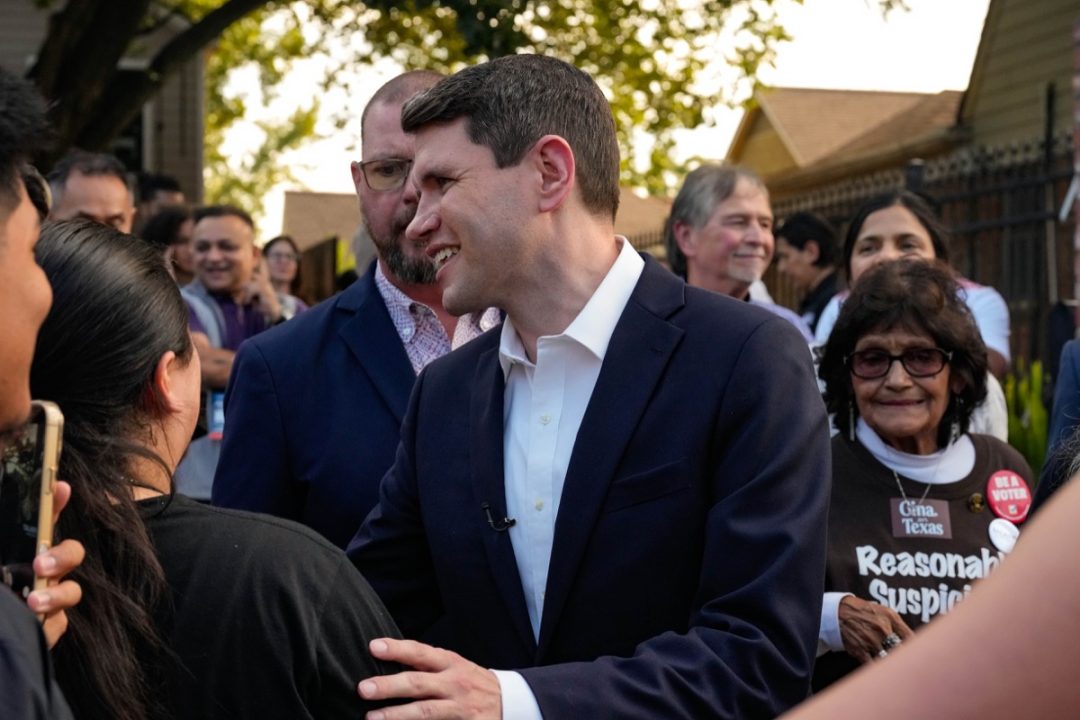
Much is at stake, too. If two of them, James Talarico (D-Texas) and Adam Hamilton (D-Kan.), win on November 3, it’s almost certain Democrats will seize the Senate.
There are also religious-Left candidates running in Iowa: Lutheran minister Sarah Trone Garriott and Presbyterian pastor Lindsay James. Both are locked in tight Hawkeye State House races.
A Piece of the Faith-electorate Pie
The motivation here is simple. The “religious Right” has long been a force in politics, and white evangelical Protestants and white Catholics still favor Republicans. For example, as Axios reported Friday:
A September Marist survey of 1,139 Texas registered voters showed [Republican Ken] Paxton with a 75% to 22% lead over Talarico among white evangelical Christians.
The bottom line: If a Democratic candidate can peel off even just an extra 10 percent of this bloc in a conservative state, it could be enough to carry the day.
Providing details on the story, Axios writes:
Talarico, a Presbyterian seminary student, and Hamilton, a United Methodist pastor, are challenging conservatives’ claim to speak for faith. Their bids come after Democrat Raphael Warnock, senior pastor of Ebenezer Baptist Church, was elected to the Senate in 2021.
- President Trump won both Texas and Kansas by double digits in 2024. Neither state has sent a Democrat to the Senate in the 21st century — the last time Kansas did was in 1932. Both races this year are considered toss-ups.
Axios then provides information about Talarico’s efforts. After mentioning that he’s using Christianity to “soften” his leftism, the site informs:
- Talarico has also made several visits to Black Baptist churches. Trump made inroads with minority communities in Texas, and Talarico looks to do the same after besting Rep. Jasmine Crockett (D-Texas), who is Black, in a brutal primary.
- He’s harnessed scripture in his pitch against Christian nationalism and for protecting the vulnerable, invoking the biblical campaign slogan, “It’s time to start flipping tables.”
- “We’re in a populist political moment, and many of the teachings of the social gospel give him an opportunity to link the politics and his faith together,” [said political pundit Brandon Rottinghaus].
As for Hamilton in Kansas, Axios states that the key isn’t so much capturing religious voters. It’s replicating Democratic Gov. Laura Kelly’s coalition. The site then continues:
- Hamilton has presented himself as a bridge-builder, drawing on his experience leading the largest United Methodist church in the nation.
- His well-known religious background could appeal to less engaged, moderate Christians and center-right voters …
Another benefit pastors (and related figures) enjoy is the communication factor. Such people tend to be comfortable speaking publicly and are often articulate and eloquent. These qualities generally win more votes than does ideological rectitude, as they are the marketing — the packing. Candidates’ actual positions are often on a secret ingredients label.
What Is “Religion”?
Now, this idea about being “religious” is interesting; it’s wholly misunderstood. Question: If someone said “John is political” or “Justine is ideological,” would this reveal what the person actually believes?
Either one could be a Marxist or Nazi — and still be “political” and “ideological.”
The point is that, as with politics and ideology, “religion” is a category, not a creed. The Aztecs, who bloodily sacrificed thousands of people to their feathered serpent-god Quetzalcoatl, were religious — so were the 9/11 terrorists.
Some will now balk, insisting, essentially, that something is not a “religion” if it’s not “good.” While well-intended, this point of view often blinds people to the real qualitative differences among theists.
Then, some people will say, “So-and-so believes in God.” All right. You know who else believes in God?
Satan.
He absolutely knows that God exists. But he rejects God’s ways.
Of course, the non-religious may now ask: Why should I care about this? The answer is that, yes, people are legally entitled to believe what they wish. But it comes down to authenticity and credibility. Perhaps nothing is worse, too, than cynically using faith for political gain. As Jesus himself said, “Beware of false prophets.”
What They Actually Believe
So it’s instructive examining what these candidates actually believe. Let’s begin with the big tamale here, James Talarico.
It’s well-known that he has supported the leftist agenda; e.g., abortion, “transgenderism,” etc. Yet more striking is what a lesbian minister at Talarico’s longtime church admitted she believed on undercover video. Reverend Babs Miller, minister at St. Andrew’s Presbyterian Church in Austin, who has known Talarico since he was little:
- Said that Jesus might not have even existed, and she doesn’t care.
- Rejects the traditional doctrine of the Virgin Birth.
- Doesn’t believe Jesus died to save man from sin.
- Says Christianity “could have all been made up, for all I know.”
- Advocates a “take what you want and leave the rest” approach to Christianity.
Miller further explained that Talarico’s move toward the political middle was just for show (videos below). She also said that his mother “would kill him” if he “backed down” on his leftist beliefs once in office.
Conclusion? Again, we can believe what we wish. But something is clear: What Miller espouses, and what Talarico apparently believes, isn’t Christianity at all. In fact, more than a religion, it’s a philosophy — a very woke one.
The Second-string Posers
Then there’s Adam Hamilton in Kansas. He believes in “abortion rights,” thinks the Bible got it wrong on homosexuality, and supports having his church “marry” same-sex couples. He says Christianity’s teachings on homosexuality should be thrown in a “bucket” of things not reflecting God’s will.
Finally, there’s Sarah Trone Garriott and Lindsay James, running for the Iowa House seats. Garriott is the one uncomfortable with public Christian displays. She objects, for instance, to an image of a woman holding a sign reading “one nation under God, indivisible.” Never mind that it’s in the Pledge of Allegiance.
As for James, she’s the pastor-candidate who opposes a prohibition against youth “sex changes.” (She’s also against a six-week abortion ban.) So “Male and female He made them” — but she supports puberty blockers, hormone therapy, and sexual-mutilation surgery for kids anyway.
In light of the above, can it be said that the “religious Left” left the idea of being religious? Actually, no. But whether they’re Christian — or fit for office — is a completely different matter.