Massie’s AIPAC Act Targets Israel’s Foreign-influence Loophole
A Republican primary in Kentucky’s 4th District has become a national test of money, loyalty, and foreign influence in Washington.
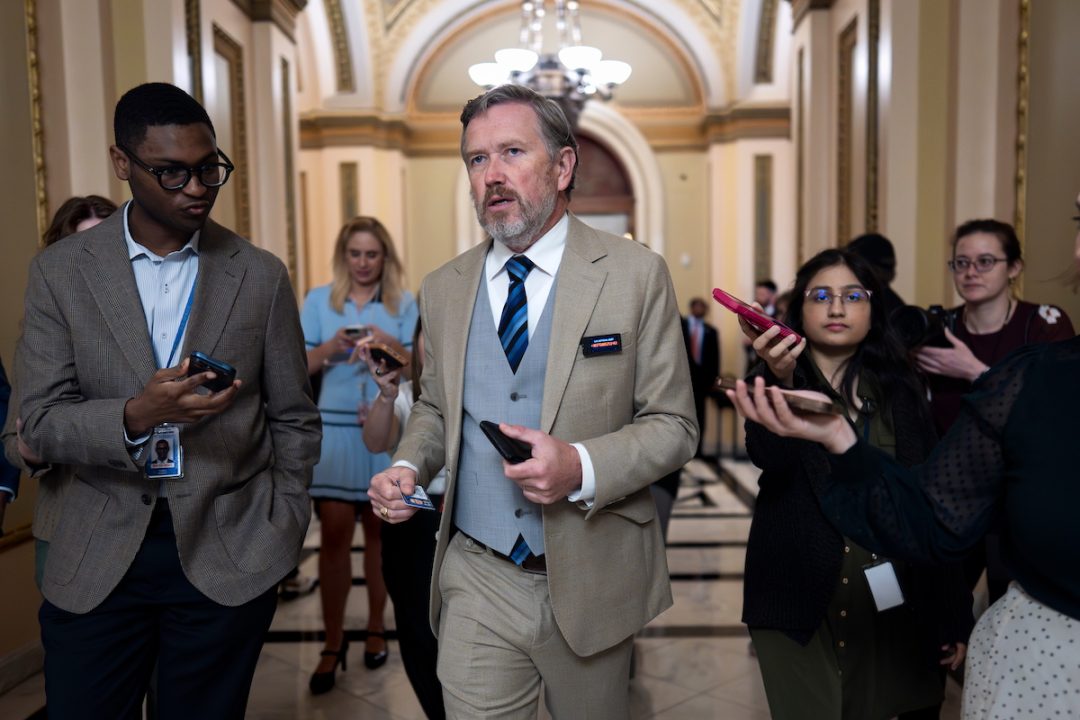
Representative Thomas Massie, a strong constitutionalist, is fighting for his political survival against Trump-endorsed Ed Gallrein. But the contest is no longer merely local. It has become a proxy battle over Israel, AIPAC, and the power of donor networks to punish lawmakers who break from Washington’s foreign-policy consensus.
As pro-Israel groups spend heavily to unseat him, Massie answered with legislation. Last Thursday, he introduced the Americans Insist on Political Agent Clarity Act, or AIPAC Act. The bill arrives as a transparency measure and poses a sharp question: When does a domestic lobbying group become a vehicle for a foreign state’s interests?
The Bill
Massie’s bill would amend the Foreign Agents Registration Act of 1938, known as FARA. The law already requires certain agents of foreign principals to register with the Justice Department (DOJ) and disclose their work. Massie’s proposal targets what he calls a loophole for U.S.-based organizations that do not directly receive foreign-government money or instructions, yet lobby in ways that principally benefit a foreign nation.
The bill says FARA should cover “any organization, association, corporation, or other entity” organized under U.S. law that “does not directly receive funding or instruction from a foreign government,” but whose “lobbying activities or stated mission” seek to influence U.S. policy “in furtherance of the political or economic interests of a foreign country.” It also allows DOJ to examine “objective indicia,” including “repeated advocacy” aligned with a foreign government’s diplomatic goals, “coordination with foreign officials,” foreign strategic guidance, or even whether the lobbying activity uses the name of a foreign nation.
The bill also creates a new complaint mechanism. “Any citizen of the United States may file a complaint with the Department of Justice requesting investigation of potential violations,” the text says. That provision would give citizens a formal path to trigger DOJ review, though the department would still control enforcement.
In his announcement, Massie stressed that the measure “does not ban speech, restrict advocacy, or prohibit Americans from supporting foreign allies.” However, he said,
Americans have a right to know when powerful lobbying organizations are advancing the interests of foreign governments in Congress…. [The bill] simply ensures transparency. If an organization is heavily engaged in influencing U.S. policy in ways that principally benefit a foreign country, it should be required to register under FARA.
The bill itself echoes that argument. It states that FARA serves “compelling interests in national security and transparency” and says disclosure requirements do not abridge speech or association.
AIPAC
AIPAC, the American Israel Public Affairs Committee, describes itself as an American organization devoted to strengthening the U.S.-Israel relationship. Its website says it “brings together Democrats and Republicans” and exists “to safeguard the U.S.-Israel alliance today, tomorrow and forever.”
AIPAC’s political reach extends well beyond lobbying. Ballotpedia reports:
In 2024, the PAC said it contributed more than $53 million to 361 pro-Israel Democratic and Republican candidates. Of those supported, 96% won in the general election.
Its affiliated super PAC, United Democracy Project (UPD), has become one of the most visible forces in congressional primaries. The Jewish News Syndicate reported that AIPAC and UDP spent $95.1 million in the 2024 elections, including candidate donations and independent advertising. For example, UDP spent $14.6 million in the Jamaal Bowman race and $8.6 million in the Cori Bush race, according to OpenSecrets figures cited by the outlet. Both Democrats had been outspoken critics of U.S. support for Israel’s actions in Gaza.
The Money Trail
Track AIPAC, a watchdog project critical of the Israel lobby, presents a broader picture of pro-Israel money flowing into American politics.
For example, it reported a striking figure for pro-Israel spending that aided President Donald Trump:
Our latest analysis uncovered >$230 MILLION in spending by pro-Israel interest groups benefiting President Donald Trump since 2020. Miriam Adelson’s Preserve America PAC is by far the biggest spender, pouring $215 million+ into U.S. presidential elections to help Trump.
Trump has publicly thanked the Adelson family for its support on multiple occasions, even though he once decried such large donations as a form of political bribery. He also credited the Adelsons with inspiring key pro-Israel decisions during his first administration. Other senior Trump administration officials, including Vice President J.D. Vance and Secretary of State Marco Rubio, also receive substantial support from AIPAC and similar groups.
Track AIPAC says the pattern extends deep into Congress:
80 members (15%) of the current US Congress have AIPAC as their all-time top contributor per OpenSecrets reports…
8 Senators. 72 Representatives. 36 Republicans. 44 Democrats.
In Massie’s own race against Trump-endorsed Ed Gallrein, campaign spending has become the flashpoint, with a major share coming from pro-Israel groups. Axios reported last week that the Kentucky primary had already drawn more than $25.6 million in ad spending by mid-May. The New York Post reported on Monday that the race had reached $32.6 million in spending, making it the most expensive House primary in U.S. history. That race, argued Massie, has “turned into a referendum on whether Israel gets to buy seats in Congress.”
FARA
FARA was enacted in 1938 to ensure disclosure of foreign influence. The DOJ explains:
The central purpose of FARA is to promote transparency with respect to foreign influence within the United States by ensuring that the United States government and the public know the source of certain information from foreign agents intended to influence American public opinion, policy, and laws, thereby facilitating informed evaluation of that information.
DOJ also stresses that FARA does not regulate the content of speech. It requires registration and disclosure. That distinction matters. FARA is not supposed to silence advocacy. It is supposed to label it.
FARA registration is not unusual. U.S. agents have registered for foreign principals tied to Saudi Arabia, China, Japan, Ukraine, the United Arab Emirates, South Korea, Canada, Qatar, Turkey, and many other countries. Some represent embassies. Others represent sovereign wealth funds, ministries, state media outlets, or foreign political institutions.
The timing of Massie’s bill also matters. It comes as the United States is engaged in an unconstitutional war with Iran, a campaign Trump and other senior officials have openly tied to Israel’s interests and objectives. That makes the central question harder to avoid. If lobbyists working for other countries must disclose their foreign-principal ties, why should a powerful pro-Israel organization get a pass?
The Kennedy Precedent
The Israel lobby has faced this question before.
In 1962, during the John F. Kennedy administration, the DOJ under Robert F. Kennedy pressed the American Zionist Council (AZC) over FARA registration. The AZC belonged to the institutional environment from which AIPAC later emerged as a separate organization. Archival material says DOJ cited funds from the Jewish Agency for Israel, the operative branch of the World Zionist Organization. Other reporting says JFK’s DOJ ordered AZC to register, though the demand was later withdrawn.
That episode still fuels suspicion among critics of the Israel lobby. Some believe Kennedy’s pressure on pro-Israel influence networks made him some powerful enemies, and might have led to his assassination. That claim remains contested. But the historical point is clear: Kennedy-era officials took the FARA question seriously.
Massie is now trying to revive it in statutory form. His bill may never pass. It will, without a doubt, face First-Amendment objections and fierce lobbying. But, thankfully, it is already forcing an overdue debate.
Indeed, when an organization helps steer U.S. policy toward another country’s interests while ordinary Americans bear the cost in skyrocketing debt, wars, and blowback, slogans are not enough. Americans deserve to know who benefits, who pays, and who answers to whom.