

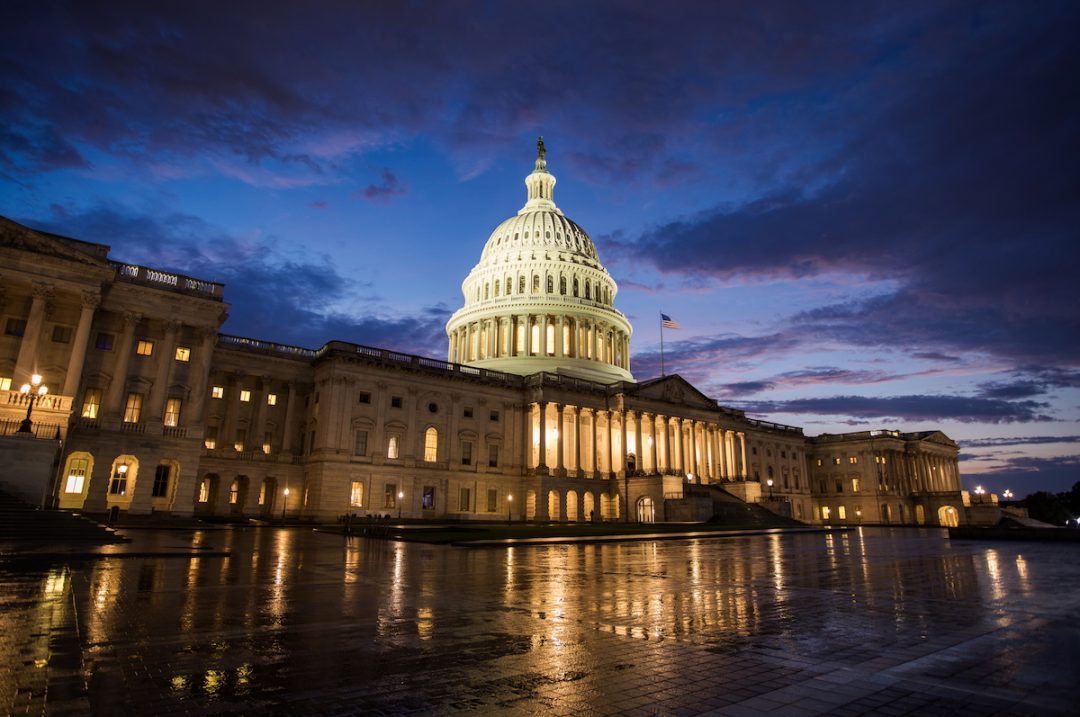
NDAA Passes House With U.S.-Israel Military Merger. Massie: “Massive Betrayal”
With the vote of 216 congressmen that critics say is tantamount to treason, the U.S. House of Representatives passed the 2027 National Defense Authorization Act, which will irrevocably entangle the U.S. and Israeli militaries, and some say, give Israel control of the American military policy.
Only seven Republicans voted against the imprudent measure. Two did not vote. Lauren Boebert of Colorado explained that she was meeting with Defense Secretary Pete Hegseth when the vote occurred.
Republican Thomas Massie of Kentucky and Democrat Ro Khanna of California led a valiant but unsuccessful fight against the bill.
The Senate must pass its version of the bill, after which it will go to a conference committee. That committee will hammer out one bill that will return to the two chambers for a final vote.
Section 219
First numbered 224 and now numbered 219, the measure shoe-horned into the NDAA would merge the U.S. and Israeli militaries, giving the Middle Eastern nation no small measure of control over the Pentagon and U.S. military policy.
Section 219 will “expand and accelerate bilateral defense technology research, development, testing, evaluation, integration, and industrial cooperation,” the measure says, by a number of means, including:
• identifying jointly developed or Israeli-origin technologies with operational utility for potential integration into United States systems and programs … ;
• ensuring collaborative research initiatives involving government, private sector, and academic institutions in the United States and Israel, … in a manner that protects sensitive technology and information and the national security interests of the United States and Israel; …
• establishing frameworks for joint ventures, licensing agreements, and United States-based co-production or manufacturing partnerships with Israeli industry.
The two militaries would cooperate on “missile and air defense technologies” as well as cyber-defense, electronic warfare, and artificial intelligence.
The measure gives Israel — notorious for hostile espionage against the United States, its main benefactor — unprecedented access to U.S. national-security secrets.
The measure “lays the groundwork for bilateral research and development, co-production of weapons, joint ventures, licensing agreements, and seemingly every manner of U.S.-Israeli military-industrial complex cooperation,” Ben Freeman explained for Responsible Statecraft:
The U.S. and Israel already work together heavily on missile defense, but this provision would greatly expand coordination to seemingly every area of defense tech, including AI, quantum, autonomous systems, directed energy, cyber, biotech, and many more. It also proposes “network integration” and “data fusion.” In other words, the U.S. military’s data could soon be the Israeli military’s data.
It would give the Israel Lobby even more power than it has now. That power already includes marshaling the tens of millions of dollars that purchased Massie’s seat in the House for a largely unknown Israel-firster.
Section 219 will “give the Israeli government the opportunity to greatly expand one of the most powerful levers of influence in U.S. politics: jobs in the U.S,” Freeman continued:
By expanding or starting new co-production facilities like it already has in Mississippi and Arkansas, the Israeli government could boast of providing jobs on U.S. soil, thereby securing allies among members of Congress who represent the districts where those jobs lie.
The result could well be a U.S. political system even more susceptible to the whims of an Israeli government that seemingly has no qualms about drawing the U.S. into military conflicts in the Middle East.
Not surprisingly, the idea for the merger came not from Hegseth, President Trump, or the Israel Lobby. Rather, it came from Israeli Prime Minister Benjamin Netanyahu.
“I was glad to receive your proposed Congressional resolution endorsing my plan to shift the framework for US-Israel defense cooperation from aid to partnership,” he wrote to Israel-first GOP Representative Marlin Stutzman of Indiana:
As I said in our meeting in Jerusalem on May 27, 2026, Israel deeply appreciates the financial component of the military aid the United States has generously provided us over the years. The time has now arrived for us to move from aid recipient to partner.
GOP Treachery
Try as they might, Massie and Khanna failed to get a vote on their amendment to strip Section 219 out of the defense bill.
That losing battle helped set up yesterday’s 216-212 final vote.
“This NDAA is a betrayal of American sovereignty,” Massie wrote on X:
GOP hacks say it’s great because the House attached the SAVE Act to it.
Here’s the problem with their spin: The NDAA isn’t due, and almost never passes, before November!
Former GOP Representative Marjorie Taylor Greene, whom Trump hounded from office because she crossed him on releasing the Epstein Files, called the vote “total betrayal.”
For her part, Lauren Boebert of Colorado, who missed the vote along with Andy Biggs of Arizona, said she opposes Section 219 and was meeting with Hegseth, where she “helped secure his commitment that Section 219 would be stripped from the NDAA in conference.”
“Protecting America’s intellectual property for future generations is non-negotiable,” she wrote on X:
For months, I’ve worked with colleagues to strengthen the NDAA, including measures to harden our bases against drone attacks, bolster the Colorado National Guard, ban DoW purchases of slave-labor equipment, and reduce waste, fraud, and abuse.
Boebert noted that the bill must still go to a House-Senate conference committee, which will reconcile the two versions of the bill.
That means congressmen more loyal to the United States than to Israel can still push to remove it.
As for Democratic support, six voted for the bill. They received a combined $8.3 million from the Israel Lobby, Track AIPAC reports.
Henry Cuellar of Texas: $2.4 million;
Don Davis of North Carolina: $4 million;
Jared Goldman of Maine: $1 million;
Vicente Gonzales of Texas: $397,389;
Adam Gray of California: $60,523; and,
Marie Gluesenkamp Perez: $431,838.