
Judge Finds Trump’s $10 Billion IRS Lawsuit Was Never a Real Case, Sanctions Attorneys
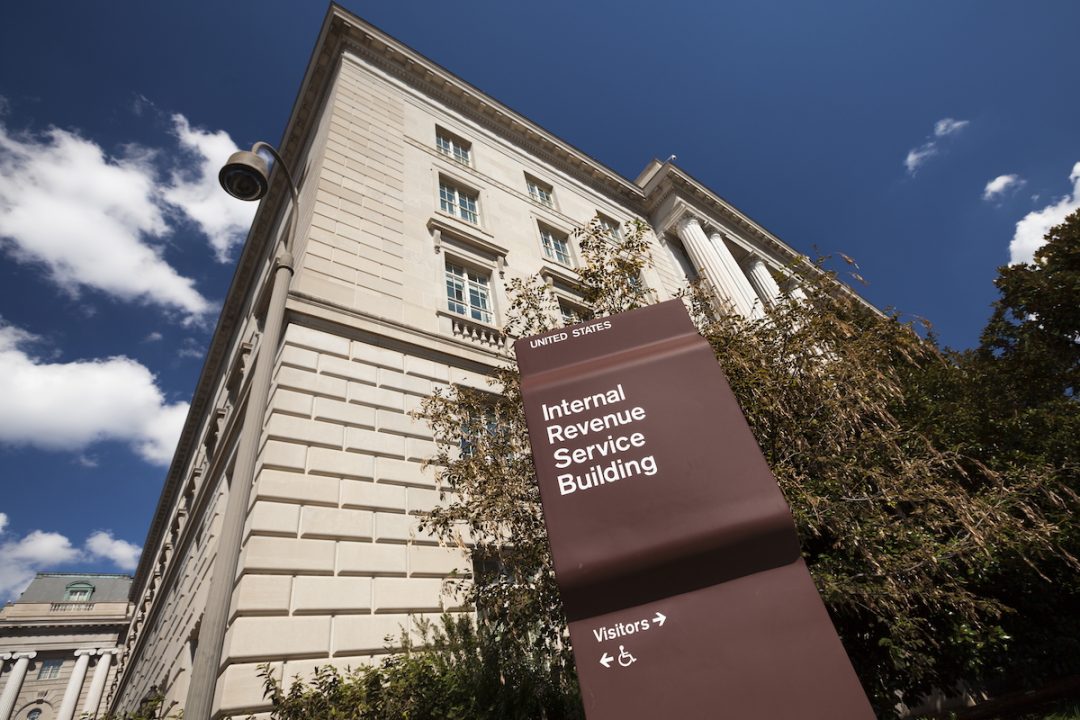
A federal judge on Monday delivered a blistering rebuke to President Donald Trump and his Department of Justice (DOJ). She found that Trump’s $10 billion lawsuit against the Internal Revenue Service (IRS) was never a genuine legal contest.
U.S. District Judge Kathleen Williams ruled that Trump used the case to lend judicial legitimacy to a sweeping agreement. The deal offered broad protections to the president, his family, his businesses, and their affiliates. It also created a $1.776 billion fund for people who claimed the government targeted them through “weaponization or lawfare.”
Williams found that the lawsuit lacked the basic conflict required for a federal court to act. Trump controlled the agencies he had sued, she wrote, while the government never mounted a defense.
The judge also sanctioned two of Trump’s lawyers. She also barred both “sides” from presenting the agreement as a settlement reached through the case.
The Case
Trump and two of his sons, Donald Trump, Jr. and Eric Trump, along with the Trump Organization, sued the IRS and Treasury Department on January 29. They sought at least $10 billion over the leak of their confidential tax records that occurred during Trump’s first term in office.
Former IRS contractor Charles Littlejohn pleaded guilty on October 12, 2023, to disclosing Trump’s tax information to news organizations. A federal judge sentenced him to five years in prison on January 29, 2024.
But Littlejohn’s conviction did not end the matter for Trump. Williams did not dispute the president’s right to seek a legal remedy. Her ruling focused instead on when he sued, whom he sued, and what happened after the case reached court.
The governing statute generally requires plaintiffs to sue within two years of discovering an unauthorized disclosure. Trump’s lawyer Alina Habba publicly identified him as a victim at Littlejohn’s October 2023 plea hearing. But Trump filed the lawsuit more than two years later.
The government had raised that deadline and other defenses in similar lawsuits. It had also disputed whether the United States could be liable for disclosures made by a contractor rather than a federal employee.
In Trump’s case, however, no government lawyer entered an appearance. The IRS and Treasury filed no answer, motion, or statement of position during the 109 days the case remained pending.
That silence became central to Williams’ ruling.
From Lawsuit to Settlement
Williams questioned whether the case met the requirements of Article III of the Constitution, which limits federal courts to genuine cases or controversies. Indeed, a lawsuit normally requires parties with opposing legal interests.
The judge ordered both sides to explain how that requirement could be satisfied. Trump, after all, controlled the Treasury Department and its agency, the IRS. His DOJ also bore responsibility for defending them.
Neither side answered.
Instead, Trump’s lawyers dismissed the case with prejudice on May 18. The DOJ then announced that the parties had reached a settlement.
The agreement included a formal apology. It also called for the Treasury Department’s Judgment Fund to supply $1.776 billion for the newly established “Anti-Weaponization Fund.” The fund would compensate other people who alleged government mistreatment, although they were not parties to Trump’s lawsuit.
Acting Attorney General Todd Blanche issued a separate order the next day. It purported to release Trump, his relatives, their companies, and affiliates from an expansive range of federal claims. The language also appeared to restrict audits and other agency actions tied to conduct before the agreement.
Blanche later told Congress that the department would not proceed with the fund. He, however, declined to commit to that in writing. He also did not give any assurance about the release and audit protections.
A Lawsuit Without an Adversary
Williams concluded that the president and the agencies he sued shared the same ultimate interest. She wrote,
President Trump controls the actions of the Secretary of the Treasury Department Scott Bessent, IRS CEO Frank Bisignano, and all Executive Branch actors.
His own executive order added to that problem. It required executive branch employees to follow the president’s legal interpretations unless he or the attorney general authorized a different position.
The government’s conduct reinforced the structural conflict. It declined to assert defenses that it had used against other plaintiffs. It stayed silent when the court asked about jurisdiction. Finally, it then joined an agreement that granted relief far beyond the tax disclosure claims. Williams wrote,
It is risible to suggest that there was ever adverseness between the Parties.
The judge said the parties used federal litigation to give official weight to an arrangement they did not want a court to review:
This action was never about a party seeking judicial resolution of a legal issue or a factual dispute. The nature of the suit itself and the conduct of the Parties and counsel from its filing make plain that this was an attempt to use the Court to provide some legitimacy to an agreement to confer immunity to people and entities affiliated with the President and to earmark billions of dollars from American taxpayers to redress grievances not defined in the law.
Williams expressly found that Trump and the other plaintiffs acted in “bad faith and for an improper purpose.” That purpose was to secure judicial legitimacy for an agreement with no viable foundation in law or fact.
Lawyers Face Sanctions
Williams referred Trump attorney Alejandro Brito to the Florida Bar for possible discipline. She also barred Daniel Epstein from receiving temporary admission to practice in the Southern District of Florida for one year.
The judge directed the court clerk to send the decision to the New York bar, where Blanche is licensed. She also sent it to the District of Columbia bar, where Associate Attorney General Stanley Woodward is licensed. Existing disciplinary complaints involving both officials are already pending.
Williams then imposed a potentially more consequential restriction.
She prohibited Trump, his sons, and the Trump Organization from calling the agreement a “settlement” in any official proceeding. The same restriction applies to the IRS and Treasury.
The parties may not use, offer, or cite its provisions as evidence of a settlement reached through the lawsuit. The prohibition covers judicial, administrative, regulatory, and arbitration proceedings.
The order does not expressly decide whether every part of the private agreement is independently valid. Williams said that question was not before her. Her ruling nevertheless strips the deal of its claimed status as the product of federal litigation. It could also undermine attempts to enforce its audit and immunity provisions.
The judge also found monetary sanctions appropriate under the court’s inherent authority. She did not set an amount.
Outside groups and former judges who challenged the arrangement may seek reimbursement for their legal expenses. They have 14 days to submit requests. Trump and his lawyers may then respond.
Trump’s Lawyers Defend the Case
Trump’s legal team defended the underlying lawsuit after the ruling.
A spokesman said the IRS had allowed a “politically-motivated employee to leak private and confidential information about President Trump, his family, and the Trump Organization.” The spokesman said Trump would continue to hold accountable those “who wrong America and Americans.”
The statement, however, did not address Williams’ central finding. The judge said the court could not adjudicate a dispute when the plaintiff controlled the defendants and both sides sought the same outcome.
Indeed, she ended the ruling with a direct constitutional conclusion.
“In sum, the facts before this Court demonstrate there was never adverseness between the Parties; there was never a case or controversy; and there was never a question as to who would prevail,” Williams wrote. Even the president himself acknowledged that glaring problem earlier in the case, saying he was expected to “work out a settlement with myself.”