

Rapid Rise of Red-meat Allergies a “Ticking” Time Bomb
Cases of a tick-borne disease that renders victims permanently allergic to red meat are skyrocketing in the United States.
The condition “has proliferated from just a few dozen known cases in 2009 to as many as 450,000 now,” reported The Guardian last summer. The outlet quoted expert Brandon Hollingsworth of the University of South Carolina:
We thought this thing was relatively rare 10 years ago but it’s become more and more common and it’s something I expect to continue to grow very rapidly…. We’ve seen an explosive increase in these ticks, which is a concern.… It seems like an oddity now but we could end up with millions of people with an allergy to meat.
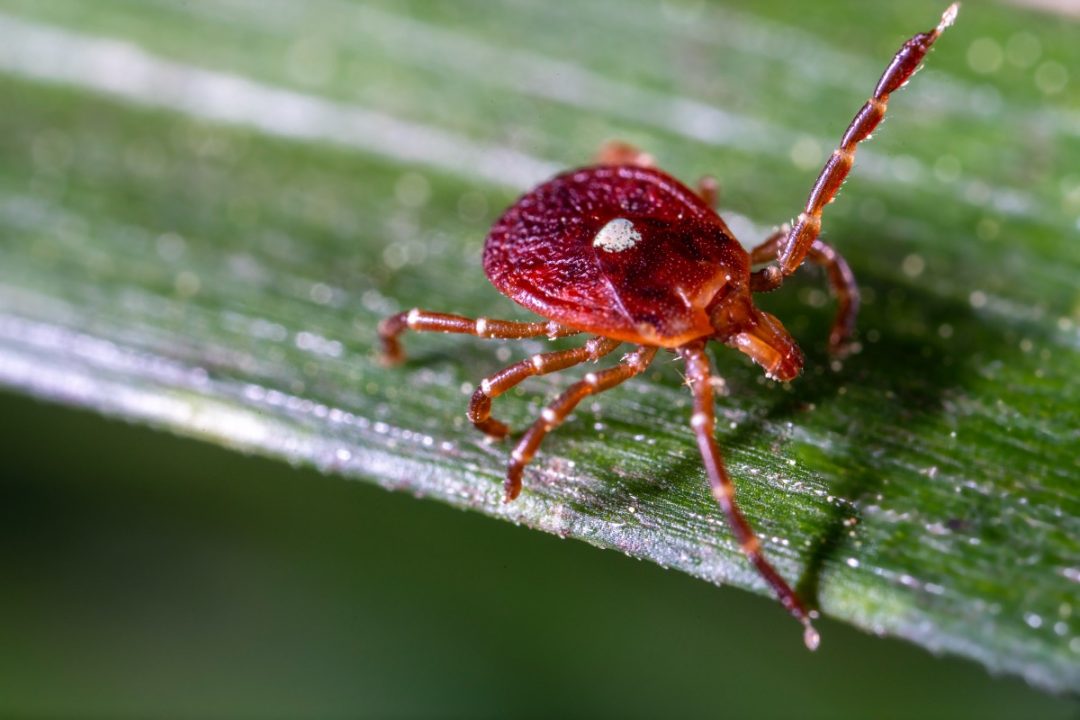
He is referring to AGS, or alpha-gal syndrome, a condition triggered by the bite of a Lone Star tick (among other parasites), which introduces a sugar molecule called alpha-galactose (alpha-gal) into a person’s body. Alpha-gal causes an allergic reaction to mammalian meat. Other symptoms include hives, gastrointestinal issues, and anaphylaxis, a life-threatening allergic reaction.
“Moral Bioenhancement”
While most red-blooded Americans would view AGS as a bad thing, some scientists are rejoicing. For example, a paper published in the journal Bioethics last year postulated that if eating meat is morally wrong, then promoting parasite-induced allergies could be morally obligatory. Citing arguments common to animal-rights activists, they propose using a known disease to achieve their goal of turning all humans into herbivores.
The men who dub this stealth coercing “moral bioenhancement” are two medical ethicists with Western Michigan University. Their paper is called “Beneficial Bloodsucking.” They rationalize that because most adverse effects are temporary and nonfatal, the end justifies the means: AGS primarily affects meat consumption for the rest of a person’s life, a necessary goal to prevent animal cruelty. They suggest that genetic editing of ticks to enhance AGS transmission is feasible and even obligatory.
(One of the two authors is Parker Crutchfield, Ph.D., who previously published a 2019 essay arguing that compulsory “moral bioenhancement” should be covert, and who, during the Covid-19 pandemic, proposed a compulsory, covert “morality pill” to force noncompliant people to follow public-safety measures. The other author, Blake Hereth, Ph.D., a member and former chair of the American Philosophical Association’s Committee on LGBTQ People in the Profession, lists pronouns as they/them and stumps for Black Lives Matter.)
Morally Indefensible
A response paper, “Why It Is Wrong to Promote Alpha-Gal Syndrome: A Response to Crutchfield and Hereth,” challenges their claim that AGS would reduce animal suffering, noting shifts to other meats such as poultry and fish. Moreover, argue the authors, the proposal is morally indefensible as it violates bodily autonomy. AGS carries lifelong risks and provides no health benefits.
“Moral bioenhancement” is important to refute because the Crutchfield/Hereth duo is not a one-off. Bioethicist S. Matthew Liao of New York University has long advocated biomedical modifications to discourage meat consumption. However, his stated goal is to mitigate global warming. His 2012 paper “Human Engineering and Climate Change” suggested artificially inducing red-meat allergies by stimulating immune system intolerance to bovine proteins. “There’s this thing called the Lone Star tick, where, if it bites you, you will become allergic to meat,” he said during a panel discussion at the World Economic Forum. “So that’s something we can do through human engineering.”
Gates’ Involvement
The circumstances recall funding by the Bill & Melinda Gates Foundation for research into genetically engineered cattle ticks. In 2021, the foundation granted nearly $1.5 million to Oxitec Ltd. for this purpose, and an additional $4.8 million in 2023 after reported efficacy. Gates is also famous for investments in pharmaceutical companies involved in tick-borne disease treatments and in plant-based and lab-grown meat companies. Additionally, the foundation funds genetically modified mosquitoes as part of its malaria research. There is no definitive evidence linking Gates-funded research to the increase in AGS cases, but the timing and overlap is disturbing.
Also of note is the historical use of aerial dispersal of insects and ticks for bioweapons testing during the Cold War. Operation Big Itch witnessed the U.S. military dropping some 670,000 uninfected tropical rat fleas from aircraft at Dugway Proving Ground to test dispersal methods in 1954. Two years later, Operation Drop Kick involved uninfected mosquitoes released over residential areas in Georgia and Florida to study disease spread. Last year, the U.S. House passed an amendment introduced by New Jersey Republican Chris Smith, ordering reviews of tick and insect bioweapons experiments conducted by the Department of Defense throughout the 1950s, ’60s, and ’70s.
Due to the current inexplicable uptick in ticks, perhaps Congress should instead investigate whether such methods are in use today.
Related Article:
War on Meat: Has Tick-borne “Thought Experiment” Become Full-blown Biowarfare?
This article is part of The New American’s weekly online newsletter Insider Report, which is emailed to TNA subscribers each week. Click here to subscribe to The New American to receive the Insider Report and access exclusive content.