
States Push Back Against Geoengineering and Cloud Seeding
Editor’s note: An April email to subscribers intending to link to the video “DOJ Must Release ALL Epstein Files or Face Criminal Liability, Rep. Massie Warns” mistakenly routes to this article instead. Please click here to watch the video.
As public concern grows over geoengineering, cloud seeding, and other forms of weather modification, several states have moved to prohibit or restrict these practices. Multiple states, including Arizona, Florida, Louisiana, and Tennessee, have considered or enacted measures to ban intentional atmospheric manipulation, while Nevada has moved in the opposite direction by appropriating taxpayer funds for continued cloud-seeding operations. Together, these actions highlight a growing conflict between constitutional self-government and an increasingly normalized push for weather intervention by government agencies, researchers, and global climate-regime advocates.
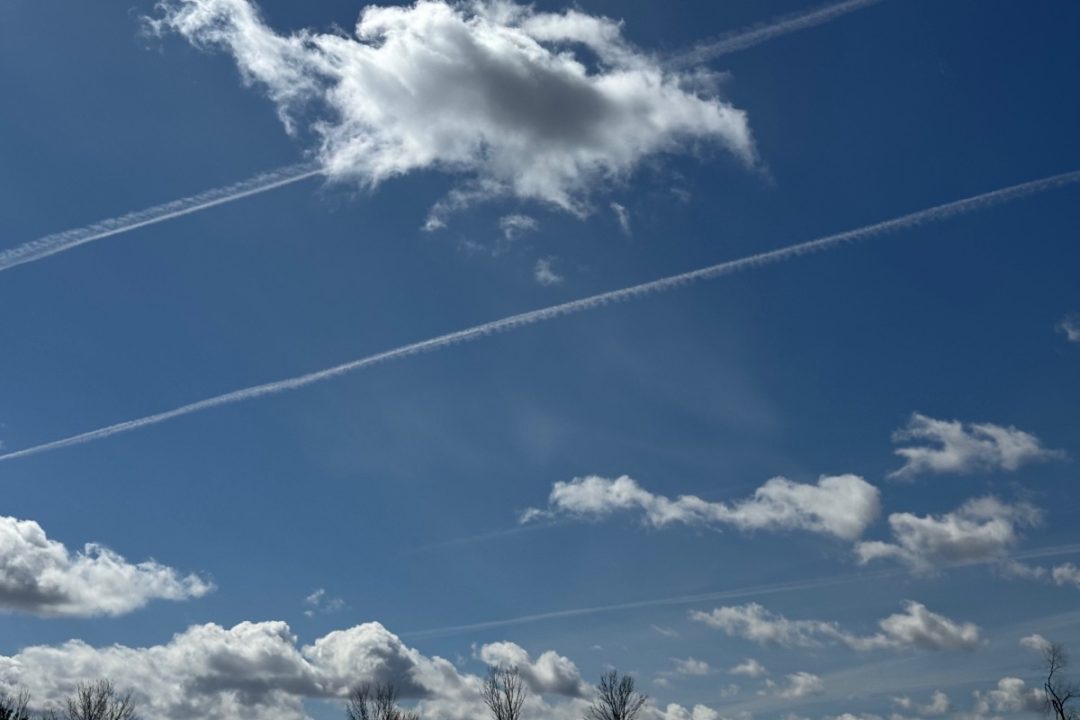
Cloud seeding and geoengineering are no longer fringe topics. According to the U.S. Government Accountability Office (GAO), cloud seeding is an 80-year-old technology used to increase precipitation or suppress hail, most commonly by dispersing silver iodide into clouds. The GAO report noted that nine U.S. states are currently using cloud seeding, while 10 have banned or considered banning cloud seeding or weather modification in general. The same report acknowledged that estimates of added precipitation range from zero to 20 percent, but also admitted that research into the effectiveness of cloud seeding remains limited and that reliable information on benefits and effects is lacking.
A 2025 scientific dataset built from National Oceanic and Atmospheric Administration (NOAA) weather-modification reports showed that cloud seeding has been practiced in the United States since the 1940s, and 832 reported weather-modification projects from 2000 to 2025 were documented in publicly accessible records. That dataset found cloud-seeding activity concentrated heavily in western states, with silver iodide as the dominant agent and ground-based deployment the most common method. It also found that activity rebounded after 2021.
The history of weather modification is well documented. As The New American recently reported, Operation Popeye was a U.S. military cloud-seeding program during the Vietnam War from 1967 to 1972. The New American, also reported that NOAA has stated that cloud seeding is the only common weather-modification activity currently practiced in the United States, and federal law has long required reports on such activity. In other words, the debate is not about whether weather modification exists, but whether government should permit, fund, or normalize it.
States Draw a Line
The Arizona Senate took a strong stand with SB1432. That measure, introduced in 2025, would have prohibited geoengineering and climate modification within state borders by banning the intentional injection, release, or deployment of chemicals, substances, or apparatus intended to alter temperature, weather patterns, or sunlight intensity. It also would have repealed an older weather-modification licensing chapter, and protected the integrity of Arizona’s water resources fund by requiring collected fees to remain in trust for the state Department of Water Resources. The measure affirmed state sovereignty, rejected unauthorized atmospheric experimentation, and would have protected the people of Arizona from risky interventions pursued without meaningful public consent. Unfortunately, although the Senate passed SB1432, the bill died in the House.
Tennessee acted even earlier — and successfully. In 2024, it enacted SB2691, now Public Chapter No. 709, prohibiting the intentional injection, release, or dispersion of chemicals, compounds, substances, or apparatus into the atmosphere for the purpose of affecting temperature, weather, or the intensity of sunlight. The measure cited documented concerns that the federal government or entities acting on its behalf may be conducting geoengineering experiments, while acknowledging that the risks to human health and environmental welfare are not yet well understood. By drawing a clear legal line against atmospheric manipulation inside its borders, Tennessee affirmed that protecting public health, environmental welfare, and state sovereignty must take precedence over speculative climate-intervention schemes.
Florida enacted SB56 in 2025. This bill prohibits geoengineering and weather-modification activities in the state reflecting a growing recognition that no person, company, or government entity should be allowed to manipulate weather, climate, or sunlight intensity over a state’s people and property. SB56 makes unapproved cloud seeding and similar activities a third-degree felony, punishable by up to five years in prison and fines of up to $100,000.
Louisiana also acted. SB46, enacted in 2025, bans the intentional release of substances into the atmosphere to modify weather, temperature, climate, or sunlight, while carving out narrow exceptions for firefighting, agriculture, and forestry activities below 1,000 feet. It directs the Louisiana Department of Environmental Quality to establish procedures for the public to report suspected violations and post collected data online. It also repeals the prior law authorizing weather-modification licensing and fees. The measure reins in experimental weather modification, increases transparency, and restores a degree of accountability to an area long insulated from public scrutiny.
Nevada, however, moved in the opposite direction. SB6, also enacted in 2025, appropriates $600,000 in fiscal year 2025-2026 and another $600,000 in fiscal year 2026-2027 to the Desert Research Institute for Nevada’s State Cloud Seeding Program. The measure requires annual reports to the Interim Finance Committee and returns unspent funds to the general fund, but still commits taxpayer dollars to a practice whose benefits are disputed and whose long-term consequences remain uncertain. Lawmakers should not force taxpayers to subsidize speculative atmospheric intervention that expands government activity outside the legitimate score of government without even a guaranteed public benefit.
A Fundamental Question
Ultimately, this is not merely a scientific or environmental question. It is a question of sovereignty, accountability, and the legitimate scope of government. If cloud seeding and geoengineering are truly as beneficial and harmless as their advocates often claim, then why has the GAO acknowledged that data on effectiveness remain unreliable, that more widespread use of silver iodide could raise unanswered environmental and public-health questions, and that reporting requirements may still be inadequate to monitor these operations properly?
Transparency, Reporting, and Consent
Even existing law recognizes that weather modification is serious enough to require reporting and oversight. The federal Weather Modification Reporting Act of 1972 requires those conducting weather-modification activities in the United States to report them to the federal government, and states such as California have long maintained permitting and regulatory frameworks for such activities. That fact alone undercuts the claim that concerns about atmospheric intervention are imaginary or unworthy of public scrutiny. If these practices are real enough to justify permits, reports, environmental reviews, and public-safety rules, then they are also real enough to justify public concern, legislative action, and governmental restraint.
The deeper issue is consent. Large-scale atmospheric intervention does not stay neatly confined to a laboratory or bureaucratic file cabinet. It can affect air, water, land, agriculture, and the health and property of people who never agreed to become subjects of experimentation. Geoengineering proposals raise questions not only about effectiveness, but about informed consent, environmental review, and whether the public is being adequately informed at all. In a constitutional republic, the people are not test subjects, and the skies above their homes should not be treated as an open field for speculative government-backed or privately coordinated intervention. Before any such activity is normalized, the burden should be on its advocates to prove not only safety and legality, but also transparency, accountability, and respect for the consent of the governed.
Property Rights and Public Accountability
Additionally, a constitutional republic should not permit bureaucrats, contractors, or international climate-regime advocates to conduct atmospheric experiments over the heads of the people. Nor should state governments become passive partners in such schemes through licensing regimes, subsidies, or vague oversight. Weather modification directly affects private property, agriculture, water, and public health. Any government activity touching those areas must be restrained, transparent, and consistent with the principles of representative self-government.
Legal history also shows that weather modification is not a harmless or consequence-free enterprise. Court disputes over cloud seeding have involved flooding, water rights, environmental harm, and liability for damages. Even when courts have upheld such programs or dismissed claims for lack of proof, the disputes themselves underscore the point: Weather modification is not merely a theoretical debate, but a real-world controversy involving law, property, public safety, and constitutional self-government.
Public Distrust and the Climate Agenda
Public distrust has only grown as the subject has moved further into public view. The 2025 documentary trailer for Just Look Up reflects that growing alarm, portraying geoengineering and atmospheric intervention not as fringe speculation, but as a real and increasingly visible public controversy. The trailer points to official reports, past congressional and international testimony, and the willingness of some scientists and policymakers to discuss reducing sunlight or altering weather systems in the name of climate management. Whether every claim made in the documentary proves accurate is not the central issue. The larger point is that public concern is no longer confined to the margins. Americans are asking legitimate questions about what is being tested, what is being proposed, and who gave permission to tamper with the skies above their homes, farms, and communities.
That concern is understandable. If substances are intentionally released into the atmosphere, they will eventually fall somewhere — onto land, into water, and across the property of citizens who never consented to such experimentation. This issue cannot be dismissed with slogans or ridicule. It raises serious questions about property rights and self-government. In a constitutional republic, the people are not subjects to be managed by technocrats, nor should their airspace become a testing ground for schemes devised by experts, bureaucrats, or global institutions. If geoengineering advocates want public trust, they should begin with, as alluded to earlier, full transparency, honest disclosure, and respect for the consent of the governed.
The broader geoengineering movement also fits neatly within the broader climate agenda advanced by global institutions and political elites, including the United Nations’ Agenda 2030. Whether framed as solar-radiation management, climate intervention, or weather resilience, these schemes too often assume that unelected experts should be entrusted with power to alter nature itself. That is not humility. It is hubris. And hubris backed by state power is dangerous.
Choose Liberty and Local Control
Arizona, Florida, Louisiana, and Tennessee recognized that truth and acted accordingly. Instead of normalizing weather modification, they moved to stop it. Nevada should have done the same. States should reject public funding for cloud seeding, repeal any remaining weather-modification licensing laws, require full transparency for any past or present atmospheric interventions, and defend the right of their citizens to live free from unauthorized chemical or technological manipulation of the skies above them.
If lawmakers are serious about protecting health, property, and liberty, they should begin by saying no to geoengineering. The atmosphere is not the government’s laboratory, and the people are not test subjects.
To learn more about how your state and federal legislators vote on issues of constitutional importance, visit The New American’s Freedom Index and state Legislative Scorecards. You can also stay informed about what is happening in your state legislature and in Congress by signing up for legislative alerts here.