
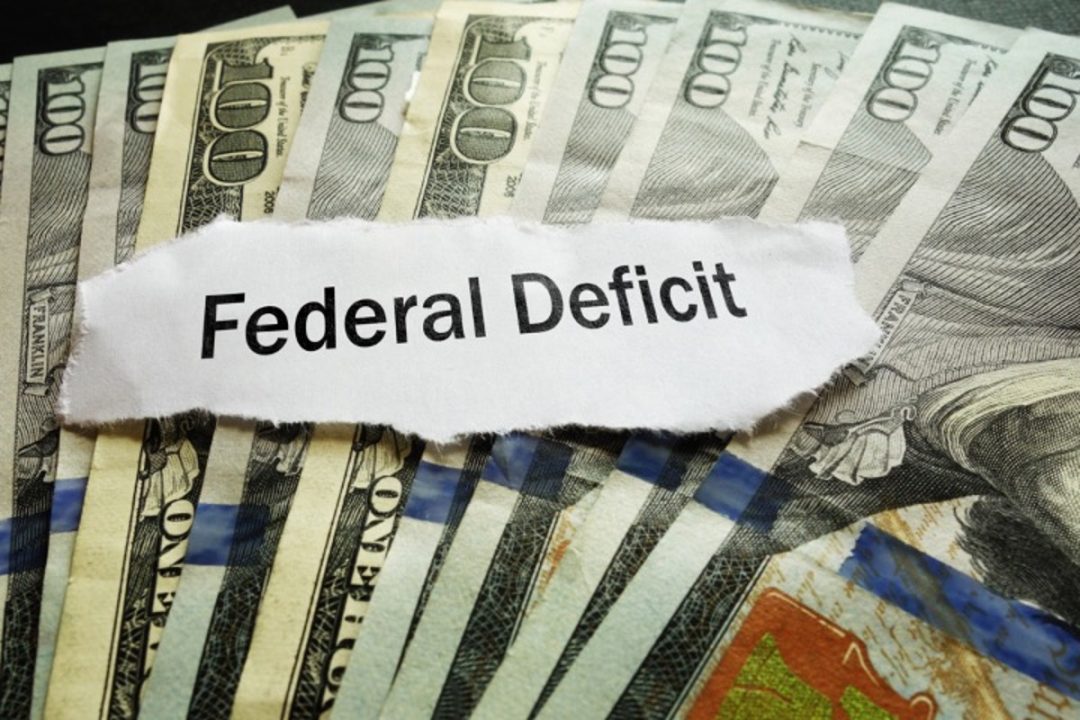
Federal Deficit Hits $1.4 Trillion as Spending Keeps Outrunning Revenue
The federal government’s fiscal trajectory continues to deteriorate, despite collecting more money from taxpayers.
According to the latest estimate from the Congressional Budget Office (CBO), the bipartisan agency that provides budget and economic analysis to Congress:
The federal budget deficit totaled $1.4 trillion in the first nine months of fiscal year 2026…. That amount is $35 billion more than the deficit recorded during the same period last fiscal year.
The deficit grew despite a $142 billion, or four-percent, increase in federal revenue. That is because spending rose even faster, climbing by $178 billion to $5.5 trillion. Interest costs also surged, adding another layer of pressure to an already strained budget.
Fortune put the pace of borrowing in stark terms:
U.S. Treasury has borrowed $155 billion every month of this fiscal year — and is now paying $24 billion a week in interest on its debts.
The outlet also reminded of an uncomfortable reality:
At the time of writing [June 10], the total U.S. national debt sits at $39.4 trillion, accumulated under administrations led by both Republicans and Democrats.
In other words, Washington took in more money, borrowed at a staggering pace, and continued adding to a debt burden that neither party has shown much willingness to control.
Tariff Revenue Turns Into Refunds
Tariffs initially gave Washington a substantial revenue boost. Customs duties rose by $55 billion, or 51 percent, during the first nine months of the fiscal year.
Then the Supreme Court struck down certain tariffs in February. The government began refunding the duties to the importers that had paid them.
Needless to say, the Treasury sent no refunds directly to consumers, even though New York Federal Reserve researchers found that nearly 90 percent of the tariff burden was borne by American businesses and consumers.
CBO reported that tariff refunds reached about $70 billion in May and June. By June, the revenue stream had gone into reverse:
In June 2026, refunds of customs duties ($50 billion) exceeded gross collections ($24 billion), producing a net outflow of $26 billion — $52 billion below the $27 billion collected last June.
In practical terms, that collapse helped drive June receipts down by $32 billion from the prior year. It also exposed the danger of treating executive tariffs as a stable fiscal foundation.
Workers Pay More, Corporations Pay Less
Individual income and payroll taxes supplied most of the revenue increase. Combined collections rose by $169 billion, or five percent.
Withholding from workers’ paychecks increased by $115 billion, which CBO attributed to higher wages and salaries. Nonwithheld payments rose by another $90 billion.
Corporate income tax receipts moved sharply in the opposite direction. They fell by $86 billion, or 24 percent, even as corporate income increased.
That decline stemmed from the Republican reconciliation package:
The enactment of the 2025 reconciliation act allowed corporations to take larger deductions for certain investments, thereby reducing some payments and offsetting the increases in those receipts that otherwise would have been expected, given the rise in corporate income.
The contrast was remarkable. Workers and individual taxpayers sent Washington substantially more money. Corporate tax collections fell by nearly one-quarter.
The same reconciliation law also increased individual income-tax refunds by $31 billion, further reducing net receipts.
The Biggest Programs Keep Growing
The three largest mandatory programs accounted for nearly the entire increase in federal outlays. Social Security, Medicare, and Medicaid spending rose by a combined $169 billion.
Social Security spending increased by $62 billion, or five percent. Medicare rose by $58 billion, or eight percent. Medicaid increased by $49 billion, or 10 percent.
These programs grow automatically under existing law. Rising enrollment, benefit formulas, medical costs, and payment rates keep pushing the totals higher.
“Defense” spending also increased. Military outlays rose by $30 billion, or five percent. The largest increases went toward personnel and research and development.
Veterans Affairs spending rose by $26 billion. The agency served more beneficiaries and spent more per person.
Interest Payments
The most ominous increase came from the cost of past borrowing.
Net interest outlays reached $857 billion through June. That was $98 billion more than last year — 13 percent higher. Interest spending exceeded both Medicare outlays and military spending over the same period.
CBO explained the cause directly:
Outlays for net interest on the public debt rose by $98 billion (or 13 percent) because the debt was larger than it was in the first nine months of fiscal year 2025 and because of higher long-term interest rates.
June alone added another warning. Monthly interest costs rose by $31 billion, or 36 percent, from the previous June.
Cuts That Did Not Change the Direction
Several agencies did spend less. Education outlays fell by $55 billion. Environmental Protection Agency (EPA) spending dropped by $20 billion. Homeland Security spending declined by $13 billion.
Those numbers require context. Most of the education decline came from a revised estimate of outstanding student loan costs. The EPA decline reflected “clean” energy grants paid in late 2024 that did not recur. Lower disaster spending drove much of the Homeland Security reduction.
Clearly, these were not broad structural cuts. They were largely accounting changes, timing differences, or the expiration of earlier spending bursts.
And so, predictably, the deficit still grew.
CBO projects a full year deficit of $1.9 trillion for fiscal 2026. Its February outlook also projected that debt held by the public will rise from 100 percent of the gross domestic product (GDP) this year “to a record 108% by 2030 and 120% by 2036.” Put simply, Washington is on track to borrow nearly $2 trillion this year while pushing publicly held debt ever further beyond the size of the entire U.S. economy.
The latest monthly report shows that long-term warning taking shape in real time.
Responsibility
Fiscal responsibility requires more than merely slowing the rate at which Washington adds to the debt. It requires Congress and the executive branch to restrain spending, reform automatic programs, and stop financing government operations through permanent borrowing.
Better still, the roughly 80 percent of the federal government that operates beyond any clear constitutional mandate, often in service of entrenched corporate interests, should be shut down. As this magazine has long advocated, its powers, functions, and funding should return to the states and the people, where they belong.
Through June, Republican-controlled Washington did none of those things, despite their repeated promises. The government collected more, spent more, and added another $1.4 trillion to the ledger.