
U.S. Strikes Drone Storage Facility in Iran After Drone Attack on Commercial Ship. Attack Ongoing.
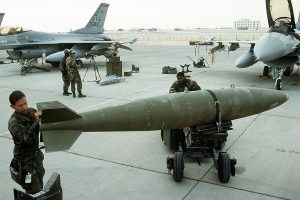
Following a threat from President Trump today and Iran’s apparent violation of the ceasefire agreement that Iran and the United States inked last week, U.S. forces struck coastal targets in Iran today.
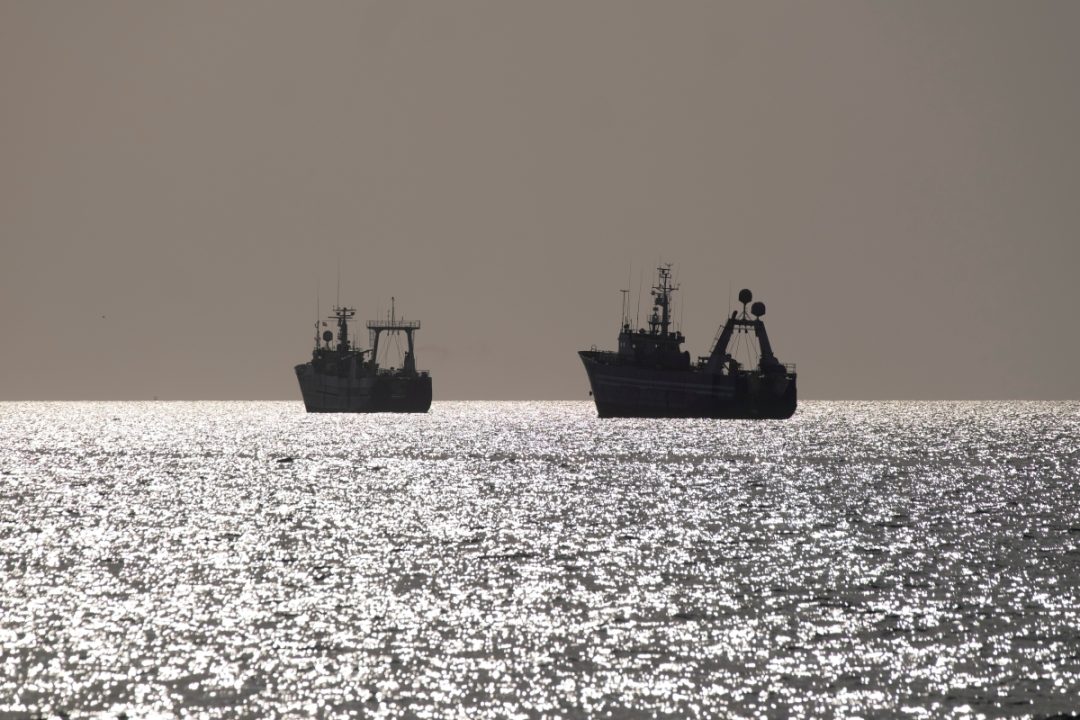
The U.S. Central Command said the strike retaliated against Iran’s drone attack on a commercial vessel transiting the Strait of Hormuz.
The attacks are ongoing, The Associated Press reported, citing an anonymous official.
On June 17, Iran and the United States signed a memorandum of understanding that supposedly curtailed hostilities for 60 days.
The fighting might well hinder or even stop traffic through the Strait of Hormuz, which could send oil prices past $100 a barrel again and pressure the Trump administration to release more oil from the already-depleted Strategic Petroleum Reserve.
As well, Oman informed European countries today that they might have to pay fees for ships passing through the strait.
The Latest Fighting
“U.S. aircraft struck Iranian missile and drone storage locations and coastal radar sites after Iran hit M/V Ever Lovely on June 25 with a one-way attack drone,” CENTCOM announced today:
The Singapore-flagged cargo ship was exiting the Strait of Hormuz along the Omani coast at the time of Iran’s attack.
The unwarranted aggression against commercial shipping by Iranian forces clearly violated the ceasefire. Furthermore, Iran’s dangerous behavior undermined freedom of navigation as commerce increasingly flows through the vital international trade corridor.
As well, AP reported, the strikes are “still ongoing, even as U.S. Central Command released a statement confirming the action, a U.S. official with knowledge of the situation” said.
Earlier today, Trump announced on Truth Social that Iran had broken the fragile MOU by firing not one but four drones.
“The Islamic Republic of Iran shot at least four One Way Attack Drones at Ships transversing [sic] the Strait of Hormuz,” he wrote:
One of the Drones solidly hit the upper deck of a large and very expensive Cargo Carrying Ship. Damage was done, but the Ship was able to proceed on its way. We knocked down three other Drones. Obviously, this is a foolish violation of our Ceasefire Agreement.
In the Oval Office, a reporter asked Trump whether Iran would face consequences for the drone attack.
“You’ll find out,” Trump said.
Asked whether the ceasefire is still in place, Trump said he doesn’t “like the fact that they took a shot yesterday — actually four, we knocked down three — at a ship, not an allied ship, but a ship, a very expensive ship.”
“They shouldn’t be doing that,” Trump added.
MOU Terms
The terms of the Memorandum of Understanding are clear.
The two sides “declare the immediate and permanent termination of military operations on all fronts, including in Lebanon, and undertake from now on not to initiate any war or any military operation against each other, and to refrain from the threat or use of force against each other, and ensur[e] the territorial integrity and sovereignty of Lebanon,” the first point of the 14-point MOU says.
The two countries agreed to respect their “sovereignty and territorial integrity” and not meddle in “each other’s internal affairs.” They agreed to negotiate a final deal within 60 days, a deadline that can be extended if both sides agree.
“The final deal will confirm the permanent termination of the war on all fronts, including in Lebanon,” Point 1 says.
Unclear is why Iran fired the drones at the ship, knowing with near certainty that U.S. forces would strike back.
The Strait, Oil Prices, Possible Fees
If the fighting in the region continues and traffic through the Strait of Hormuz is impeded or stopped, oil prices will almost certainly soar again.
As of today, they are still between $66 and $74 per barrel. During the fighting before the United States and Iran signed the MOU, the price of benchmark Brent crude jumped to $120 per barrel.
Should that happen again, the Trump administration might reopen the spigots at the Strategic Petroleum Reserve (SPR) to stifle a spike in oil prices.
As The New American reported on Wednesday, releases by the Biden and Trump administration have taken more than 300 million barrels of the SPR’s 726 million barrel peak in 2011.
“As of June 22, it’s at 331.2 million barrels, less than half its capacity, CBS News reported:
“Congress and President Trump in his first term agreed to sell it down starting in 2017 to use the additional funding to balance the budget,” said [petroleum analyst Patrick] De Haan.
From 2017 to 2023, Congress helped authorize 10 sales from the SPR. About 140 million barrels were sold during that span. It started rising again in late 2023 until the Iran War started this year.
Oil supplies were the reason Trump said he had no choice but to sign the MOU.
“If we keep bombing, those ships won’t be going — and you’re talking about $500, $600, $700 million a day,” Trump said:
That’s a lot of money, a lot of money.… Also, we run out of reserves in about four weeks. You know there are reserves all over the world and we would really run out. And there would be a time when you wouldn’t be able to get it. And you wanna see bedlam?
In another development, Oman told European officials their countries might pay fees to get ships through the strait.
“Omani officials stated they will comply with international maritime law but indicated potential fees for services such as de-pollution efforts in the strait or navigation assistance,” sources told Bloomberg News, Investing.com reported:
The sultanate is studying systems used at other global shipping chokepoints, including the Malacca strait in Asia, where no mandatory shipping charges exist, the people said.
The US, Europe and Oman’s Gulf Arab neighbors are growing concerned that Oman may establish a tolling or fee system with Iran for the Strait of Hormuz.