
Trump, Iran President Sign MOU; Trump Says He Had No Choice
U.S. President Donald Trump and Iranian President Masoud Pezeshkian signed a 14-point memorandum of understanding that ended the war in Persian Gulf for 60 days until final details of a peace deal are negotiated.
Trump signed the pact at the Palace of Versailles in France, while Pezeshkian signed electronically from his office. The signing had been scheduled for Friday in Switzerland.
The pact immediately opened the Strait of Hormuz and ended the U.S. naval blockade there. And Trump had confessed at the close of the G7 confabulation in France that he didn’t have a choice because U.S. oil reserves were running out.
14-point MOU
The first point in the memorandum of understanding (MOU) says the two sides “declare the immediate and permanent termination of military operations on all fronts, including in Lebanon, and undertake from now on not to initiate any war or any military operation against each other, and to refrain from the threat or use of force against each other, and ensur[e] the territorial integrity and sovereignty of Lebanon.”
The two countries agreed to respect their “sovereignty and territorial integrity” and not meddle in “each other’s internal affairs.” They agreed to negotiate a final deal within 60 days, a deadline that can be extended if both sides agree.
“The final deal will confirm the permanent termination of the war on all fronts, including in Lebanon,” Point 1 says.
“The signing of this agreement at the highest level of the respective governments demonstrates the commitment of both sides to a diplomatic resolution of the conflict,” Pakistan’s Prime Minister Shehbaz Sharif wrote on X:
[The] MoU shall enter into force with immediate effect and as a first step, [the] Islamic Republic of Iran will instantly reopen the Strait of Hormuz and the United States of America will immediately lift the naval blockade. …
May this Memorandum of Understanding serve as an enduring foundation for greater understanding, mutual respect and shared prosperity for the complete region.
French President Emmanuel Macron posted video of the ceremony. “This agreement paves the way for lasting peace and allows the reopening of the Strait of Hormuz,” he wrote on X:
It is an important step in the right direction for our compatriots that will soon enable a decrease in energy prices.
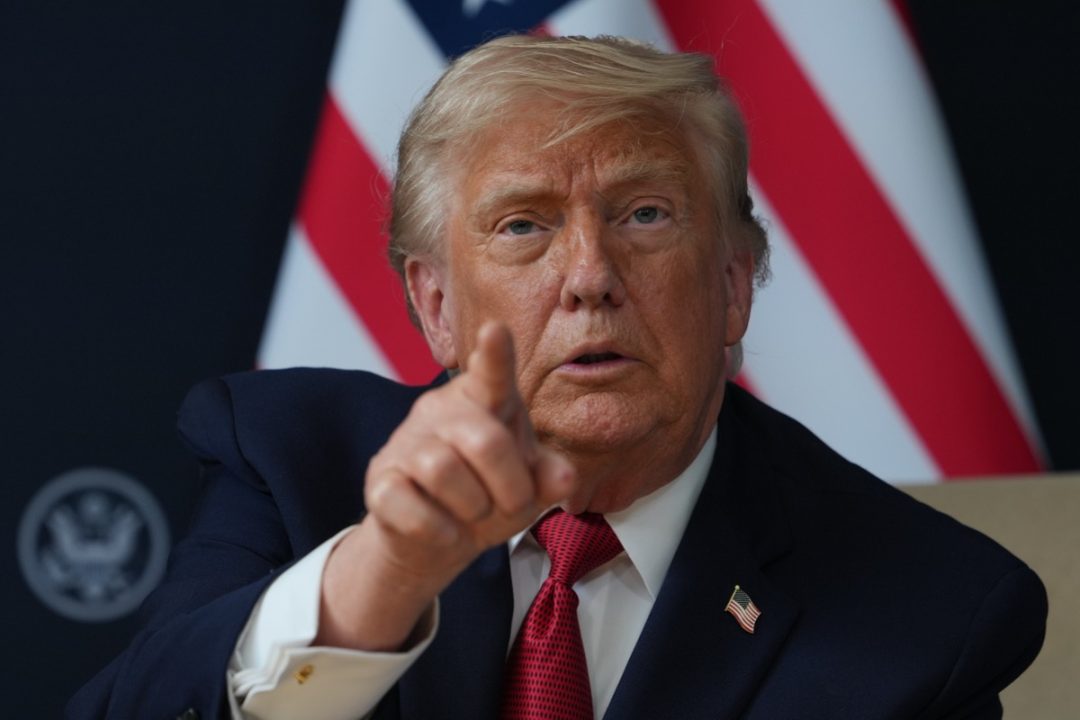
Writing on Truth Social, Trump said that “the United States is committed to PEACE, and we encourage everyone in the Middle East Region to maintain their commitment to allowing our negotiations to beautifully unfold.”
“The Markets are loving what is happening with Oil Prices way down, and Stocks way up. We expect a complete Ceasefire on all fronts, including Lebanon, Hezbollah, and Israel,” Trump wrote.
No $300 Billion for Iran
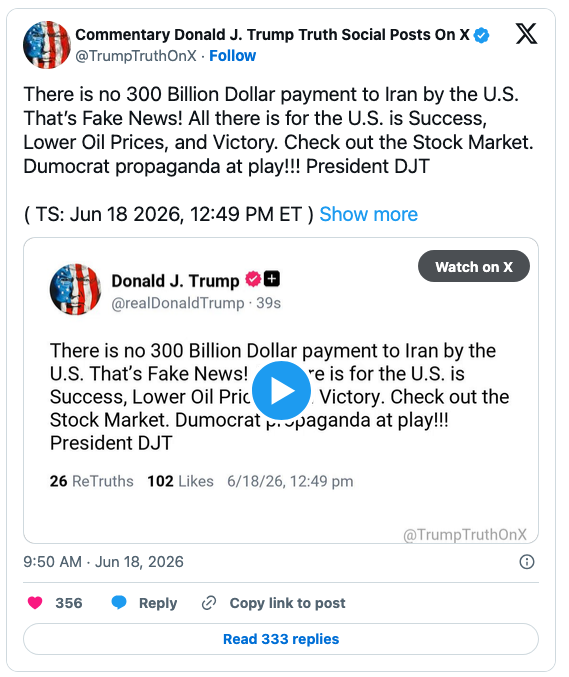
Trump also noted that the United States will not pay Iran $300 billion. The MOU creates a $300 billion private investment fund.
Iran’s Supreme Leader, Mojtaba Khamenei, sees the agreement differently, The New York Times reported.
He “said that President Trump had made the deal with Iran ‘out of desperation’ and warned that Iran would not submit to ‘excessive demands’ from the United States in the second round of talks,” the newspaper reported:
Quoted by state media, Khamenei said that “the in-person negotiations that will take place in the future do not mean accepting the enemy’s view.” Trump has threatened Iran with more attacks if it does not meet U.S. demands on dismantling its nuclear program. Iran still has some leverage in negotiations, given the economic impact of the conflict and its unpopularity among American voters.
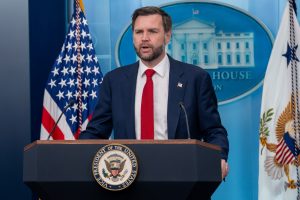
The second round of talks, led by Vice President J.D Vance, are to begin this weekend.
Israeli Sabotage
MOU regardless, the war in Lebanon won’t likely end.
Even before the memorandum was signed, Israeli officials, including Prime Minister Benjamin Netanyahu, said Israel would not leave southern Lebanon, which it hopes to annex up to the Litani River as part of its Greater Israel Project. Nor will it abandon any other of its “security zones,” Israeli code for territory it considers permanently part of Israel.
“I want to make clear: We will remain in the security zones as long as required in order to defend our country,” he told Israelis in a televised address on Monday.
Netanyahu’s top ministers said the same thing.
In other words, Israel has told its benefactor it will do what it pleases, when it pleases.
Trump Admits U.S. Surrender
Speaking at the close of the G7 meeting in France before he inked the MOU, Trump explained why he was forced to sign it. He had no choice. The U.S. had lost:
If I went out and continued to bomb them … just bomb the hell out of them, I’d get bad press on that. No, there’s nothing I can do. But what this does, is it allows the ships to go. If we keep bombing, those ships won’t be going — and you’re talking about $500, $600, $700 million a day. That’s a lot of money, a lot of money. … Also, we run out of reserves in about four weeks. You know there are reserves all over the world and we would really run out. And there would be a time when you wouldn’t be able to get it. And you wanna see bedlam?
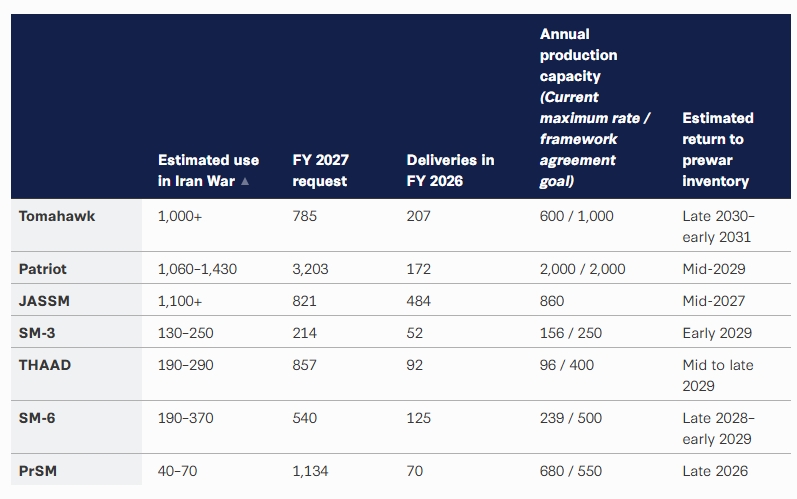
Thus, the war ends without achieving a key goal for Israelis: regime change. As well, Trump spent $113.3 billion and depleted the U.S. military’s inventory of crucial weapons.
In May, the Center for Strategic and International Studies reported that Defense Secretary Pete Hegseth was right when he testified that rebuilding the U.S. munitions inventory will require “months and years.”
Examples:
- Land Attack Missile (TLAM), Terminal High Altitude Area Defense (THAAD), and Patriot — heavily used in this war — will take three or more years from today to return to prewar inventory levels.
- Standard Missiles (SM-3 and SM-6) will take around two years. These naval missiles were not used as heavily.
- Joint Air-to-Surface Standoff Missile (JASSM) and Precision Strike Missile (PrSM) will take several months to a year to replace. The prewar PrSM inventory was low because the system had just begun production. JASSM, though heavily used, will see large deliveries from recent procurements.