Switzerland Narrowly Rejects “No 10 Million” Immigration Proposal
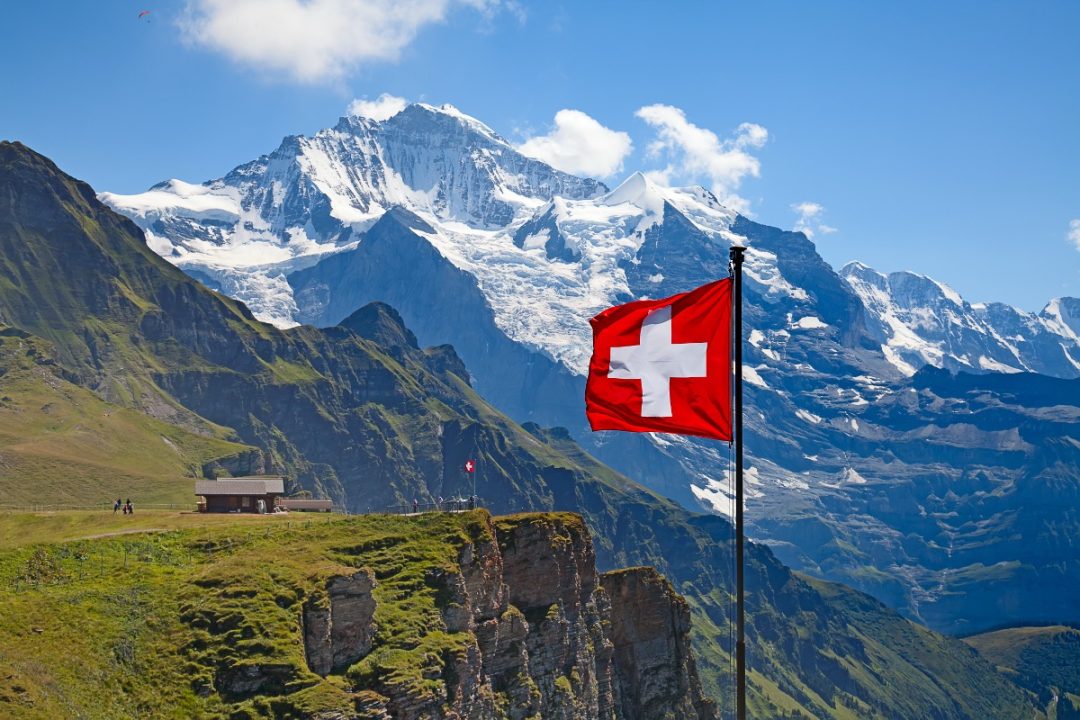
In a referendum with major implications for Switzerland’s sovereignty and relationship with the European Union, Swiss voters on Sunday rejected a proposal to cap their country’s population at 10 million by restricting immigration. Despite the proposal’s defeat, however, the relatively narrow vote margin demonstrates growing public opposition to mass migration.
The proposal, titled “No 10-million Switzerland,” was rejected with 54.79 percent of the popular vote. As a constitutional amendment, it also needed a majority of cantons (the Swiss equivalent to states in the United States) voting in favor. Only 10 cantons (including half-cantons) supported it, while 13 voted against it. Nearly 59 percent of voters turned out, an unusually high proportion for nationwide referendums.
The Proposal
“No 10-million Switzerland,” a popular initiative spearheaded by the conservative Swiss People’s Party (SVP), would have required the Swiss federal government to restrict immigration in order to prevent Switzerland’s population from surpassing 10 million before 2050. Specifically, the measure stipulated that if the country’s population surpassed 9.5 million, the government would have had to restrict asylum and family reunification and renegotiate international agreements that promote mass migration. If the population exceeded 10 million, Switzerland would have been required to withdraw from the UN’s Global Compact for Migration and its agreement with the European Union allowing for the free movement of people.
Switzerland’s parliament and Federal Council (executive branch) had urged voters to reject the proposal, arguing that it would force the government to withdraw Switzerland from multiple international agreements, particularly with the European Union — preferring subservience to globalism over reasserting national sovereignty.
Government and Parties React
The Swiss federal government praised the proposal’s rejection. Federal Councilor Beat Jans, who leads the Department of Justice and Police, and thus manages Switzerland’s immigration policy, stated in a news conference that “the electorate has sent a signal for stability and reliability,” and claimed that voters wanted to “continue the bilateral path with the EU.”
SVP president Marcel Dettling, however, declared that “Switzerland has nothing to celebrate today” from the referendum results, and noted how rural areas largely supported the proposal, but were overpowered by the left-leaning cities.
The left-wing Social Democratic and Green parties celebrated the results, with Green Party parliamentary group leader Greta Gysin declaring that “Switzerland is not an island.” Both parties claimed that the results signaled momentum for further integrating Switzerland into the European Union, particularly via the pending — but uncertain — ratification of a new series of agreements to “harmonize” Swiss laws with the EU.
Centrist and moderately conservative parties, which had all opposed the proposal, also celebrated its rejection, but offered lip service toward addressing mass migration or its effects in some manner. Dettling responded by noting that those parties had achieved “nothing, absolutely nothing,” toward addressing mass migration.
EU officials praised the results. President of the European Commission Ursula von der Leyen said in a statement that the EU and Switzerland “will continue working together to modernise and deepen our cooperation.” David McAllister, who chairs the European Parliament Foreign Affairs Committee, said the results showed that “Switzerland remains committed to its ties with Europe.”
With high voter turnout and record campaign spending — CHF15.52 million, or $19.75 million, as of May 15 — the referendum was viewed by both sides as particularly consequential, and was compared to the 2016 Brexit referendum in the United Kingdom.
Strong Down-ballot Results
Although the “No 10-million Switzerland” proposal failed, the SVP — the party behind the initiative — performed strongly in multiple cantonal and other down-ballot elections.
In the canton of Graubünden, the SVP gained 10 seats in the cantonal parliament, becoming the largest party, and won a seat in the canton’s executive council for the first time in 18 years. In the canton of Glarus, the party gained six seats in the cantonal parliament, winning 40 percent of the total seats — an impressive feat in a multiparty system.
Meanwhile, in the canton of Basel-Landschaft, SVP candidate Matthias Liechti won election to an open seat in the executive council, restoring the party’s representation for the first time in three years.
The SVP also got its way on a second nationwide referendum. A proposal to restrict Swiss conscripts’ ability to switch from military to civilian service passed with 52.46 percent of the popular vote.
The party’s strong down-ballot results demonstrate that, despite the “No 10-million Switzerland” proposal’s failure, immigration remains an important issue in Switzerland. Swiss political analyst Urs Bieri, in an interview with Swissinfo, noted, “Today’s vote should not be interpreted as the public not seeing [immigration] as a problem. The problem will persist and will need to be discussed.” The SVP is expected to highlight mass migration heading into the 2027 Swiss federal elections.
Dangers of Mass Migration and Direct Democracy
In the last 30 years, Switzerland’s population has increased from seven million to more than nine million — five times faster than the EU’s population growth — fueled almost entirely through migration. Foreigners currently comprise more than a quarter of Switzerland’s population. This influx has had significant negative impacts on the country, leading to the SVP’s proposal.
In recent decades, Switzerland has ceded large parts of its sovereignty to the European Union despite not being a member, and the EU continues to pressure the country into becoming a mere satellite state. The country is already a member of the EU’s open-borders Schengen Area and allows the “free movement” of EU citizens into the country.
Mass migration inherently threatens national independence. By importing significant numbers of people with no allegiance or cultural affinity, a country loses its unique identity, cultural cohesion, and patriotism. This erodes citizens’ desire to maintain an independent nation-state, and advances the globalist goal of merging that country into a regional or one-world government. To stop and reverse the advance of big-government globalism, it is essential that countries put an end to mass migration.
Switzerland’s system of direct democracy allows citizens and groups to force referendums on constitutional and statutory matters if they gather a certain number of signatures. As The New American has previously reported, this system is antithetical to a republican form of government, which the U.S. Founding Fathers advocated.
The United States is experiencing similar — and intensifying — attacks on its system of government, including via mass migration and appeals to “democracy.” Rather than allowing America to go the way of Europe, Americans must boldly defend their country’s founding principles and inform others of those principles. If we do so, we can restore our country as the U.S. Founding Fathers envisioned it.