EU Doles Out $106 Billion to Ukraine to Keep War Going
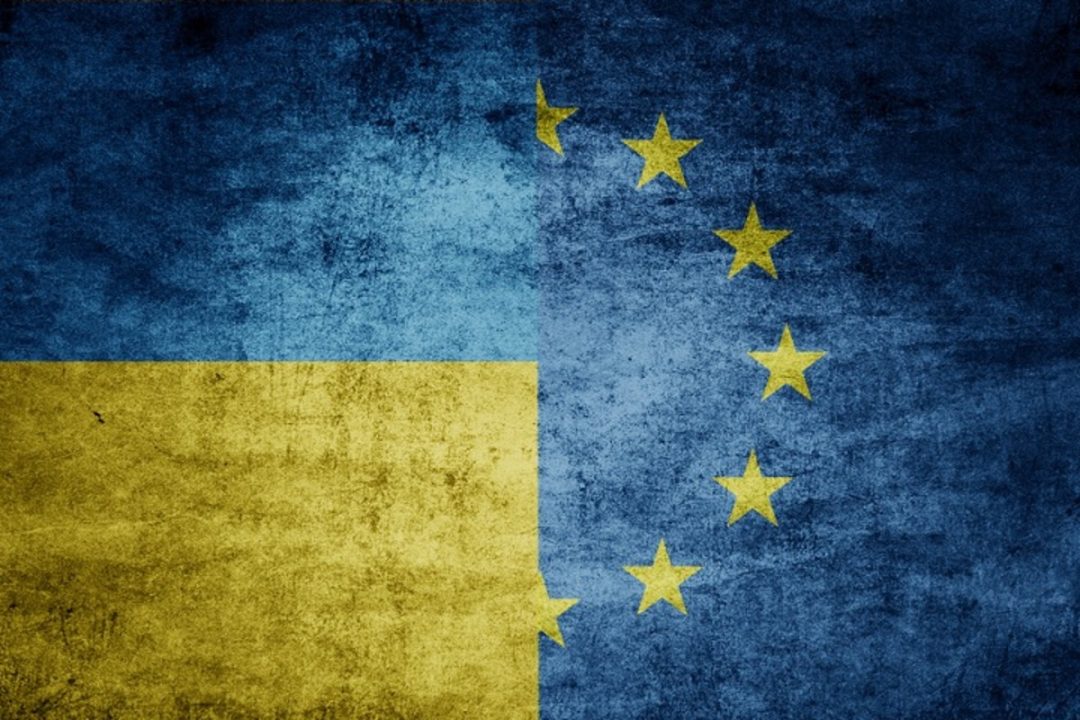
While most Western media are focused on the Middle East, the war in Ukraine continues with no end in sight. The European Union just approved a 90-billion-euro loan package to Ukraine to keep its government afloat and its military armed.
The package, which equates to $106 billion, was approved Thursday. And it was approved because Hungary, an EU member, got new leaders. On April 12, Hungarians ousted Prime Minister Viktor Orbán and elected by a landslide Péter Magyar. Orbán had been blocking the loan because Ukraine damaged a Russian oil pipeline that landlocked Hungary desperately depends on. Magyar, however, made it clear before the election that under his leadership, Hungary would let the loan move forward.
As for the pipeline, Ukrainian President Volodymyr Zelensky announced just days before the loan went through that it had been repaired and oil was flowing once again to Hungary and Slovakia.
Funds for Weapons Production and Energy
Zelensky announced Sunday that the first thing Ukraine will put the money toward is weapons production. “The first tranche under the approved €90 billion European support loan will be directed toward domestic production for Ukraine’s defense,” he said. “This includes drones and the entire miltech sector.”
The second priority is energy. Zelensky’s comments suggest he doesn’t see the war ending this year:
By next winter, we must protect everything we can to the maximum extent possible. For this purpose, in addition to local budgets, a portion of the funds will be allocated from the central budget. Funding will be sourced, in particular, from these tranches under the €90 billion package. We expect to allocate several billion from it specifically to protect the energy sector. We discussed this during meetings with European leaders in Cyprus.
President of the European Commission Ursula von der Leyen was among the leading Eurocrats to celebrate the loan. “Today is a good day for Europe and Ukraine,” she said last week. “Last time I was with you in Kyiv, dear Volodymyr Zelensky, I said we would deliver the €90 bn loan — one way or the other. Today, we deliver on this promise.”
Europe Ramping Up Weapons Manufacturing
NATO Secretary-General Mark Rutte met with von der Leyen earlier this month to discuss ramping up European weapons manufacturing and continuing to funnel money and arms to Ukraine.
A lot of Europe has been on a weapons-production rampage. Poland nearly tripled military spending from 2022 to 2025. A slew of Scandinavian countries has forged a military coalition that includes joint exercises. And Germany, whose top leader has been among the most vocally bellicose toward Russia, has signed about 47,000 military contracts worth 111 billion euros since 2022.
Russia Ramping Up Threats
Russia isn’t likely to share Zelensky’s, von der Leyen’s, and Rutte’s enthusiasm for Ukraine’s new lifeline, as it sees this as a war with not just Ukraine, but Western Europe. It has repeatedly accused the Europeans, chiefly the Germans, of perpetuating the war.
Russian leaders have even made threats involving the use of nuclear weapons. A year ago, the country changed its policy on the use of nuclear weapons. Russian Security Council Secretary Sergey Shoigu said that Moscow maintains the right to use nuclear weapons “in the event of the West’s aggression,” as reported by Russian media. Moreover, he announced:
In November 2024, revisions were introduced to the Basic Principles of State Policy of the Russian Federation on Nuclear Deterrence, according to which Russia reserves the right to use nuclear arms in the event of aggression against it or the Republic of Belarus, including with the use of conventional weapons. In accordance with Russia’s National Security Strategy, in the event of foreign countries carrying out hostile actions representing a threat to Russia’s sovereignty and territorial integrity, our country considers it legitimate to take appropriate symmetric and asymmetric measures necessary to thwart such actions and prevent them from repeating.
Roadblocks to Peace
The war in Ukraine is going into its fifth year, despite numerous efforts by U.S. President Donald Trump to end it. The two main obstacles to an agreement have been the issues of territory and NATO, or NATO-like alliances. Russia wants to keep the eastern part of Ukraine it has gained control over. Zelensky and the hardliners in his country will not accept any territorial concessions. It appears they are willing to fight to the last Ukrainian before ceding any land.
Also, Ukraine has not explicitly agreed to drop its bid for NATO membership, although it did at one point appear ready to do so at the behest of German Chancellor Friedrich Merz. The Russians have been complaining about NATO’s encroaching eastward expansion for decades. For them, Ukraine was the last straw.
Middle East Also a Battle Between East and West
Most of the world has shifted its focus toward the war in the Middle East, which has also become a proxy battle between East and West. In Eastern Europe, the United States and European nations are funneling money, weapons, and intel to Ukraine. Russia, meanwhile, has received intel and war technology from Iran, China, and North Korea. In the Middle East, Russia is helping Iran with intelligence on U.S. and Israeli assets, and China is suspected of providing materials to help build Iranian missiles.
The Council on Foreign Relations noted how Russian (and probably Chinese) aid has helped Iran:
An Iranian attack on March 27 against Prince Sultan Air Base damaged several U.S. aircraft on the ground. A valuable E-3 Sentry AWACS command and control plane was destroyed on the tarmac. Other Iranian strikes have hit at least ten early warning radars used by the United States and countries in the Persian Gulf to defend against Iranian drone and missile strikes. The Iranian attacks have been so extensive that, according to the New York Times, “Many of the thirteen military bases in the region used by American troops are all but uninhabitable.” It is hard to see how Iran, which lacks satellites of its own, could have struck so many of these targets so accurately were it not for Russian, and possibly Chinese, assistance.
Still Hope for a Settlement?
Over the weekend, scheduled talks between Iran and the United States fell apart before a meeting ever happened. Tehran said talks with the Americans are worthless as long as Washington continues blockading Iranian ports and Israel keeps attacking Lebanon. Reports say Iran sent Washington, via Pakistan, a proposal “that focuses on opening the Strait of Hormuz and lifting the U.S. sea blockade on Iran as a way of ending the war and then tackling nuclear negotiations later.” Reports say Trump is holding a meeting Monday afternoon to discuss the proposal.
Meanwhile, on Monday, Iranian Foreign Minister Abbas Araghchi met with Russian leader Vladimir Putin. He told a Russian reporter that the U.S. is considering the Iranian proposal because it hasn’t achieved any of its goals.
If certain reports are accurate, Trump is indeed looking for an off-ramp. And judging by his willingness to extend ceasefires, there is probably truth to that. Some reports claiming sources within the White House say the president is frustrated with the war’s impact on U.S. gas prices and the global market as a whole.
So East and West are now at war on two fronts, in Eastern Europe and the Middle East. This makes for a combustible global environment that is likely heading toward one of two scenarios: a world war, or a multipolar world with several world powers choosing coexistence over mutually assured destruction.