

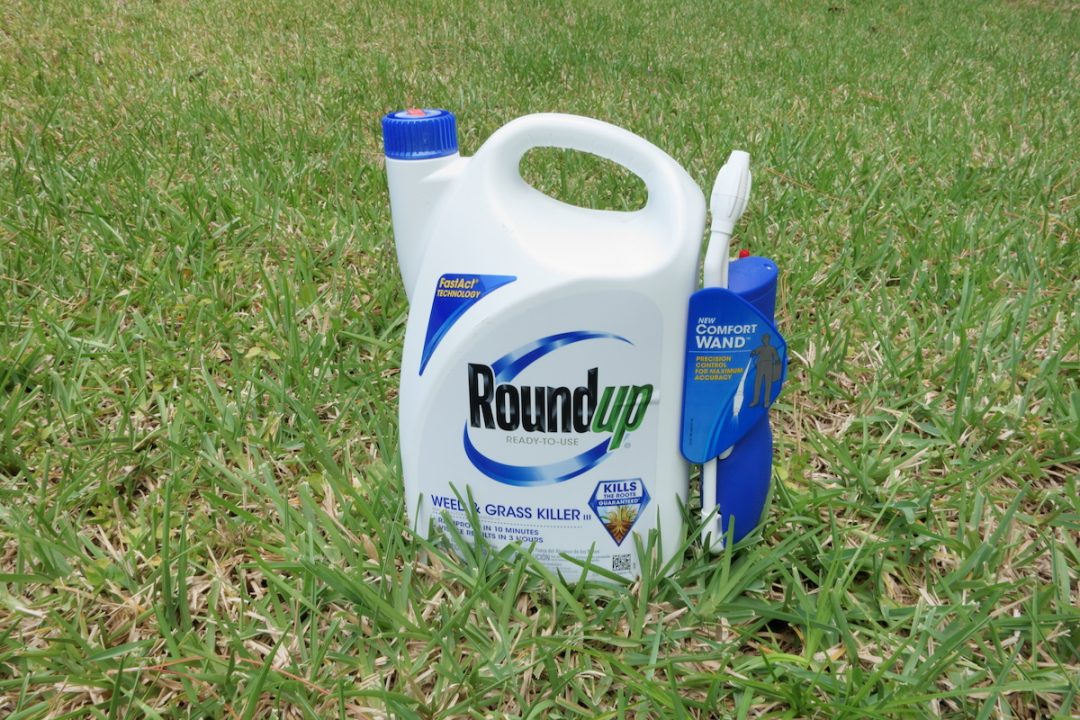
Supreme Court Hands Monsanto a Major Shield Against Roundup Cancer-warning Lawsuits
The Supreme Court has handed Monsanto one of the most consequential corporate liability victories of this term.
The ruling in Monsanto Company v. Durnell, issued on Thursday, does more than protect the maker of Roundup from one Missouri plaintiff. It narrows the courthouse door for thousands of Americans who claim the glyphosate-based weedkiller caused their cancer and should have carried a warning label.
It also exposes an uncomfortable political fact. In this case, President Donald Trump’s Department of Justice (DOJ) and the Environmental Protection Agency (EPA) stood on the same side as Monsanto and Bayer AG, Monsanto’s German parent company. They argued that because EPA had already approved Roundup’s label without a cancer warning, states could not use their own courts to require one.
For many in the Make America Healthy Again (MAHA) world, that was a betrayal.
Many raised the core question behind the case: If a notoriously captured federal agency of dubious constitutional standing approved a label, can that decision wipe out a state jury verdict?
The Supreme Court answered yes.
Roundup’s main active ingredient, glyphosate, has already been linked to cancer in multiple legal disputes and peer-reviewed studies. Juries have awarded billions in damages against Monsanto over Roundup-related claims, and about 65,000 lawsuits remain active. The Court’s ruling now puts many of those claims in jeopardy by turning EPA’s approval of a warning-free label into Monsanto’s strongest defense.
The Case
The case, Monsanto Company v. Durnell, began in 2019, when John Durnell, a Missouri man, sued Monsanto in state court, alleging that two decades of Roundup use caused his non-Hodgkin’s lymphoma. He argued that the product should have carried a cancer warning. A jury agreed on the failure-to-warn claim and awarded him $1.25 million.
Monsanto appealed. The company argued that federal pesticide law preempted Durnell’s claim.
The legal question turned on FIFRA, the Federal Insecticide, Fungicide, and Rodenticide Act. FIFRA gives EPA authority over pesticide registration and labeling. It also says states may not impose labeling or packaging requirements “in addition to or different from” federal requirements.
Monsanto’s argument was simple. EPA approved Roundup’s label without a cancer warning. A Missouri jury verdict based on the absence of that warning would force Monsanto to add language EPA did not require. That would create a state labeling requirement different from the federal one.
The Supreme Court accepted that argument in a 7-2 decision.
Justice Brett Kavanaugh wrote the majority opinion. Chief Justice John Roberts and Justices Clarence Thomas, Samuel Alito, Sonia Sotomayor, Elena Kagan, and Amy Coney Barrett joined him. Justice Ketanji Brown Jackson dissented, joined by Justice Neil Gorsuch.
The Majority’s Logic
The majority framed the case as a matter of federal uniformity.
Kavanaugh wrote,
The EPA has repeatedly evaluated glyphosate and repeatedly concluded that glyphosate is not likely to cause cancer.
Because of that conclusion,
EPA has not required labels on glyphosate-based pesticides like Roundup to include a cancer warning.
That mattered, in the majority’s view, because pesticide makers must use EPA-approved labels. They cannot freely change them when state law or a jury says they should.
The Court held that Durnell’s state law claim would require Monsanto to add a cancer warning to Roundup’s label. That requirement would be “in addition to” and “different from” what EPA required. Under FIFRA, the Court said, that is preempted.
This is the most important line of the ruling. The Court did not decide whether glyphosate causes cancer. It did not decide whether Roundup is safe. It decided who gets to decide what warning appears on the label.
The answer was the EPA.
The majority also rejected the argument that state lawsuits are needed when new evidence emerges.
Kavanaugh wrote that the EPA does not sit in an “information-free silo.” He said the agency has tools to track new safety developments, demand more data, require label changes, suspend registrations, or cancel products.
In theory, that sounds reassuring.
In practice, it asks Americans to trust the very agency whose judgment is at the center of the controversy (more on that later).
The Politics Behind the Shield
The ruling also had a sharp political edge.
The United States filed a brief supporting Monsanto’s position. The solicitor general also sought and received argument time at the Supreme Court. That put Trump’s DOJ and EPA on the side of Bayer and Monsanto against Durnell and other plaintiffs seeking state court remedies.
Representative Thomas Massie (R-Ky.), who attended the arguments, put the point bluntly after the ruling. Resharing the post claiming that “government agencies don’t protect citizens from large corporations, rather they protect large corporations from citizens,” he wrote,
This is correct. I attended the Supreme Court arguments. Trump DOJ argued alongside Bayer/Monsanto that because the EPA had already blessed glyphosate, no state government could require labels disclosing cancer risk. The EPA & DOJ in this instance was only there to protect Bayer.
Massie’s criticism landed because it cut across the usual partisan script.
This was not a case where liberals attacked deregulation and conservatives defended business. Gorsuch joined Jackson’s dissent. Thomas joined the majority, but wrote separately to warn about the power of federal agencies and the way broad regulatory schemes can favor large incumbent companies.
That concurrence made the ruling even stranger.
Thomas agreed that Monsanto won under current law. But he also warned that such delegations of federal power can create a “profitable alliance” between corporations and government. That sounds very close to the agency capture critique. Yet the outcome still favored the corporate defendant.
The political backdrop makes that tension harder to ignore. U.S. Right to Know reported in February that Bayer spent $9.19 million lobbying Congress and the executive branch in 2025, retained at least 13 outside lobbying firms, and registered 45 lobbyists. The group also traced extensive Bayer ties inside the Department of Agriculture (USDA) and the EPA, placing former industry lobbyists and legal allies in roles that shape pesticide approvals and chemical regulation. Not surprisingly, the administration had delivered “a string of victories to Bayer,” including DOJ’s support at the Supreme Court and EPA’s reapproval of dicamba, a Bayer herbicide twice blocked by federal courts.
Jackson’s Dissent
Jackson’s dissent cut straight at the majority’s premise. She said the Court had departed from the “near-unanimous view” of lower courts that had rejected Monsanto’s preemption argument and accepted a theory Congress never wrote into FIFRA.
Her point was simple. Durnell’s claim was not “in addition to or different from” federal law. It was “equivalent to FIFRA’s key labeling requirement,” the prohibition on misbranding. FIFRA itself requires adequate warnings. It does not turn EPA registration into corporate immunity.
That is where Jackson said the majority went wrong:
In accepting Monsanto’s argument and holding that Durnell’s failure-to-warn claim is preempted, the Court misunderstands FIFRA’s requirements, misinterprets the scope of FIFRA’s preemption, and ultimately leaves Durnell without a remedy for the significant harms he has suffered.
She was especially blunt about EPA approval. Registration under FIFRA is only “prima facie” evidence of compliance. It is not the final word:
This means that the EPA’s approval of a pesticide’s label cannot conclusively establish that the pesticide is not misbranded.
Then came the line that captured the whole dissent:
The majority reads into FIFRA a labeling requirement that does not exist, and it reads out of FIFRA the statute’s ongoing prohibition on misbranding.
In other words, Jackson did not merely accuse the majority of favoring Monsanto. She accused it of rewriting the statute in a way that converted agency approval into a liability shield.
The EPA Problem
Jackson’s dissent pointed to the legal problem. Critics of EPA point to the practical one.
The majority’s ruling rests on a major assumption: that EPA’s judgment on glyphosate is reliable enough to settle the warning question nationwide. But that is precisely what many health advocates dispute.
Children’s Health Defense (CHD), in an amicus brief, argued that EPA’s glyphosate record reflects not regulatory caution, but regulatory failure. For instance, the group pointed to the Food Quality Protection Act that requires EPA to apply an additional tenfold safety margin when assessing pesticide risks to infants and children, unless reliable data justify a lower standard.
That protection was not incidental. Congress recognized that children are more vulnerable to chemical exposures. Their bodies and brains are still developing. They also encounter pesticides through food, drinking water, lawns, parks, runoff, contaminated objects, and hand-to-mouth behavior.
According to CHD, EPA has refused to apply that 10X child-protective safety factor to glyphosate since 1998. Instead, the agency reduced the factor to 1X.
CHD argued that EPA relied on a small group of older animal studies, many industry-funded and unpublished. The group said those studies focused mainly on visible physical effects in rats and rabbits, while failing to adequately examine developmental neurotoxicity, endocrine disruption, immune effects, microbiome harms, cumulative exposure, and real-world glyphosate formulations that include other chemicals.
That critique cuts directly against the majority’s confidence in EPA. The Court said the agency has tools to track new science and update labels when needed. CHD’s answer is that having tools is not the same as using them.
In that view, EPA’s failure to find harm may reflect EPA’s failure to look hard enough. That is why state failure-to-warn lawsuits matter. They can force evidence into the open when federal regulators do not.
That being said, the entire problem of regulatory capture of the EPA would not be an issue if there simply were no EPA. The EPA is an unconstitutional federal agency, as the federal government is not given authority under the Constitution to regulate on environmental issues. Lawsuits over products causing potential harm to consumers should be left in state courts.
Related article:
Trump’s Order Elevates Glyphosate to National Defense Status, Sparks MAHA Revolt