Trump Calls Presidency “Sacred,” Says He Chose Not to Pursue Obama, Biden, and Clinton
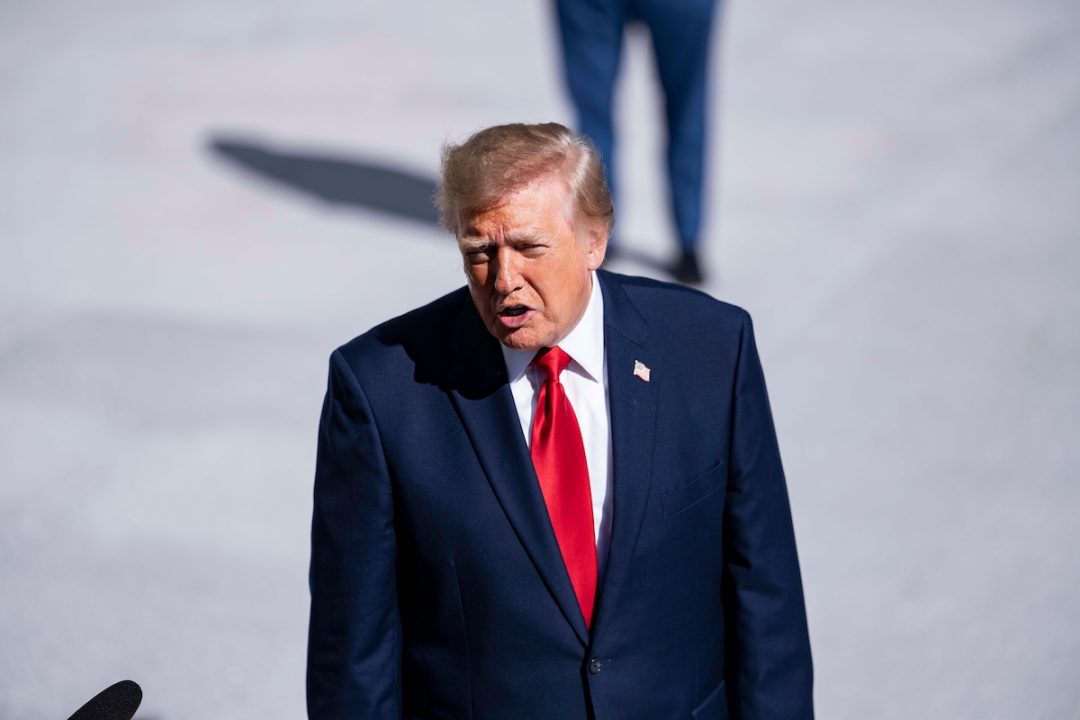
President Donald Trump said Wednesday that he chose not to pursue former Presidents Barack Obama and Joe Biden, or former Secretary of State Hillary Clinton, despite accusing them of serious wrongdoing. His explanation was that the presidency is a “sacred” institution deserving special respect.
For years, Trump and his allies accused Democratic leaders of treason, weaponizing federal law enforcement, enabling illegal immigration, imposing coercive Covid policies, pursuing disastrous wars, and covering up government misconduct. They also demanded accountability for abuses surrounding January 6 and answers about Jeffrey Epstein’s network.
For conservatives who expected Trump to “drain the swamp” and dismantle the Deep State, his remarks raised an uncomfortable question: If political leaders are protected by the offices they once occupied, what becomes of accountability?
And what comes next for Americans who believed Trump’s promises to restore limited government and the rule of law?
Trump’s Explanation
Trump made the remarks during a White House event announcing automatic enrollment in investment accounts for children.
Asked whether he feared another impeachment if Democrats regained Congress in November, Trump responded:
I could have done very bad things to Hillary Clinton. I could have done very, very bad things to Joe Biden. I could have done very bad things to Barack Hussein Obama. I thought it was inappropriate to do so, because you have to treat the office of the presidency with respect.
Despite having been impeached twice, Trump maintained that he had exercised restraint:
Even to this moment, I have — I can do whatever I want, if I want. They’ve done some very bad things.
He accused his opponents of illegal conduct, raising the obvious question: Why not investigate? According to Trump,
But I view the presidency as a very sacred position. It’s a very sacred position, very important, very sacred, a position where it has to be treated properly.
He added:
I’ve had my shot and still do at Biden, at Hillary Clinton and Barack Hussein Obama and I’ve had plenty of people say, let’s go get them. And I said, no, you can’t do that to the presidency.
Trump did not announce the termination of specific investigations or identify particular criminal allegations he had abandoned. Nevertheless, he invoked presidential prestige as a reason for withholding action.
Is It “Sacred”?
The Supreme Court appears to share at least part of Trump’s expansive view of presidential protections.
In its landmark July 2024 ruling, the Court granted former presidents absolute criminal immunity for actions within their exclusive constitutional authority and presumptive immunity for other official acts. Unofficial conduct remains prosecutable.
Justice Sonia Sotomayor warned in her dissent that the decision effectively placed “a king above the law.”
Yet America is supposed to be a constitutional republic, not a monarchy or theocracy. Government authority comes from the people, and public office is not a source of personal privilege or immunity from scrutiny.
The Court’s decision established legal protections for certain presidential acts. Trump now appears to go further, suggesting that the dignity of the office itself justifies declining to pursue investigations of former presidents and political opponents.
But judicially recognized immunity is not blanket protection from investigation, much less a license to disregard alleged wrongdoing. Criminal accountability must depend on evidence and due process, not presidential discretion over who deserves to be investigated and and who gets to walk free.
The Accusations
Hillary Clinton
Trump’s declaration contradicts years of accusations that helped define his political movement.
His 2016 campaign featured chants of “Lock her up,” directed at Clinton over her use of a private email server for classified information.
FBI Director James Comey called her conduct extremely careless but recommended against prosecution. Trump and his supporters maintained that she received preferential treatment.
Clinton also faced criticism over the 2012 Benghazi attack, which killed four Americans, including Ambassador Christopher Stevens. Her involvement in the Obama administration’s Libya intervention raised further questions about accountability for disastrous foreign-policy decisions.
Barack Obama
Trump repeatedly accused federal intelligence and law-enforcement agencies of being weaponized against his 2016 campaign through the Russia collusion investigation.
A 2019 Justice Department inspector general report documented serious FBI failures involving surveillance applications, although it found sufficient grounds to open the original investigation.
In July 2025, CIA Director John Ratcliffe reportedly referred Comey, former CIA Director John Brennan, and Clinton to the Justice Department for possible prosecution. Director of National Intelligence (DNI) Tulsi Gabbard also accused Obama and his national-security team of conspiring to undermine Trump’s first presidency.
Obama’s administration also faced criticism over drone strikes, military interventions, surveillance, and expanding executive power.
Joe Biden
Conservatives accused Biden’s administration of enabling invasion of illegal immigrants and exceeding executive authority.
They condemned Covid vaccine mandates and accused officials of pressuring technology companies to censor dissent about public health and elections.
Biden’s DOJ faced accusations of selectively enforcing federal law, weaponizing it against everyday parents, pro-lifers, Christians, and Trump himself.
The January 6 prosecutions intensified those concerns. Supporters of the defendants accumulated evidenced of selective prosecution and excessive sentencing.
Biden’s retention of classified documents brought another controversy. Special Counsel Robert Hur documented evidence of improper retention and disclosure but declined to recommend charges.
What About the Others?
Trump’s supporters expected accountability far beyond Obama, Biden, and Clinton. Their demands also targeted Dr. Anthony Fauci, Bill Gates, Pfizer CEO Albert Bourla, former NIH Director Francis Collins, former CDC Director Rochelle Walensky, and EcoHealth Alliance’s Peter Daszak over Covid wrongdoings. Others called for scrutiny of former Attorneys General Merrick Garland and Loretta Lynch, FBI officials James Comey, Andrew McCabe, and Peter Strzok, intelligence chiefs John Brennan and James Clapper, former Homeland Security Secretary Alejandro Mayorkas, and officials involved in the January 6 investigations.
None of these figures has been convicted of crimes related to the alleged abuses that Trump’s supporters wanted investigated. Some have faced inquiries, referrals, or criminal charges, but the sweeping reckoning promised to voters has not materialized.
The Epstein Files
Trump’s remarks also come amid continuing controversy over the Trump DOJ’s handling of the Jeffrey Epstein case.
What emerged from the Epstein affair goes far beyond any political scandal. It involves the sexual trafficking and abuse of minors and disturbing allegations of occult practices, cannibalism, and satanic rituals involving a man who maintained a network of global elites spanning politics, business, academia, and finance. The disclosures also point to foreign intelligence connections, reproductive exploitation and baby trafficking, genetic engineering, pandemic preparedness networks, and suspicious circumstances surrounding Epstein’s death, as investigative journalist James Corbett explored in his examination of the files.
After months of resisting the release of the Epstein files and dismissing the controversy as a “Democrat hoax,” Trump reversed course under overwhelming bipartisan pressure and signed the Epstein Files Transparency Act in November 2025. His DOJ subsequently released millions of pages, but delays, redactions, and initially withheld records generated bipartisan criticism. To this day, the DOJ battles to keep some of the Epstein documents from disclosure.
The Washington Savior Problem
Trump returned to Washington promising to dismantle entrenched bureaucratic power. Yet his administration continues to wield expansive executive authority, strengthen federal enforcement machinery, sustain enormous spending, and pursue military interventions, while advancing technocratic policies associated with the very globalist establishment he pledged to confront.
The broader pattern is hard to ignore: Washington continues accumulating power, while the political parties merely compete over who gets to wield it.
Trump’s latest remarks also expose the weakness of a movement built around one man’s promise to confront corruption. Accountability becomes a matter of personal discretion. When he decides the presidency is too “sacred” to investigate, the promised reckoning simply does not happen.
This problem extends well beyond Trump. For decades, Americans have placed their hopes in charismatic political leaders promising to fix Washington. Their public images were carefully cultivated, their messages crafted to resonate with voters, and their promises tailored to popular frustrations. Yet the underlying concentration of federal power has persisted through Republican and Democratic administrations alike.
That is why the alternative is not another Washington savior, but the restoration of constitutional limits and meaningful authority to states, counties, local institutions, and communities.
Ultimately, Americans must confront two uncomfortable questions. Why do they keep expecting those who control Washington to voluntarily surrender their power? And if they welcome government overreach whenever their preferred party is in charge, is it really the concentration of power they oppose, or simply who wields it?