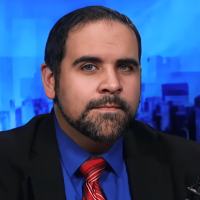


The Price of Congressional Independence
“I won’t be coming back,” Congressman Thomas Massie (R-Ky.) told his colleagues on the floor of the U.S. House of Representatives on November 19, 2026. “That’s why I tell you I’m working as hard as I can until the end — for me, that’s January 3rd at noon, and not a minute sooner.”
The constitutionalist Kentucky Republican lost his bid for another term in Congress six months earlier, in May. President Donald Trump endorsed his primary opponent, and millions of dollars was poured into the congressional race by outside political organizations. Massie’s primary defeat settled his prospects of returning for another term in the House, but it did not relieve him of his congressional duties. As Massie said, his term will not expire until noon on January 3, 2027, as stipulated in Section 1 of the 20th Amendment. And he intends to finish his term in full.
The issue on the House floor that day was the federal government’s disclosure of records pertaining to convicted sex offender Jeffrey Epstein. Massie, who worked alongside Congressman Ro Khanna (D-Calif.) to secure the passage of the Epstein Files Transparency Act the previous November, is again challenging his own party’s leadership over the release of government records.
The circumstances of Massie’s departure from Congress raise a question of considerably greater importance than the political fortunes of one Kentucky congressman: How much independence is a member of Congress permitted to exercise when his party controls the White House?
Upon assuming office, every member of Congress takes an oath, mandated by Article VI, Clause 3 of the Constitution and codified in 5 U.S.C. § 3331, to support and defend the Constitution of the United States. Nowhere in that oath is the congressman required or expected to support and defend the president of the United States. Nor does it contain an exception relieving him of his constitutional obligations whenever his political party happens to occupy the White House. This distinction is worth remembering, particularly when disagreements over government spending, foreign policy, or congressional oversight become grounds for a president to demand the political removal of a member of his own party. “Massie’s a loser. He shouldn’t be taking up the time of Congress, or the Senate or anything that he’s doing. The guy’s a stone-cold loser,” Trump said on November 9, 2026.
Massie’s predicament says a great deal about the political machinery operating in Washington. Americans send representatives to Congress to defend their interests, uphold the Constitution, and check the executive branch, regardless of party affiliation. The president and his party leaders, however, frequently expect something considerably simpler: obedience. Independent judgment is a noble quality in a campaign advertisement, but an inconvenient habit once the roll-call votes begin. When a member insists upon following the Constitution rather than the president or instructions of his party, the party can arrange — to put it mildly — for him to discover just how much political machinery is available for discouraging further acts of independence. Massie’s experience has already provided an unusually public demonstration.
Typically, the media prefers to present such contests as quarrels between personalities, rather than about principles. Was Massie insufficiently loyal to Trump? Was Trump merely defending his agenda? Trump won the 2024 election, so shouldn’t Massie have shut up and voted in support of his agenda? Who offended the other first? The cameras linger over the insults, the commentators examine the president’s latest Truth Social post or Massie’s tweets on X, and the audience is invited to pick a side and select a favorite. Meanwhile, a much more important question receives comparatively little attention: What happens to constitutional restraints when the officials elected to defend them are punished for getting in the way?
A Congress Independent of the President
To appreciate the constitutional significance of Massie’s primary defeat, one must first recall what the Founding Fathers designed in 1787. The Framers did not establish a parliamentary system in which the executive derives its position from the confidence of the legislature. They established three separate branches of government, each possessing its own constitutional powers. In Article I, Section 1 of the U.S. Constitution, they vested “All legislative Powers herein granted” in Congress. Under Article I, Section 8, Congress possesses the authority to levy taxes, regulate foreign commerce, and declare war. Section 9 stipulates that “No Money shall be drawn from the Treasury, but in Consequence of Appropriations made by Law.” Under Article II, Section 3, the president is authorized to recommend measures to Congress that he judges to be “necessary and expedient,” but he is not authorized to command lawmakers to pass them. Nor are lawmakers obligated to do so.
James Madison explained the logic of this arrangement in The Federalist, Nos. 48 and 51. Recognizing that “parchment barriers” alone would not prevent encroachments upon the authority of the respective branches, Madison argued that the interior structure of the government must be arranged so that its constituent parts keep each other in their proper places. “Ambition must be made to counteract ambition,” Madison wrote in The Federalist, No. 51. “The interest of the man must be connected with the constitutional rights of the place.”
Madison’s design depended in part upon giving officeholders both the constitutional means and personal motives to resist encroachments by the other branches. Members of the House of Representatives, elected directly by the people every two years, would have their own source of political authority. Modern national political parties, presidential primary endorsements, and multimillion-dollar super PACs were not part of Madison’s formula, and can certainly complicate things for constitutionalists seeking to follow Madisonian principles. A congressman who depends upon the favor of his party’s leader for reelection may find his personal political interests at odds with the constitutional prerogatives of Congress. The incentives for exercising independent judgment deserve scrutiny.
Donald Trump arrived promising to drain the swamp, confront globalism, restore America’s industrial base, reduce federal abuses, and avoid the foreign adventures of recent administrations. His withdrawal from the original Trans-Pacific Partnership in 2017 was a promising example of a departure from his predecessors’ policies.
The question confronting his supporters, however, was whether the powers concentrated in Washington were being dismantled or simply handed to a president they trusted. The Constitution contains no exception permitting unlimited government whenever the occupant of the White House has an agreeable campaign slogan.
The Price of Saying No
One of Massie’s most consequential disagreements with the administration concerned federal spending. Since first taking the oath of office in November 2012, Massie has established a consistent record of opposing unconstitutional expansions of federal authority. As of November 26, 2026, he had a 99-percent lifetime score on the Freedom Index, which takes 10 of the most important votes cast about every six months and scores how every member of Congress voted on those select votes, measured against a proper originalist, or strict constructionist, interpretation of the Constitution. Some of Massie’s legislative proposals during the 119th Congress include the Federal Reserve Transparency Act (H.R. 24) to audit the Federal Reserve, the Federal Reserve Board Abolition Act (H.R. 1846), H.R. 899 to terminate the Department of Education, the PRIME Act (H.R. 4700) to expand opportunities for intrastate meat processing, and the Not A Trusted Organization Act (H.R. 6508) to withdraw the United States from NATO.
In a video interview with The New American on February 7, 2025 (and printed in the March 24, 2025 issue of the magazine), he discussed the 16th Amendment (graduated income tax), the 17th Amendment (direct election of senators), and the Federal Reserve — three disastrous changes ratified and enacted in 1913. In that same interview, Massie anticipated a confrontation over spending. Discussing the Department of Government Efficiency (DOGE) and the unconstitutional programs it had identified at USAID, he explained that Congress would need to defund those programs and activities through legislation. “I would hope that, if the Uniparty packs that spending bill with the unsavory USAID programs, the president would veto it,” Massie said. “But we’ll see.” Within a few months, another disagreement over spending would put his relationship with the president to the test.
The One Big Beautiful Bill Act, signed into law by the president on July 4, 2025, increased the statutory debt limit by $5 trillion. The figure represented additional borrowing authority, rather than money instantly spent, but it enlarged Washington’s ability to finance its commitments on credit. Supporters praised the tax-cut provisions and other policies they favored. The borrowing capacity remained an enormous addition to the bill. Politicians had produced legislation so beautiful that asking how to pay for it was considered spoiling the view. Future taxpayers, unfortunately, would still be expected to finance the scenery.
Massie objected. He supported extending the 2017 tax cuts and opposed many of the programs inherited from earlier administrations, but refused to endorse an enormous package that increased spending while postponing supposed savings. In a May 21, 2025 interview with The New American, he explained why the bill’s attractive provisions did not excuse its overall fiscal direction. He also called for restoring congressional authority, abolishing unnecessary federal departments, and withdrawing from international arrangements that infringe upon American sovereignty and independence. Trump, who advertised limited government, had encountered a colleague willing to ask what the advertisements would cost. The encounter was evidently less pleasant than a campaign rally.
The administration argued that the reconciliation package would preserve tax cuts, fund border security, and implement other campaign commitments. Massie objected to the additional borrowing authority and what he regarded as insufficient immediate spending reductions. The disagreement concerned both the substance of the bill and the president’s ability to secure votes for his legislative agenda.
On May 20, 2025, Trump visited House Republicans to promote his spending bill. Speaking to reporters that day, he said of Massie, “He should be voted out of office.” Two days later, Massie and Representative Warren Davidson of Ohio were the only Republicans to vote against passage of the House version of the package (House Roll Call 145). Trump had already called for a primary challenge in March, when Massie opposed a government funding measure. A dispute over spending thus became a dispute over whether one congressman deserved to keep his job. That is how pressure from above works. It need not arrive as a mysterious instruction slipped under a closed door. Sometimes the instruction comes from the presidential podium.
Massie applied the same constitutional reasoning to the controversy surrounding fraudulent childcare assistance claims in Minnesota. In a subsequent interview with The New American in January 2026, he questioned Washington’s constitutional authority to finance childcare in the first place. “Everybody is concerned about the fraud in the program,” he said, “without considering that maybe the whole program is fraudulent in itself.”
Federal spending is hardly the only subject Massie differs with the administration. In that same interview, he characterized the American military intervention in Venezuela and capture of its head of state, Nicolás Maduro, as an “act of war” rather than an arrest, as the administration has framed it. Massie’s objections concerned the authority under which the operation was conducted and the precedent it established. “We’ve got social-media influencers — and even people in the administration — that are skipping all of the legal arguments and just saying that ‘might makes right,’” Massie said. The controversy raised a question extending well beyond Venezuela: What responsibility does a congressman have to scrutinize the exercise of military power by a president of his own party?
The Other 10 Percent
In the January 7 interview, summarized in a January 14 TNA article, Massie explained that he shared Trump’s desire to retain the Republican majority in the House. He questioned the wisdom of expending political capital and money attacking fellow Republicans when those resources could be used to defend the majority. “I hope we keep the majority,” Massie said. “He and I just have different ideas of how to go about that.”
Just four months before Kentucky’s May 19 congressional primary, he explained the larger significance of his primary fight. Could a Republican vote with his party most of the time and still exercise independent judgment on the remaining issues? “Are you allowed to vote differently than your party 10 percent of the time,” he asked, “or are they going to demand complete compliance?” He said other members were watching to see whether resistance was politically survivable. One donor had sent a contribution of $15 with the message, “This is for the nine percent.” The donor evidently understood something the party managers hoped other constituents would overlook: A representative who agrees with leadership on almost every issue is afforded precious little independent judgment to exercise.
During that January interview, Massie explained why other congressmen were watching his race. “I think there are at least 30 members of Congress who are watching my race and deciding whether they will ever step out of line again, or whether they will step out of line the first time,” he told me. “And that’s why it’s so important, in my opinion.”
Weeks earlier, on January 5, President Trump had taken to Truth Social to brand Massie a “weak and pathetic RINO.” Massie responded that he had voted with his party approximately 91 percent of the time. “I like to say the 9 percent of the time I’m not voting with the party, it’s because they’re starting a war, bankrupting the country, or covering up for pedophiles,” he said.
Massie also recalled conversations at Rotary Club meetings and county fairs in his district. Some voters, he said, told him, “I don’t agree with you all the time, maybe 80 percent of the time or 90 percent of the time, but I sure do appreciate that you are up there fighting for us.” The January interview documented his expectations before the primary. Unfortunately, the election result provided a different measure of voter sentiment.
As for the president’s relentless social-media barrages, Massie joked that Trump had developed “Massie Derangement Syndrome.” “One day he attacked me three times on social media and Canada three times on social media,” Massie recounted. “So at the end of the day, I pointed out that the President of the United States attacked me and Canada all day long, but the difference was Canada might eventually cave — and obviously I did not.”
Massie also rejected the charge that his opposition to foreign aid stemmed from hostility toward Israel or any other nation. “I don’t hate Israel,” Massie said. “Right now, I can’t even think of any country that I hate. I don’t vote for foreign aid for any country, and I don’t vote for wars.” He further explained, “In fact, if the president — whether it’s Joe Biden or Barack Obama or President Trump — engages in war without authorization from Congress, I’m opposed to that.”
Massie argued that the attacks were intended to deter his colleagues from dissenting. “I don’t think the president or his henchmen who put him up to this wake up in the morning and say, ‘We’re going to break Thomas Massie,’” he explained. “They don’t believe that. But what they do know is my colleagues are able to be bullied, and they are scared when I’m attacked.”
An Expensive Lesson in Party Loyalty
The contest in Kentucky’s 4th Congressional District primary attracted substantial outside funding on both sides. Trump backed Ed Gallrein in the race. According to the Federal Election Commission, MAGA KY (committee C00908723), a super PAC formed in June 2025, reported $7,984,000 in receipts and $7,484,113 in independent expenditures through July 15, 2026. An FEC-based compilation by PaidForPolitics identified approximately $6.2 million in expenditures opposing Massie and $1.3 million supporting Gallrein. Massie attracted outside support as well: The same compilation reported approximately $6.7 million in expenditures opposing Gallrein by Kentucky 4th PAC. Independent expenditures are not contributions to a candidate’s campaign, and their disclosure does not necessarily itself establish coordination with a campaign.
By November, Massie told the House, $32 million had been spent against him. That was his estimate; the figures from MAGA KY alone do not account for the overall total. In our January interview, Massie identified three wealthy financial backers of the initial advertising campaign against him, which began the previous summer. “They’re all three billionaires: John Paulson, Paul Singer, and Miriam Adelson,” Massie said.
The Lexington Herald-Leader reported that Singer had contributed $1 million to MAGA KY, Paulson $250,000, and a political committee associated with Adelson $750,000. Massie attributed their opposition, in part, to disagreements over foreign policy relative to Israel. “They’re afraid if one horse gets out of the barn, one Republican strays from the fold, then others may get out of the barn as well,” Massie explained. He also noted that Singer stood to profit handsomely from the administration’s intervention in Venezuela after purchasing CITGO, and that Paulson’s name had appeared in Jeffrey Epstein’s personal contact book — a fact Massie would later revisit on the House floor after additional files were released by the Department of Justice.
While outside super PACs bankrolled by out-of-state billionaires saturated Kentucky’s mailboxes and airwaves, Massie reported in January, his campaign was powered by more than 15,000 individual donors across all 50 states — and also Puerto Rico — with an average contribution of roughly $80, including more than 1,000 donors in Kentucky alone. “He will be a puppet for them if he wins by virtue of a super PAC with three billionaires in it,” Massie warned of Gallrein. “You think when they call him up and ask for a favor, he’s not going to do it?”
Ed Gallrein defeated Massie on May 19, receiving 57,822 votes (54.88 percent) to Massie’s 47,539 (45.12 percent), according to the certified results reported by Decision Desk HQ. Reuters reported that at least one former Massie supporter chose Gallrein because of Trump’s endorsement. Nevertheless, the message delivered to other officeholders required little interpretation: Straying from the president and leadership to vote on constitutional convictions will invite a well-financed operation to end one’s congressional career. The ballot box remained in the hands of the voters, but the pressure upon the choices presented was unmistakable.
Congress Versus the Executive
If party leaders hoped Massie’s primary defeat would quiet him for the remainder of the 119th Congress, they severely miscalculated and misjudged him. Nowhere was the institutional clash between congressional oversight and executive resistance more visible than in the battle over the Jeffrey Epstein files. Massie joined Representative Ro Khanna in pursuing the Epstein Files Transparency Act. Their legislation sought the release of specified federal records, with protections for victims and other information lawfully withheld. Getting the bill before the House was another matter. Congressional leaders control much of what reaches the floor, so Massie and Khanna used a discharge petition to force a vote over leadership’s resistance. They needed 218 members willing to sign. (A politician could announce his devotion to transparency at a press conference and then decline to place his name on the document that might actually produce it. Washington has long been blessed with an inexhaustible supply of speeches about accountability. Signatures, on the other hand, are harder to manufacture.)
In the face of intense pressure from the White House, which warned that signing the discharge petition would be viewed as a “hostile act,” only three other Republicans joined Massie in signing it: Representatives Marjorie Taylor Greene of Georgia, Lauren Boebert of Colorado, and Nancy Mace of South Carolina. House Speaker Mike Johnson (R-La.), meanwhile, refused to schedule the bill, criticized its drafting, and presided over a month-long recess that delayed the swearing-in of a newly elected member who had pledged to provide the 218th signature. The House Oversight Committee even floated what Massie later called a “placebo” resolution — plagiarizing entire paragraphs from Massie and Khanna’s own text — to give nervous Republicans something to vote for without actually requiring the Justice Department to act.
Then came a remarkable reversal. On November 18, 2025, the House passed the Epstein Files Transparency Act (House Roll Call 289) by 427 votes to one. The Senate approved it by unanimous consent, and Trump signed it the following day, enacting Public Law 119-38. After months of resistance, the final vote was almost unanimous. A stranger arriving in Washington for the signing might have imagined the legislation had encountered enthusiastic cooperation from its conception. (Congress has a talent for joining a parade after its leaders have exhausted their opportunities to cancel the route.) The overwhelming vote revealed something more important than a sudden improvement in everyone’s enthusiasm, though. Persistent organization had forced an issue that leadership could no longer comfortably evade.
Passing a law, however, proved to be only half the battle. In the months that followed, the Justice Department (DOJ) claimed it was working toward full disclosure. On January 30, 2026, it announced that it had published nearly 3.5 million responsive pages and maintained that it had fulfilled its production obligations. The DOJ also said its collection efforts had identified more than six million potentially responsive pages. However, Massie and his allies documented massive noncompliance: Roughly three million files remained withheld under assertions of “deliberative privilege,” internal prosecutorial memos were kept hidden, and the DOJ simultaneously over-redacted records for lawmakers while negligently exposing the personally identifiable information of several survivors.
In response, Representatives Massie, Khanna, and Teresa Leger Fernández (D-N.M.) advanced a second measure, the Epstein Files Transparency Act II (H.R. 9694), on July 15, 2026. Among its proposed remedies are additional means for survivors, state attorneys general, and members of Congress to seek judicial review over disputed withholding. The practical problem, however, is plain: If an executive department could decide for itself which records satisfy a disclosure law, the legislature might discover that passing a law and compelling obedience to it are two different enterprises. The Constitution places Congress in the legislative branch for a reason. Legislators who want an agency to follow their commands sometimes have to do more than issue another press release reminding it that they exist.
Once again, the sponsors have resorted to a discharge petition. On November 11, 2026, it reached 218 signatures, the number required to advance the measure toward floor consideration. Washington’s professionals are forever urging Republicans and Democrats to cooperate, but when Massie and Khanna did so without asking leadership’s permission, the enthusiasm for bipartisan cooperation was noticeably less impressive.
When Speaker Johnson dismissed the second discharge petition in an interview as a “political stunt” and accused Massie of “trying to get attention again,” Massie took to the House floor on November 19 on a point of personal privilege to dismantle the speaker’s claims line by line. He noted that Johnson had not even read the second bill, had voted for the exact language of the first bill he was now impugning, and had claimed to want transparency “in a way that protects the system.”
“Which system?” Massie asked the chamber. “The system of justice where billionaires for three decades can go to their own island, can go to their own ranch, rape women, traffic 14-year-old girls? Is that the system?”
Massie also pointed out a sobering tally: Of the six Republicans who had worked across the aisle on the two discharge petitions — himself, Greene, Boebert, Mace, Brian Fitzpatrick (Pa.), and Ralph Norman (S.C.) — not a single one was returning to the next Congress. “Did the elite get their way?” Massie asked. “Maybe so, but we haven’t had our last word yet.”
The Larger Question
On January 3, 2027, at precisely noon, Thomas Massie’s 14-year tenure in the House of Representatives will come to an end. There is a certain satisfaction in watching a departing representative remind his colleagues on November 19 that the voters had elected him to serve until his term expired, and that he intends to use every remaining hour to fulfill his oath.
Yet his departure also exposes the weakness of a political movement that invests all its hopes in a beloved officeholder — whether in the White House or in Congress. A constitutional Republic cannot survive on the heroism of one or two lone dissenters, nor can it be preserved by voters who demand constitutional fidelity only when the opposing party is in power.
When James Madison wrote in The Federalist, No. 51, that ambition must counteract ambition, he understood the importance of giving those entrusted with governmental power an incentive to resist encroachments upon their authority. The electorate also has a role in holding representatives accountable for their legislative actions. If voters will not defend the constitutional independence of their representatives, well-financed interests and party leaders will happily define the acceptable limits of that independence for them. The result is a legislature whose members are only free to exercise judgment so long as they reach the approved conclusion.