
Paul vs. Rubio Venezuela Debate Goes Viral
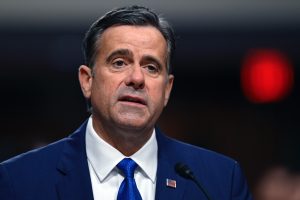
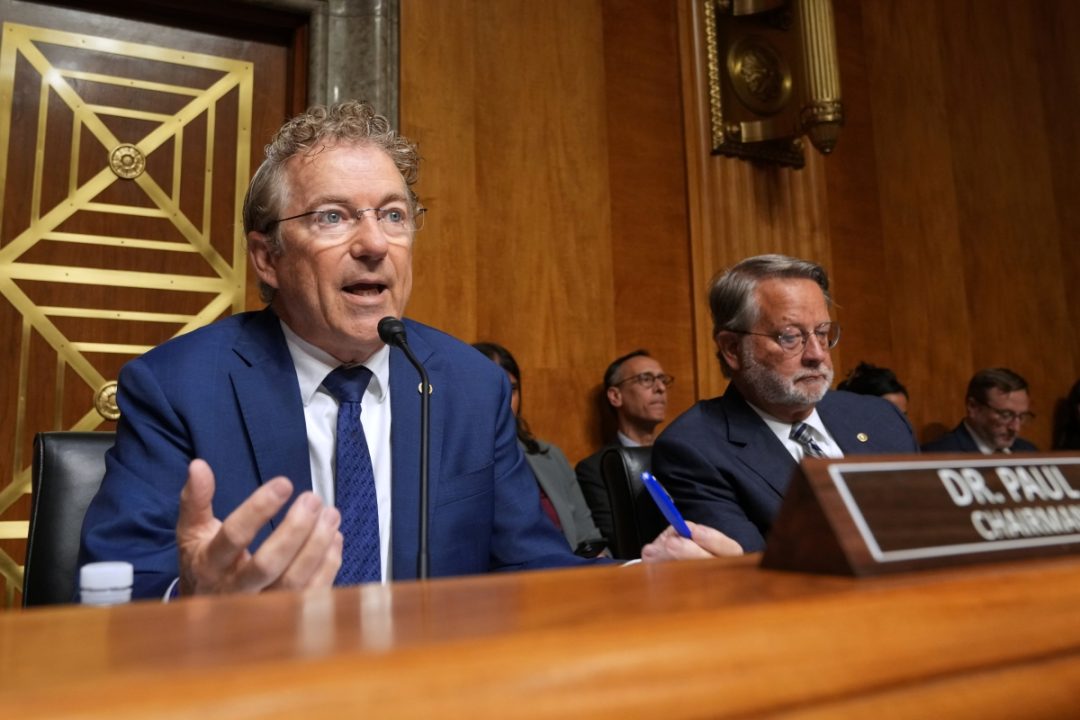
Six months into President Trump’s imprudent, unconstitutional war in Iran, video of an exchange between GOP Senator Rand Paul and Secretary of State Marco Rubio about the U.S. attack on Venezuela — during which U.S. forces “arrested” Venezuelan strongman Nicolas Maduro and his wife — is going viral.
In January, Kentucky’s Paul asked Rubio a straightforward question during his testimony before the Foreign Relations Committee. If a foreign country did to the United States what the United States did to Venezuela, wouldn’t that be an act of war?
Rubio: Yes, but what we did wasn’t an act of war.
Paul didn’t buy that answer. He cited the Constitution, and the apparent double standard used to justify the raid.
Yet his clear view and understanding of the Constitution went south in July when he voted to approve the 2027 National Defense Authorization Act. The act contains a strikingly dangerous section that would merge the U.S. and Israeli militaries.
That would mean Israel might assert unconstitutional control of American military policy and possibly control military operations.
Act of War or Not?
Rubio appeared before the committee on January 28, about three weeks after the January 3 raid in which U.S. forces attacked Venezuelan air defenses and captured Maduro for trial pursuant to an indictment for myriad crimes.
They included “narco-terrorism conspiracy, cocaine importation conspiracy, possession of machineguns and destructive devices, and conspiracy to possess machineguns and destructive devices against the United States.”
While the operation was a success, Paul and other skeptics had questions for Rubio.
Noting that the Founders “debated extensively, over which branch of government should have the power to declare or initiate war, virtually unanimously they decided what was entered into the Constitution was that the declaration or initiation of war would be the power of Congress.”
So, Paul continued, some war advocates argue that war isn’t really war and instead a drug bust or “kinetic action.”
“If you reverse the circumstances, it becomes very difficult for these arguments to hold up,” Paul observed:
So I would ask you, if a foreign country bombed our air defense missiles, captured and removed our president, and blockaded our country, would that be considered an act of war?
Rubio appreciated that Paul has been consistent on following the Constitution for his entire career no matter who sits in the White House. But “I will point out two things,” the secretary of state said:
The first is, it’s hard for us to concede that an operation that lasted about 41/2 hours and was a law enforcement operation to capture someone we don’t recognize as a head of state, indicted in the United States, wanted with a $50 million bounty …
Paul interrupted Rubio: “If it only took 4 hours to take our president, very short, nobody dies on the other side, nobody dies on our side, it’s perfect. Would it be an act of war?”
Rubio: “We just don’t believe that this operation comes anywhere close to the constitutional definition of a war.”
Paul:
But would it be an act of war if someone did it to us? Nobody dies, few casualties, they’re in and out. Boom, it’s a perfect military operation. Would that be an act of war? Of course, it would be an act of war. I’m probably the most anti-war person in the Senate and I would vote to declare war if someone invaded our country and took our president.”
But taking Rubio at his word, Paul continued, conceding for the sake of argument that the Venezuelan operation was a drug bust.
“What if a foreign country indicts our president for violating a foreign law?“ he asked. “Should we extradite our president, or should we be OK if they come in and get him by force?
Answering Paul, Rubio was Odysseus sailing between Scylla and Charybdis.
“Ultimately, we’re always going to act in our national interests,” he said:
And so if somebody comes after our national interest, like the case you’ve described, which obviously does not exist at this time.… The U.S. always has a right to act in its national interest and to protect itself. I don’t know about this equivalency [argument] does this justify them doing it. We’re always going to do what’s best for the United States of America. We’re always going to protect our system.
Paul:
You’re exactly right. We will act in our national interests and we should. So I’m not disagreeing with you at all. What I’m saying is though that our arguments are empty then. The drug bust isn’t really an argument. It’s a ruse. The war argument, not a war, is a war, is a ruse.…. We do what we do because we have the force, we have the might. We do it because it’s in our interest. So we wouldn’t let anybody come in, bomb us, blockade us, and take our president.”
Paul added that he does not support the International Criminal Court for the same reason. The United States would not let an “international council” indict and arrest the president, then whisk him off to foreign soil for a trial.
Paul’s Bad Vote
Despite that heroic performance a month before Trump began bombing Iran on behalf of Israel, Paul voted the wrong way on the 2027 NDAA that contained the U.S.-Israeli military merger. So did 50 other senators.
That crackpot plan is found in Section 1217, the “United States-Israel Framework for Upgraded Technologies, Unified Research, and Enhanced Security (FUTURES) Act of 2026.”
Despite Israel’s record of aggressive espionage against the United States, the section orders the U.S. defense secretary to join his Israeli counterpart to build the “United States-Israel Defense Technology Cooperation Initiative.”
That operation will “expand and accelerate bilateral defense technology research, development, testing, evaluation, coordination, and industrial cooperation by doing the following, the bill says:
(A) identifying jointly developed or Israeli-origin technologies with operational utility for integration into United States systems … ;
(B) conducting collaborative research initiatives involving government, private sector, and academic institutions in the United States and Israel …;
(C) facilitating the transition of technologies from research and development into procurement and acquisition pathways;
(D) establishing frameworks for joint ventures, licensing agreements, and United States-based co-production or manufacturing partnerships with Israeli industry;
(E) coordinating with relevant Department of Defense components … ; and
(F) promoting joint training exercises and information-sharing mechanisms to enhance operational readiness to deploy jointly developed technologies.
So the U.S. and Israeli militaries would virtually merge, which in turn jeopardizes U.S. military, technology, and intelligence secrets. Worse, the United States will be attached to Israel’s foreign and military policies.
The House NDAA contains a similar section, 219, formerly 224.
Both would give Israel unprecedented access to U.S. national security secrets.
As Ben Freeman of Responsible Statecraft explained of the House version, the measure “lays the groundwork for bilateral research and development, co-production of weapons, joint ventures, licensing agreements, and seemingly every manner of U.S.-Israeli military-industrial complex cooperation.”
“The U.S. and Israel already work together heavily on missile defense, but this provision would greatly expand coordination to seemingly every area of defense tech, including AI, quantum, autonomous systems, directed energy, cyber, biotech, and many more. It also proposes ‘network integration’ and ‘data fusion,’” he wrote:
In other words, the U.S. military’s data could soon be the Israeli military’s data.
As well, Freeman continued, the measure will “give the Israeli government the opportunity to greatly expand one of the most powerful levers of influence in U.S. politics: jobs in the U.S.”:
By expanding or starting new co-production facilities like it already has in Mississippi and Arkansas, the Israeli government could boast of providing jobs on U.S. soil, thereby securing allies among members of Congress who represent the districts where those jobs lie.
“The result could well be a U.S. political system even more susceptible to the whims of an Israeli government that seemingly has no qualms about drawing the U.S. into military conflicts in the Middle East” the analyst continued.
To his credit, Paul does not show up in Track AIPAC’s list of lawmakers subsidized by the Israel Lobby. As well, Paul enjoys a lifetime score of 96 percent on the The New American’s Freedom Index, which ranks representatives and senators based on their adherence to the U.S. Constitution. Since the 117th Congress, he has scored 100 percent.