FBI Signals Midterm Elections Involvement; Supreme Court Blocks Mail-in Ballot Rule
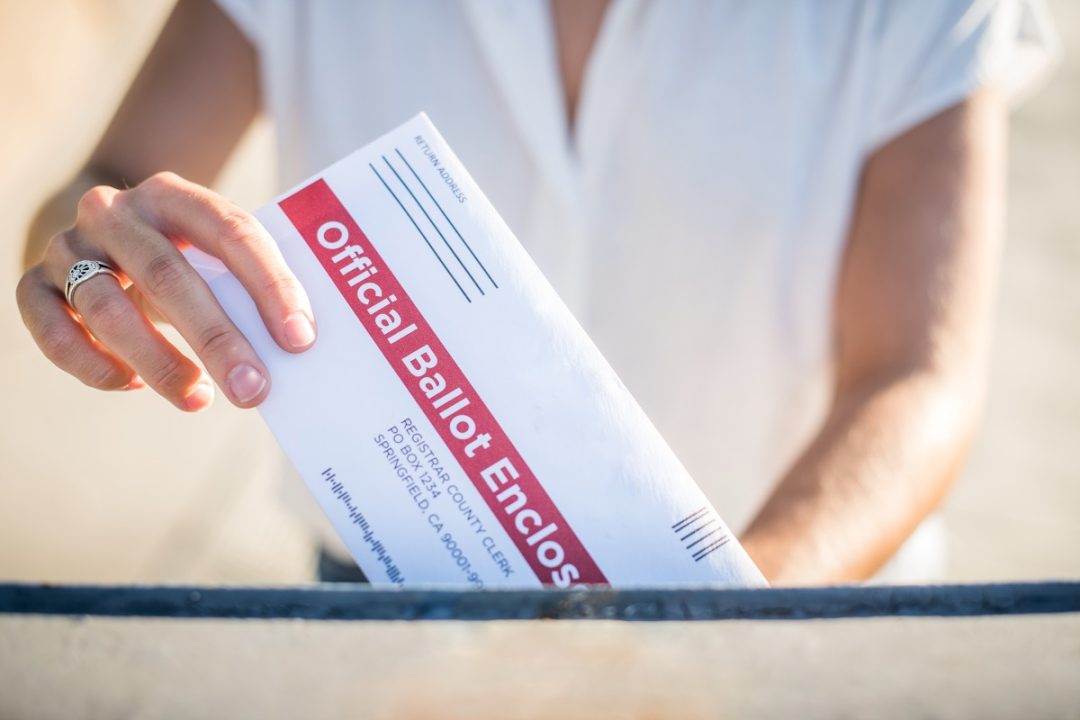
With the midterm elections less than two months away, it looks like election security will remain a concern. The Supreme Court rejected on Monday parts of a presidential executive order that would’ve added verification requirements for mail-in ballots. It also appears that the FBI intends to watch the polls.
While testifying before Congress on Tuesday, FBI Director Kash Patel told Senator Peter Welch (D-Vt.), “We have election crisis coordinators manned at all 56 field offices.” Earlier in that same exchange, Welch said to Patel, “I thought you weren’t going to be sending people to the polls.” The FBI chief responded, “When did you hear that? Just another lie.”
Supreme Court Rejects Executive Order
On the judicial front, SCOTUS decided to uphold a lower-court order that bars the U.S. Postal Service from implementing parts of an executive order that would’ve raised the bar for mail-in voting. Only two judges, Justices Samuel Alito and Clarence Thomas, dissented.
Justice Brett Kavanaugh, writing for the majority, said the rule may indeed be legal for the post office to implement, but it’s too late to apply it given that the elections are just weeks away.
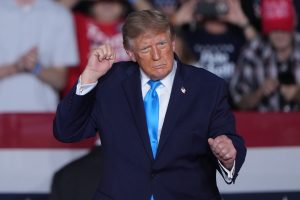
As expected, President Donald Trump lambasted the decision. He took particular issue with Kavanaugh’s logic, writing in a long social-media post:
Republicans just got another bad decision from the United States Supreme Court, one that the Court System took forever to give, and then blamed it, in part, on no time left to implement a solution to our totally CORRUPT and out of control Mail-In voting “disaster,” which is a laughing stock all over the World, and where we are the only country that has to endure such a Nation Destroying SCAM.
On March 31, Trump issued an executive order (EO) titled “Ensuring Citizenship Verification and Integrity in Federal Elections.” The order included new requirements for mail-in ballots, which Alito succinctly summarized this way:
The rule requires federal ballot mail to be sent in envelopes with three special features: an election-mail logo, the ability to be scanned using high-speed processing equipment, and a specialized barcode unique to each voter. States must design envelopes that adhere to these requirements and submit the designs to the Postal Service for review. Finally, States must upload basic information about the voter to a Postal Service portal. Under the rule, the Postal Service must review mail sent from States to voters for compliance with these requirements. Mailings that fail to comply “will not be accepted and will be returned to the” State, which can then resubmit the mail after correcting errors.
Multiple Lawsuits
Lawsuits followed. Lots of them. Twenty-four states sued over the order: Arizona, California, Colorado, Connecticut, Delaware, Hawaii, Illinois, Maine, Maryland, Massachusetts, Michigan, Minnesota, Nevada, New Jersey, New Mexico, New York, North Carolina, Oregon, Pennsylvania, Rhode Island, Vermont, Virginia, Washington, and Wisconsin.
A number of national Democratic committees sued as well. Also joining in were prominent New York Democrats, including Senate minority leader Chuck Schumer and House minority leader Hakeem Jeffries.
And a plethora of left-wing activist groups added onto the pile. They include the League of United Latin American Citizens; Secure Families Initiative; Arizona Students’ Association; National Association for the Advancement of Colored People; Common Cause; Common Cause Education Fund; Black Voters Matter Funds, Inc.; and BVM Capacity Building Institute, Inc.
The American Civil Liberties Union, as expected, got involved as well. The notoriously left-wing organization counseled the League of Women Voters of Massachusetts; League of Women Voters; Association of Americans Resident Overseas; U.S. Vote Foundation; OCA – Asian Pacific American Advocates; and Delta Sigma Theta Sorority, Inc., to file a lawsuit.
Lower Court Halts Parts of EO
On June 25, U.S. District Judge Indira Talwani, of Massachusetts, issued an order halting parts of the EO. A month later, SCOTUS paused her order, saying the states’ lawsuit arrived too early. The Court argued that since the order had not been implemented, the states hadn’t suffered any injuries. Three days later, Talwani, who was nominated by President Barack Obama, was back at it. She issued another order, this time one that barred the Trump administration from forcing states to comply with the parts of the EO that involved the post office. A few weeks later, she rattled off an injunction that barred states from complying with Trump’s executive order until the lawsuit concludes. U.S. Solicitor General D. John Sauer called the injunction “baseless.” He said, “the Postal Service’s final rule imposes only modest envelope-design and addressee-information requirements for federal-election ballots sent via U.S. Mail.”
Both Kavanaugh and Alito, although at odds in this latest order, agree that, ultimately, the government is likely to prevail in this case. But for now, while it winds its way through the long and arduous process of litigation, mail-in ballot rules, or the lack thereof, remain as is.
Legislative Involvement
The president is right to be concerned about election integrity. There is too much evidence to conclude anything other than that U.S. elections are vulnerable and mail-in ballots are abused. True the Vote, a conservative election-integrity activist group, claimed that 4.8 million mail-in ballots were trafficked in 2020. The group’s Gregg Phillips said they had “uncovered a ‘nationwide grift around voting’ in which not-for-profits orchestrated paid ballot collection, ballot preparation, and harvested ballot delivery operations.”
Although elections are primarily state issues, and they should remain so, there are circumstances that call for federal, specifically legislative, involvement. Federal election laws that interfere in elections should be annulled. Those include the National Voter Registration Act of 1993 (Motor Voter), the Help America Vote Act of 2002 (HAVA), the Uniformed and Overseas Citizens Absentee Voting Act (UOCAVA), and Section 611(c) of Title 18 of the U.S. Code regarding voting by aliens.
For more information on the constitutional application of elections, we encourage readers to visit The John Birch Society’s Restore Federal Election Integrity alert page.