
Birthright Citizenship Lives: Only Three Justices Side With Intended Meaning
Only three Supreme Court judges believe American citizenship should not be automatically granted to people just for being born here.
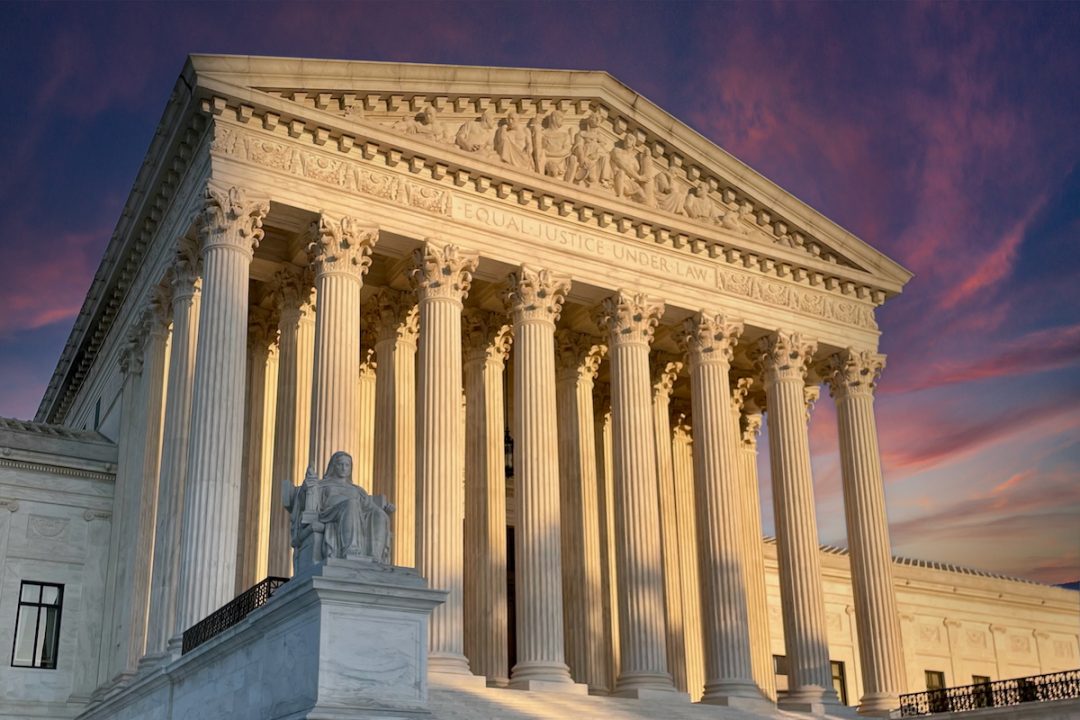
The Supreme Court on Tuesday upheld by a vote of 6-3 birthright citizenship, the version of the 14th Amendment that makes anyone who is born here, with diplomatic exceptions, an American citizen. This includes the children of illegal immigrants. Justices Clarence Thomas, Samuel Alito, and Neil Gorsuch dissented. Chief Justice John Roberts, despite his supposed conservative pedigree, has long been considered a swing vote on virtually every case. So it was no surprise that he sided with the leftists on the Court in this case.
This decision torpedoes President Donald Trump’s executive order that sought to end birthright citizenship. He signed that EO on his first day back in office, along with a slew of others. The EO was never implemented, as it was quickly challenged. This case was brought forward by the ACLU, which has a long history of anti-American litigation.
Not the End
On Tuesday, he said that as unfortunate as the decision is, it doesn’t have to be the end of the story. Trump said the decision was “too bad for our Country,” but suggested that Congress draft and pass legislation and that they “should start TODAY.” He specified that “No long and unwieldy Constitutional Amendment is necessary!”
Senator Rand Paul (R-Ky.) was also disappointed with the decision. He announced on his social media account that he’s already filed an amendment to “end birthright citizenship for those here illegally.”
The Trump administration argued before the Court “that children born to undocumented immigrants or temporary visitors were not fully ‘subject to the jurisdiction’ of the United States because their parents lacked permanent allegiance to the country.” Solicitor General D. John Sauer went to great lengths to drive home the point that allegiance is what matters when determining who gets to be a citizen. He said the Citizenship Clause “was adopted just after the Civil War to grant citizenship to the newly freed slaves and their children, whose allegiance to the United States had been established by generations of domicile here.” The clause “did not grant citizenship to the children of temporary visitors or illegal aliens, who have no such allegiance.”
Thomas’ Take
Justice Thomas agrees with this take. “Blacks were entitled to citizenship because they were Americans,” he wrote in the dissenting opinion. “They had no other homeland, owed no allegiance to any foreign power, and were subject to no other authority. They “fought and bled in the same battles,” “gained and gloried in the same victories,” and were “liable to be called upon to defend [America] in time of war” alongside every other citizen. But the same can’t be said for the children of foreigners. Thomas again:
Foreign temporary visitors were attached to their home country, lacked similar bonds to this country, and would not be called upon in time of war. Americans, consistent with their settler ethos, believed that citizens were the people who called a place home. Accordingly, domicile — a person’s legal home — played a key role in both state and national citizenship in America. A person was a “citizen” of the state where he had his “domicile.”… When foreigners temporarily visited, their “national character” was unchanged.
Alito Agrees
Justice Alito said the decision was a very big mistake. Alito:
This is one of the most important decisions in the history of the Court, and in my judgment, the Court has made a serious mistake. As interpreted by the Court today, the Fourteenth Amendment confers citizenship on virtually everyone who happens to be born in this country, including the children of “birth tourists,” women who come here solely for the purpose of giving birth to a child and then promptly return home. Careful analysis of the text of the Fourteenth Amendment and the process that led to its adoption shows that it does not degrade the concept of United States citizenship in this way. Instead, the Fourteenth Amendment confers citizenship on only those children who, at birth, owe allegiance solely to this country.
Roberts’ Ruling
Roberts, who wrote the opinion for the majority, justified the decision through the framework of English law and precedent. A legal commentary blog summarized:
Roberts’s opinion traced birthright citizenship through English common law, early American law, the Civil Rights Act of 1866, the Fourteenth Amendment and the Supreme Court’s 1898 decision in United States v. Wong Kim Ark. The Court said the common-law rule of citizenship by birthplace, known as jus soli, crossed the Atlantic and became part of American law. Under that rule, nearly everyone born within a sovereign’s territory owed allegiance to that sovereign and received protection in return, with narrow exceptions for children of foreign diplomats, enemy occupying forces, and certain tribal-sovereignty contexts.
Jackson’s “Justice”
Justice Ketanji Brown Jackson, in her concurring opinion, attacked Thomas for his dissenting opinion, specifically for apparently not being woke. “Despite his longstanding endorsement of a ‘colorblind’ Constitution, JUSTICE THOMAS now surprisingly suggests that the Citizenship Clause was a race-conscious remedial measure, relating only to ‘freed slaves such as Dred Scott’ and those who shared with them certain characteristics,” she writes. “But that narrow vision of the Fourteenth Amendment bears little relationship to the history of its ratification.”
Jackson then goes on for pages about the injustices and hardships that blacks faced even after emancipation. “Their humanity was disregarded,” she writes. “Serious doubts about their claims to citizenship were also being sown.” But blacks persisted, she said, refusing to accept a place on the lower rung of an American caste system, or to self-deport to African countries. She argues that “blacks already had a rightful claim to citizenship because they had been born on American soil.”
Earlier she said the Reconstruction phase was a reset, “not a mere spot treatment for the dark stain of slavery,” the point being that the 14th amendment applied to everyone born here, not just blacks, using the following metaphor: “The teacher who scolds a student for bullying a classmate hopes the student learns the broader lesson of treating everyone with kindness, not just that one kid.”
Original Intent
The author of the citizenship clause would likely disagree with Jackson’s take. “This amendment which I have offered is simply declaratory of what I regard as the law of the land already, that every person born within the limits of the United States, and subject to their jurisdiction, is by virtue of natural law and national law a citizen of the United States,” said Senator Jacob Howard of Michigan. “This will not, of course, include persons born in the United States who are foreigners, aliens, who belong to the families of ambassadors or foreign ministers accredited to the Government of the United States, but will include every other class of persons.”
The question now is whether Congress has the willpower and votes to remedy this longstanding misapplication. Legislation is also the remedy Justice Brett Kavanaugh proposed in his opinion. The difficulty will be in overcoming the will of the donor class, which, for both parties, is overwhelmingly pro-mass migration. That’s why it has persisted for so long. And if the donor class gets its will, the country will once again open its borders after Trump is gone.