
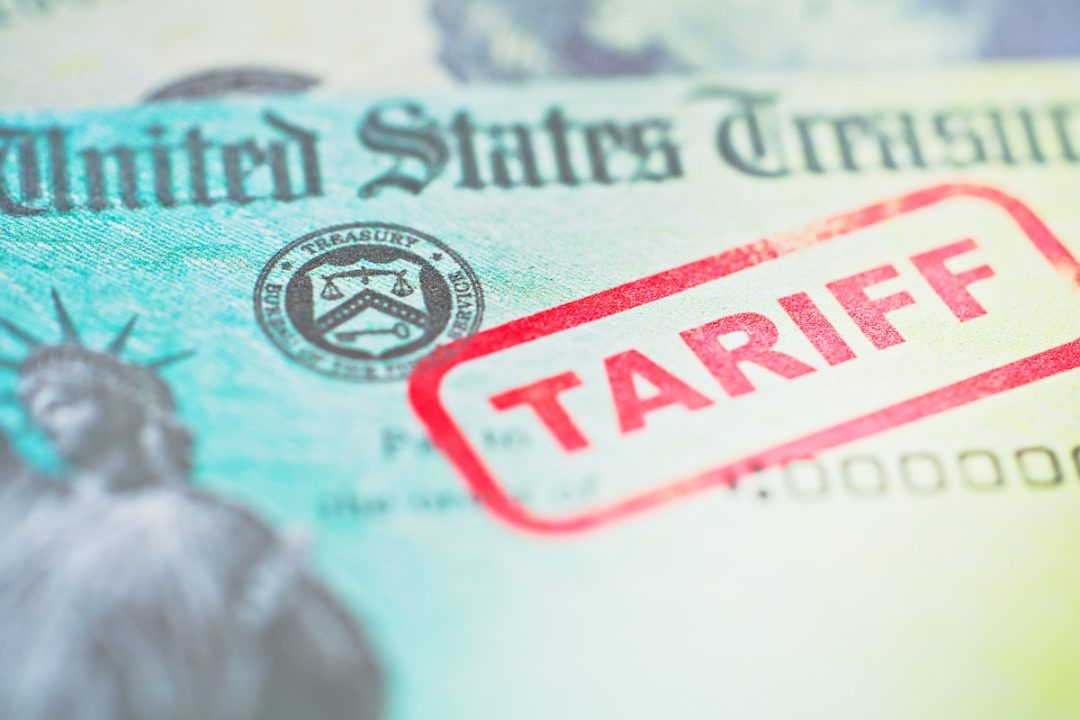
Trump’s Invalidated Tariffs Trigger $100 Billion in Corporate Refunds
“Tariffs have made us rich,” announced President Donald Trump on Wednesday. There is one problem with that boast. The Supreme Court struck down his signature “Liberation Day” tariffs as unlawful. The Treasury is now sending about $100 billion of that supposed wealth back.
And, despite the president’s assurances, much of the money did not come from foreign countries in the first place. American importers paid the tariffs, businesses passed much of the cost along through higher prices, and American consumers shouldered the burden.
Now the companies that paid the duties are getting their money back, often with interest.
Ordinary consumers get no refund. They are left with the higher prices. So who, exactly, did the tariffs make rich?
The Refunds
U.S. Customs and Border Protection (CBP) told the U.S. Court of International Trade this week that about $100 billion in the International Emergency Economic Powers Act (IEEPA) refunds, including interest, had been completed, certified, and sent to Treasury for disbursement.
The government collected about $166 billion under the tariffs later struck down by the Supreme Court. By July 31, CBP had accepted $128.68 billion in potential and certified refunds for processing.
CBP built a system called Consolidated Administration and Processing of Entries, or CAPE, to unwind the tariffs. Importers had submitted 252,496 declarations covering 25.1 million accepted entries by the end of July.
The reversal is already visible in federal accounts. Treasury issued $49.2 billion in tariff refunds in June while collecting $23.6 billion in gross customs duties. Tariffs therefore produced a net cash outflow of $25.6 billion for the month.
That is a sharp change from 2025, when the administration presented rising customs receipts as proof that the policy was working.
Americans Paid
Trump has often described tariffs as money extracted from foreign countries. In reality, tariffs are collected from the U.S. importer of record.
The importer can accept lower margins, pressure a foreign supplier to cut prices, or pass on the cost to customers.
The evidence shows that Americans absorbed most of the burden.
Economists at the Federal Reserve Bank of New York examined 2025 import data and found that nearly 90 percent of the economic burden fell on U.S. firms and consumers.
The Congressional Budget Office (CBO) reached a similar conclusion. It estimates that foreign exporters absorb only about 5 percent of tariff costs. U.S. businesses initially absorb about 30 percent through lower margins. The lion’s share — roughly 70 percent — passes directly to consumers through higher prices.
CBO also calculated that, once higher prices from competing domestic producers are included, consumers ultimately bear an outrageous 95 percent of the tariff cost that remains inside the United States.
Federal Reserve researchers, among others, confirmed the increase in actual prices. They estimate that tariff changes through November 2025 raised core goods prices by 3.1 percent through February 2026. The researchers said tariffs explained the entire increase in core goods inflation above its pre-pandemic trend during that period.
In plain terms, the tariff revenue did not arrive as foreign tribute. American businesses wrote the checks. American customers helped replenish them through higher prices.
The Refund Gap
That creates an obvious problem now.
Customs knows which company paid a tariff, but generally cannot identify which shopper later absorbed that cost through a higher price. Refunds therefore follow the customs records back to importers. Consumers are not eligible to seek direct tariff refunds from the government.
Nike shows how awkward that can become.
The company has said it paid about $1 billion in tariffs. Consumers suing Nike say it raised prices by $5 to $10 on some shoes and $2 to $10 on some apparel. Their proposed class action argues that Nike could recover the same tariff expense twice: first from customers, then from the government.
Similar consumer lawsuits have targeted Costco, Amazon, IKEA, FedEx, and Ray-Ban parent EssilorLuxottica. Reuters reported that the IKEA suit alone seeks relief for potentially hundreds of thousands of customers, and notes that consumers currently have no direct mechanism to recover tariff costs from the government.
Broad price relief is not guaranteed. Businesses told Reuters after the Supreme Court decision that they did not necessarily intend to reverse earlier price increases. Some said refunds would merely compensate them for losses already absorbed.
The Legal Defeat, Then New Tariffs
The Supreme Court set the refunds in motion on February 20. In Learning Resources v. Trump, the justices ruled 6 to 3 that the International Emergency Economic Powers Act does not authorize the president to impose tariffs. The Court did not itself order refunds or prescribe a repayment process. It sent the case back to the Court of International Trade, which later ordered Customs to return the unlawfully collected duties.
At the same time, the SCOTUS ruling did not eliminate every presidential tariff authority. Since Congress has delegated narrower powers under other trade laws, Trump quickly moved to them.
First, he imposed a temporary global tariff under Section 122 of the Trade Act of 1974. The Court of International Trade later ruled that the administration had not shown the “large and serious” balance-of-payments deficit required by Section 122. The administration appealed.
When those temporary tariffs expired, Trump turned to Section 301. His administration imposed new duties of 10 percent and 12.5 percent on imports from 60 trading partners, citing failures to combat forced labor.
Twenty-five states sued this week. They argue that the administration is again stretching a limited delegation of congressional authority into a sweeping global tariff power.
Who Got Rich?
Public disclosures put names on some of the checks. Nike has recovered nearly $986 million. Dollar Tree received about $110 million, while American Eagle Outfitters reported $108 million. Smaller refunds have gone to McCormick, BJ’s Wholesale Club, RH, and other companies.
And there are bigger winners. Moneywise reported:
Walmart’s refund could reach roughly $2.4 billion by CNBC’s calculation. Following Walmart’s lead is Apple, whose refund is roughly $2.2 billion, though the company disclosed only the effect on its margins. Ford’s filings show $1.3 billion. Nintendo hit $936 million, and Amazon named its own figure outright: $600 million.
Wall Street also saw an opportunity.
Cantor Fitzgerald, the firm Howard Lutnick led for nearly three decades before becoming Trump’s commerce secretary, explored buying importers’ rights to future tariff refunds at steep discounts. The firm is now run by Lutnick’s sons. WIRED reported that a Cantor representative offered 20 to 30 cents on the dollar for refund claims and said the firm could handle hundreds of millions of dollars in them.
Cantor says it explored such transactions but never completed one. The controversy prompted Representative Jamie Raskin (D-Md.) to demand records from Lutnick and the firm over possible tariff profiteering.
The market itself is real. American Eagle disclosed that it sold rights to $68.9 million in tariff refunds to an unidentified buyer for just $18.6 million.
The president may claim that the tariffs made America rich. Perhaps they did. But the Americans getting richer from them appear to be a very, very small group.