
Disaster Relief and the Constitution: Compassion Without Usurpation
Disaster relief is one of the most emotionally difficult areas of public policy, because real people suffer real loss. Yet compassion does not give government unlimited power. From President Grover Cleveland’s 1887 veto of the Texas Seed Bill to modern programs administered through the Federal Emergency Management Agency (FEMA), federal disaster relief has repeatedly stretched government beyond its proper, constitutional role. Recent state-level bills in Alaska, Iowa, North Carolina, and Tennessee show how federal and state disaster-recovery programs expand government expenditures, foster dependence, and weaken the principles of limited government, private charity, thrift, and local self-reliance.
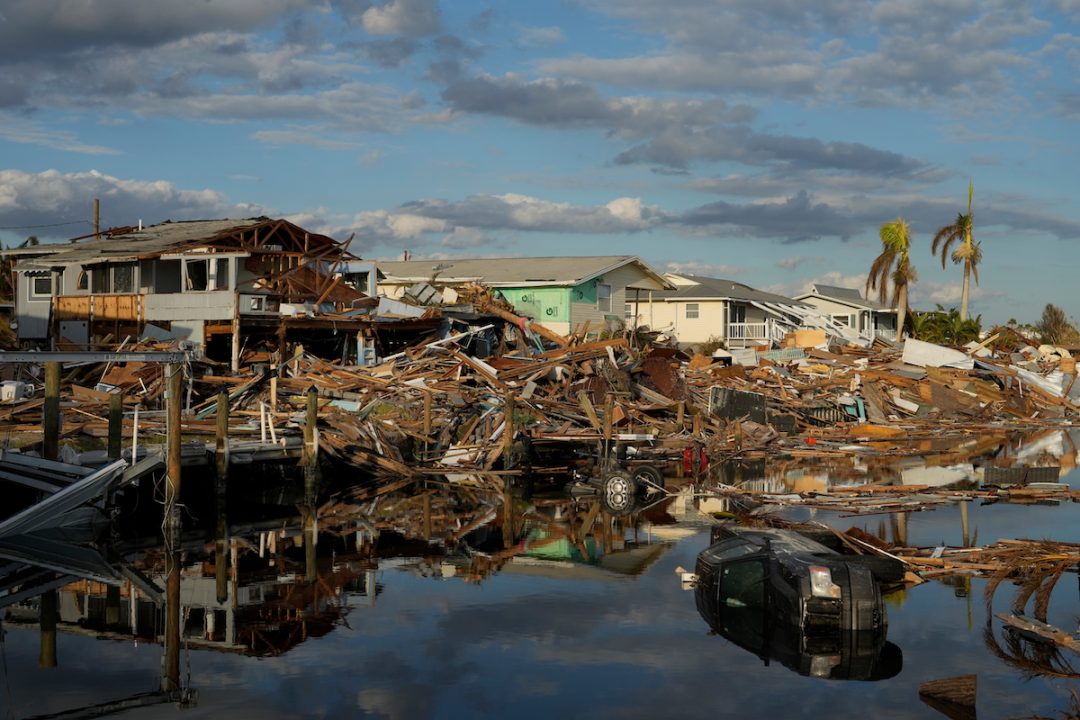
Natural disasters can devastate families, farms, businesses, and entire communities. Hurricanes, floods, fires, and droughts leave behind destroyed homes, damaged infrastructure, and serious financial hardship. Christians and constitutionalists should never minimize that suffering. Americans have a moral duty to help their neighbors in times of need. The parable of the Good Samaritan in Luke 10:36-37 demonstrates this precept, and Galatians 6:2 teaches us to bear one another’s burdens. Scripture directs us as individuals; it does not require compulsory government action in the name of charity.
There is a major difference between voluntary charity and government redistribution. Charity is an act of love. Government aid is funded by coercive taxation. When politicians use public money to relieve private suffering, they are not giving their own money — they are taking from one group of citizens and redistributing their wealth to another, often through a bureaucracy replete with added conditions, delays, waste, and political favoritism.
The U.S. Constitution created a federal government of limited and enumerated powers. It did not authorize Congress to become a national insurance company, emergency lender, rebuilding agency, or permanent source of relief for every local disaster. Churches, private charities, businesses, insurance companies, families, and neighbors are far better suited to respond to hardship without eroding liberty or creating dependency. These institutions should operate in a free-enterprise system, but the red tape created by government makes it harder for them to do their jobs.
Cleveland’s Constitutional Stand
President Grover Cleveland clearly understood this principle. In 1887, Congress passed the Texas Seed Bill, which would have appropriated federal money to purchase seed grain for farmers suffering from a severe drought in Texas. The cause was legitimate, and the suffering was real. Yet Cleveland vetoed the bill because the Constitution did not authorize such spending.
In his veto message, Cleveland wrote that he could find “no warrant for such an appropriation in the Constitution.” He also warned that “the Government should not support the people.” His point was not that suffering farmers should be ignored; it was that the federal government had no constitutional authority to use taxpayer money for that purpose.
Cleveland’s veto message also recognized that federal aid weakens the habits of private benevolence. When government assumes responsibility for every hardship, citizens become less likely to look to family, church, community, mutual-aid societies, private charity, and local action. Relief becomes centralized, politicized, and bureaucratic.
That same principle applies today. If Congress had no constitutional authority to appropriate $10,000 for drought-stricken Texas farmers in 1887, it has no constitutional authority to spend billions of dollars on disaster assistance today.
Madison and the Founders’ View
Cleveland’s position was not an isolated opinion. It reflected the older constitutional understanding held by many of the Founders. James Madison, the Father of the Constitution, objected to federal spending for charitable relief, stating in January 1794 that “charity is no part of the legislative duty of the government.” Madison did not oppose charity — he opposed federal usurpation. He made this comment during a debate in the House of Representatives on a proposal to provide relief to refugees from St. Domingo. Madison continued, exclaiming that “it would puzzle any gentleman to lay his finger on any part of the Constitution which would authorize the government to interpose in the relief of the St. Domingo sufferers.”
In 1817, Madison, by then serving as president, vetoed the Bonus Bill, which would have used federal funds for roads and canals. Madison supported the policy of internal improvements, and had earlier urged Congress to consider them, but he vetoed the bill on strict constitutional grounds. He found no enumerated power in Article I, Section 8 for Congress to fund or construct roads and canals, and he rejected broad readings of the Commerce Clause, Necessary and Proper Clause, or General Welfare Clause that would effectively give Congress unlimited legislative power. Although internal improvements were popular and arguably useful, Madison rejected the bill because he could not reconcile it with the Constitution. He understood that good intentions do not create federal power.
This is the central issue. The federal government may exercise only those powers delegated to it by the Constitution. The General Welfare Clause is not a blank check. If Congress can spend money on anything labeled helpful, compassionate, or economically useful, then the doctrine of enumerated powers is meaningless. Modern disaster relief rests largely on that false view of the Constitution.
The Rise of Federal Disaster Bureaucracy
Federal disaster aid did not become a massive system overnight. FEMA’s own website traces federal disaster relief as far back as 1803, after a devastating fire in Portsmouth, New Hampshire. For much of American history, federal relief was handled through scattered, ad hoc measures rather than a permanent national disaster bureaucracy.
Over time, however, the federal role expanded. Relief that once would have been handled by states, local communities, churches, businesses, and private organizations became increasingly centralized in Washington, D.C.
FEMA was officially established in 1979 under President Jimmy Carter through Executive Order 12127, which made Reorganization Plan No. 3 of 1978 effective. That reorganization created FEMA as an independent agency in the executive branch, and transferred various disaster-related functions into it. Later that year, Executive Order 12148 assigned FEMA broad federal emergency-management responsibilities, including civil defense, emergency planning, mitigation, and assistance functions. In 2003, FEMA became part of the Department of Homeland Security, further embedding disaster response within the modern federal security and emergency-management state.
Today, FEMA operates under the Robert T. Stafford Disaster Relief and Emergency Assistance Act, commonly known as the Stafford Act. The Stafford Act authorizes the president to issue emergency and major disaster declarations, which activate federal assistance to state, local, tribal, and territorial governments, as well as certain private nonprofit organizations and individuals.
That system may now be routine, but routine does not mean constitutional. The more disaster relief becomes centralized in Washington, D.C., the more Americans are conditioned to view the federal government as the first responder, lender, insurer, rebuilder, and provider of last resort. That is not federalism — it is government dependency.
State Bills Reflect the Same Problem
This problem is not limited to Congress. State governments also expand dependency when they build programs around federal disaster aid, create new grant funds, or distribute taxpayer money to selected groups and industries.
Tennessee’s SB6003 (2025) is one example. The bill created two new disaster-recovery funding sources following Hurricane Helene. The Hurricane Helene Interest Payment Fund provided up to $110 million to help local governments in federally declared disaster areas cover interest costs on recovery loans, with the state paying up to five-percent interest for up to three years. The Governor’s Response and Recovery Fund allocated $100 million for emergency relief through grants or loans for expenses such as agricultural aid, unemployment support, and business recovery. The Tennessee Senate passed SB6003 on January 29, 2025 by a 32-1 vote, and the House passed it unanimously that same day. Only Senator Mark Pody (R-Lebanon) voted against it.
SB6003 expands government beyond its proper role by using taxpayer money to subsidize disaster expenses. Although state governments possess broader powers than the federal government, they too are bound by the principle, enshrined in the Declaration of Independence, that governments exist “to secure [God-given] rights,” not provide welfare or take the place of voluntary charity or private insurance.
Alaska’s HB345 (2024) raises similar concerns. This bill created disaster-relief grants for Alaska unit owners to cover common disaster-related expenses, and set requirements for municipalities and regional housing authorities to apply for harbor-facility grants for construction, expansion, or repairs. Applicants must show a capital-improvement project, provide matching funds, have insurance, follow a maintenance plan, and ensure safety ladders are installed. The Alaska Senate passed HB345 on May 14, 2024 by a 19-1 vote, and the House passed it the following day by a 30-8 vote. The nays were right, since government should not issue taxpayer-funded grants. Such programs expand the size of government, pick winners and losers, and foster dependence on government assistance — often coming with strings attached.
Iowa’s HF2308 (2024) updated Iowa’s disaster response by allowing the governor to accept federal grants for expenses that local or state funds cannot cover. The state may contribute up to 25 percent for disaster aid and 10 percent for hazard mitigation, with the rest funded by applicants or federal support. Iowa can also request federal advances to be repaid later. HF2308 passed both the House and Senate unanimously, showing how deeply bipartisan the disaster-relief mentality has become. Yet constitutional principles do not depend on party consensus. By inviting federal assistance, Iowa is further tying itself to the federal government, eroding state sovereignty and discouraging voluntary charity.
North Carolina’s S743 (2024) allocated funds to support recovery efforts from Hurricane Helene, totaling more than $644 million in spending. Passing both chambers unanimously, the lack of opposition reveals the political difficulty of resisting government aid after a disaster. But the proper role of government is not to solve every problem in society, fund every recovery expense, or use disaster as a justification for expanding programs related to education, healthcare, business recovery, and public administration.
Federal Strings Attached
Supporters of federal disaster aid often argue that states should take the money because their taxpayers already paid into the system. That argument is understandable, but it reveals the deeper problem. The federal government first extracts wealth from the states, runs it through the federal government, and then returns portions of it through various forms of aid.
That process weakens state sovereignty. Federal aid often comes with federal rules, reporting requirements, eligibility standards, deadlines, audits, policy priorities, and bureaucratic control. States become dependent on the federal government’s approval, and local communities are forced to shape their recovery efforts around federal guidelines rather than local judgment.
The result is a steady erosion of federalism. Instead of sovereign states handling local disasters through their own resources and means, states become administrative partners in a national relief system. Governors request federal declarations, agencies seek federal reimbursements, local governments structure projects to qualify for federal grants, and businesses and individuals wait for government assistance. This is not how a free people should respond to hardship.
The Moral Hazard of Government Relief
Government disaster aid also creates a moral hazard. When individuals and businesses expect taxpayer funds to cover disaster losses, they have less incentive to plan responsibly, purchase adequate insurance, avoid risky development, maintain emergency savings, or build resilient local networks. If reckless government spending is tolerated, people will feel like they will not need to be financially responsible.
Private insurance, insurance co-ops, savings, voluntary associations, churches, and local charities encourage responsibility and accountability. Government aid often rewards political influence, poor planning, or risky behavior. It also forces taxpayers in one part of the country to subsidize decisions made elsewhere.
This does not mean Americans should abandon disaster victims. It means they should help them the right way. Voluntary charity is more personal, accountable, efficient, and consistent with liberty than federal redistribution.
Churches can minister directly to families. Local charities can identify real needs. Businesses can donate supplies. Neighbors can rebuild homes, clear debris, provide meals, and care for children. State and local governments can maintain roads, law enforcement, and emergency communications without becoming engines of redistribution. Government must stop taxing citizens and instead allow them to voluntarily use their money to help those in need.
A Constitutional Path Forward
A constitutional approach to disaster recovery would begin by restoring the proper limits of government. At the federal level, Congress should phase out unconstitutional disaster-relief programs, eliminate FEMA, and return responsibility to the states and civil society. Federal disaster policy should not be used to subsidize private losses, rebuild local infrastructure that belongs to states or municipalities, or distribute aid to favored industries and institutions.
At the state level, legislatures should reject programs that depend on federal grants, expand taxpayer-funded relief, or make citizens more dependent on government aid. States should instead reduce taxes, eliminate regulations, encourage private insurance, protect property rights, and remove barriers that prevent churches, charities, and businesses from responding quickly to disasters.
Citizens also have a duty. Families should prepare. Businesses should insure against risk. Churches should build mercy ministries. Communities should strengthen local networks before disaster strikes. A free society depends on people who take responsibility for themselves and their neighbors without waiting for the federal government to act.
Compassion Without Usurpation
The constitutional argument against federal disaster relief is not an argument against compassion — it is an argument against usurpation. The question is not whether disaster victims should be helped. They should be. The question is who should help, by what authority, and with whose money.
Grover Cleveland answered that question with clarity. The federal government has no constitutional warrant to spend taxpayer money on local suffering, however sympathetic the cause may be. Madison understood the same principle: Congress may not spend public money on objects merely because they are benevolent, useful, or popular.
The American system was built on limited government, federalism, private property, personal responsibility, and voluntary charity. Federal disaster relief undermines each of those principles. It expands bureaucracy, weakens state sovereignty, fosters dependency, and replaces neighborly love with government checks.
The path forward is not indifference to suffering — it is a return to constitutional government and Christian charity. Americans should help disaster victims generously, directly, and voluntarily, not through unconstitutional federal programs that turn compassion into coercion.
To restore liberty, citizens must hold both federal and state lawmakers accountable to our Republic’s founding principles. The Constitution does not disappear after a hurricane, flood, fire, or drought. In times of crisis, it becomes even more important.
To learn more about how your state and federal legislators vote on issues of constitutional importance, visit The New American’s Freedom Index and state Legislative Scorecards. You can also stay informed about what is happening in your state legislature and in Congress by signing up for legislative alerts here.