WSJ: “Fight Over Hormuz Boils Down to One Poorly Worded Clause in Trump’s Deal”
A reason for the struggle to control the Strait of Hormuz is in the Memorandum of Understanding (MOU) that briefly ended the war in the Persian Gulf.
Paragraph 5 of the MOU gives Iran the power to arrange shipments through the strait. But, an analysis from The Wall Street Journal avers, Iran and the United States differ in their understanding of what that means.
Iran interprets that codicil in the most favorable way imaginable by asserting, as a practical matter, that Iran controls the Strait.
The MOU
Signed June 17, the MOU’s fifth paragraph opens thusly:
Upon the signing of this MOU, the Islamic Republic of Iran will make arrangements using its best efforts for the safe passage of commercial vessels with no charge, for 60 days only, from the Persian Gulf to the Sea of Oman and vice versa.
In other words, neither the United States nor any other nation will arrange for safe shipping to begin.
Granted, Paragraph 5 says “Iran will conduct dialog with the Sultanate of Oman to define the future administration and maritime services in the Strait of Hormuz in discussion with other Persian Gulf littoral states in line with the applicable international law and the sovereign rights of coastal states of the Strait of Hormuz.”
But the immediate future after the signing envisioned Iran in charge.
“The U.S. and its Arab Gulf allies don’t want Iranian hegemony over Hormuz, the lifeline for much of the world’s oil and gas supply,” the Journal reported:
The language of the deal has left the two sides fighting over that point rather than making progress on a final agreement on Tehran’s nuclear program.
“This gap in interpretation is wide, baked into the deal, and not exactly surprising,” said Michael Horowitz, an Israeli geopolitical analyst. “Washington has tried to convince Tehran that compliance would be more profitable, but this framing misses the point. Iran’s behavior isn’t driven by financial motives but by security concerns and bargaining leverage. It’s a power dynamic.”
Papered-over Differences
Iran closed the strait when the United States and Israel attacked it unnecessarily, supposedly to stop its building a nuclear program that U.S. intelligence agencies said didn’t exist and President Trump said was destroyed in Operation Midnight Hammer in June of last year.
It was closed and reopened more than once in April, and the MOU said the Strait would reopen immediately.
Since the war began, the Journal noted, Iran has claimed it controls the Strait. And Paragraph 5’s note that Iran and Oman will work together on managing the waterway “nods at those claims.”
“The idea of carving out talks on the future administration of Hormuz was pressed by the Islamic Revolutionary Guard Corps, the Iranian paramilitary group that protects the regime and controls the strait, mediators said,” the newspaper continued:
The parties agreed, seeing the language as necessary to close the deal but figuring they could assert their interpretations afterward, the mediators said. Once the deal was signed, the Revolutionary Guard pushed Iran’s civilian government toward a maximalist interpretation that Iran should be in charge, they said.…
“Iran saw the deal as a recognition it was in control. Now countries in the region are paying the price,” said Amjad Taha, an Emirati political strategist. “It’s a disaster, and we are back to square one.”
The U.S. and its regional allies have balked at Iranian control. The oil-rich Arab monarchies of the Persian Gulf depend on the strait as the exit route for much of their output and want a return to its prewar status of free navigation.…
“The flaw of the MOU was not so much that it avoided the nuclear issue, but that it apparently papered over major differences between the U.S. and Iran on the key issues the agreement was intended to solve — the ceasefire, the status of the Strait, and sanctions relief,” said Eric Brewer, a former senior Iran analyst in the U.S. intelligence community. “Either the U.S. didn’t know about those differences or chose to ignore them.”
As the speaker of Iran’s parliament wrote on X, “The Strait of Hormuz will only open with ‘Iranian arrangements,’ not American threats.”
Strait Facts
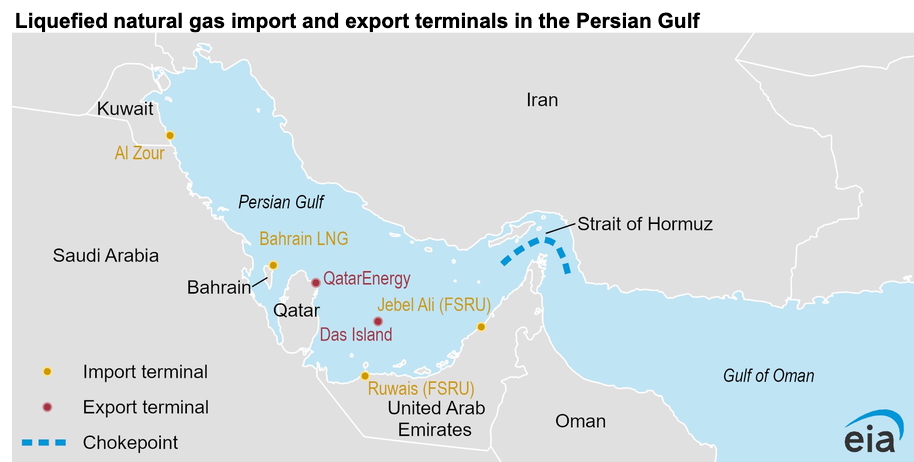
The Strait of Hormuz is a chokepoint through which oil and other energy products are exported to the world. Countries using it include Bahrain, Iran, Iraq, Kuwait, Qatar, Saudi Arabia, and the United Arab Emirates. Connecting the Persian Gulf with the Gulf of Oman and the Arabian Sea, the strait is 104 miles long. Its navigable width is 21 miles.
Prewar, about 20 million barrels of oil moved through the strait daily, about 20 percent of the world’s supply, 80 percent of which goes to Asia. But also moving through the strait is 20 percent of the globe’s liquefied natural gas, about 10 billion cubic feet every day. As with oil, most of it — 83 percent — goes to Asia.
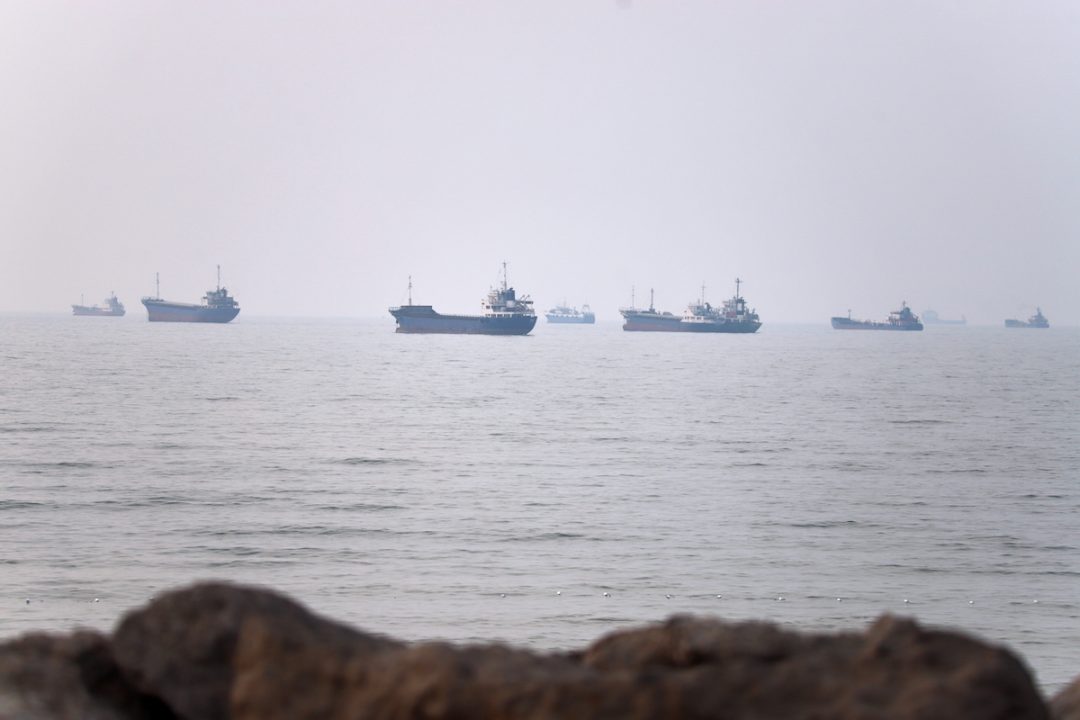
“On Tuesday, 41 ships passed through the strait in both directions, according to Kpler, a maritime data company,” The New York Times reported today:
That was more than during the peak of the war, when only a handful of vessels braved the narrow waterway between Iran and Oman each day, but significantly down from prewar levels of more than 130 ships per day.
Also moving through the strait is fertilizer and its components.
Much natural gas is converted to ammonia for export, the International Food Policy Research Institute reports:
Anhydrous Ammonia is a critical component of nitrogenous and multinutrient fertilizers; in some markets, such as the U.S., it is applied directly to fields. During 2023-25, 29% of global ammonia exports from 2023-25 originated in the Gulf region, with Saudi Arabia the leading regional exporter. India, South Korea, Morocco, Japan, South Africa, and the U.S. were the top importers in 2025.
The American Chemical Society calls anhydrous ammonia “the gas that provides (almost) all of our food.”
Another major export is urea, “the most widely used nitrogen fertilizer globally,” IFPRI explains:
The Gulf countries accounted for 36% of global urea exports from 2023-25, with Iran and Qatar the largest exporters, followed by Saudi Arabia. In 2025, top importers included India, Brazil, Australia, Thailand, the U.S., Türkiye, Ethiopia, and South Africa.
Also produced in the region is phosphate.