Trump TV Goes Live As White House Press Pool Goes Dark
President Donald Trump began his second term by ordering the federal government to “secure the right of the American people to engage in constitutionally protected speech” and end federal censorship.
Twenty months later — this Monday — the White House launched a government-produced television channel bearing his name, while barring CNN, MS NOW and Politico from the White House and prompting the major television networks to suspend their shared presidential pool coverage.
The “Essential Station”
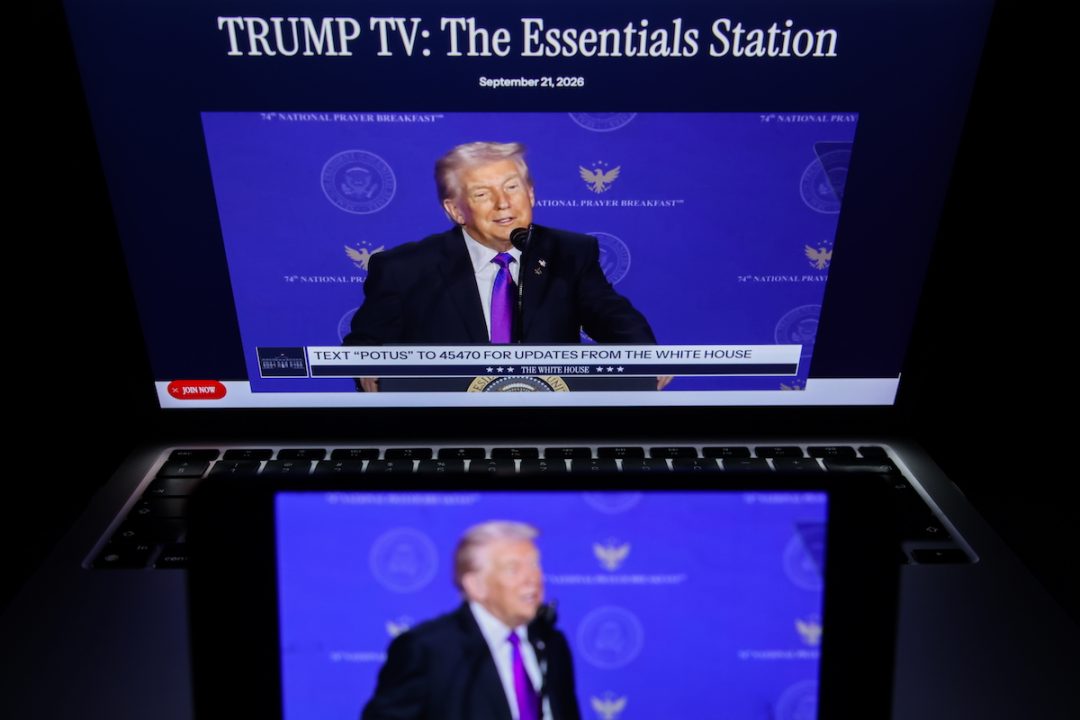
On Monday, “Trump TV: The Essentials Station” went live. The White House announced on X,
TRUMP TV IS STREAMING NOW. 24/7, updated in real time, with top past moments, announcements, and the latest and greatest from the administration all in one place.
Not every big moment has made it on your tv, now it can.
The opening selection carried a peculiar irony.
The channel began with Trump’s July 3 speech at Mount Rushmore, delivered on the eve of America’s 250th anniversary. Trump celebrated American exceptionalism, then warned of a “communist menace,” only for his new channel to echo a practice long associated with communist regimes: government-controlled broadcasting.
Still, American presidents bypassing the press is nothing new. Franklin Roosevelt used his radio “fireside chats” to speak directly to Americans. Later presidents embraced television, websites, and social media.
Trump TV goes a step further in packaging. The White House has turned official government video into a continuous branded channel bearing the president’s name. It chooses the footage, controls the presentation, and supplies the camera.
That would be notable on its own. But the timing makes Trump TV a different story.
Outlet Bans
Last Friday, Trump launched a major new crackdown on press access.
The president announced on Truth Social that he was barring CNN, MS NOW and Politico from the White House. He accused the three outlets of “reporting FAKE NEWS” and publishing what he called “FICTION and LIES.” He also warned that other organizations could follow.
The president cited no specific article or broadcast. He told reporters that the decision reflected years of coverage he considered unfair.
The ban took effect Saturday. Reporters from all three organizations had their White House credentials disabled and were turned away from the grounds.
By Monday, Trump had sharpened his rhetoric.
“The White House is not instituting an assault on the Free Press,” he wrote. Instead, he said it was targeting “FAKE NEWS,” which had “grown like Cancer” in the United States and become a “threat to our National Security.”
CNN, MS NOW and Politico sued. They argued that the administration excluded them because of their reporting and that the ban violated the First Amendment.
The White House rejected that argument. It said the First Amendment protects the outlets’ right to publish, but does not guarantee them access to the White House. “Access is a privilege — not a right,” the administration said.
Indeed, the First Amendment prevents Congress from making a law abridging freedom of speech or of the press; it does not say the executive branch may not prevent media outlets from having access to the White House. If Trump attempted to take over or shut down various media organizations via executive order, that, of course, would be a different story.
Nevertheless, the dispute quickly affected far more than the three banned outlets.
Pool Goes Dark
CNN was scheduled to provide television pool coverage Monday as Trump traveled to New York for the UN General Assembly.
With CNN barred from the White House, it could not perform the assignment. The other networks declined to replace it.
ABC, CBS, Fox News and NBC joined CNN in suspending presidential pool coverage. Bryan Boughton, Fox News Washington bureau chief and chair of the television pool, told pool subscribers,
Effective today, the TV pool will not be covering events designated as pool coverage of the President. This follows the White House’s position preventing CNN from fulfilling its assigned pool duties. There will be no replacement pool put in place.
The television pool exists for a practical reason. Every network cannot squeeze a camera crew into the Oval Office, onto Air Force One, or other restricted spaces. The five networks therefore rotate the assignment. One crew records the president and shares the footage with the others.
On Monday, that system went dark.
The consequences appeared within hours.
Trump held a ribbon-cutting for the new White House helipad. No network pool camera was there. The White House supplied its own video instead. Much of Trump’s remarks were drowned out by the roar of Marine One. Newsmax, which aired the footage, quickly identified the issue, “There’s no microphone because the pool cameras aren’t there.”
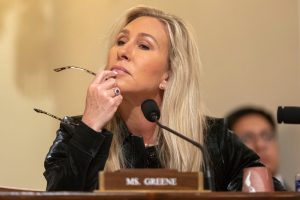
Former Republican Congresswoman Marjorie Taylor Greene was among many observers who blasted the president.
“Crazy how when you violate the 1st amendment, free speech, it backfires on you and now no one can hear your speech!” she wrote on X.
Is Trump TV “State Media”?
Critics quickly called Trump TV “state-run media” and “propaganda.” Newsweek documented several of those reactions.
Those labels capture one obvious feature, but can also blur an important distinction.
Trump TV is, indeed, government-produced media. The White House operates it. Government officials decide what appears on it. Its stated purpose is to present selected administration content.
But Trump TV is not an ostensibly independent newsroom whose government ownership is hidden. Nor has the administration nationalized private television networks. Viewers know that the material comes directly from the White House.
A Longer Shift in Media Control
The administration’s restrictions on press access did not begin this week.
In February 2025, the White House took control of the presidential press pool, ending a century-old tradition in which journalists, through the White House Correspondents’ Association (WHCA), largely managed the rotation themselves. The WHCA condemned the move.
The While House later restricted Associated Press access after the outlet refused to use Trump’s preferred “Gulf of America” terminology. Courts have continued to hear challenges over those restrictions.
The conflict spread beyond the White House. In October 2025, dozens of Pentagon reporters surrendered their credentials rather than accept new rules that allowed officials to revoke access if journalists sought classified or certain unclassified information from Defense Department employees. A federal judge later blocked key provisions as unconstitutional.
The administration has also brought regulatory pressure into disputes with broadcasters. FCC Chairman Brendan Carr warned stations to “correct course before their license renewals come up” after Trump criticized Iran-war coverage and threatened the outlets with treason charges.
Trump has also responded to individual stories with lawsuits and access restrictions. After The Wall Street Journal reported on an alleged birthday card bearing his name for Jeffrey Epstein, Trump denied the story, sued the newspaper, and later excluded a Journal reporter from his Scotland press pool.
Trump TV now arrives against that backdrop.
And while a government-produced media is not unusual, the sharper issue is what happens when official coverage expands while independent access contracts.
For sure, the press may be selective, slanted, or partisan. But in a free-media system, the audience — not the state — ultimately decides what to watch, read, or trust.