
Trump Says Venezuela’s Oil Generated Over $13 Billion. Where Did It Go?
President Donald Trump confirmed the United States has made more than $13 billion selling Venezuela’s oil, enough, he boasted, to pay for the military operation that removed Nicolás Maduro “many times over” and help “run the country.”
That claim would be extraordinary even if Congress had authorized the January 3 raid, which it did not. It is even more troubling because Trump’s own executive order established the money still belongs to Venezuela.
In practice, Washington appears to control the oil, the accounts, and the payouts.
And the trade, propelled by the unconstitutional war on Iran, is booming. Yet, the administration still will not show Congress or the public where exactly the money is going, raising obvious suspicions that the opaque accounts are functioning as an off-the-books slush fund.
What Trump Confirmed
Trump addressed the issue Monday aboard Air Force One after a reporter asked about a Financial Times estimate. The newspaper calculated that the United States had collected “about $13 billion” from Venezuelan oil sales since January.
“I think even more than that,” Trump said.
He then declared that Venezuela had paid for the military operation “many times over.” Trump had made a similar claim in June, when he said Venezuelan oil had reimbursed the United States for the operation 28 times over.
The exchange became more revealing when reporters asked where the money had gone.
“Where does the money go right now?” one asked.
“It goes toward running the country,” Trump replied.
He then added, “It can go to the military. Congress has to approve it.”
The answer confirmed several important points.
First, the administration has collected at least $13 billion. Second, Trump views the money as a potential source of military funding. Third, he recognizes that Congress would need to approve such a transfer.
Yet the president also claimed that the money had already paid for the Venezuela operation.
Those positions do not fit neatly together. Congress never authorized Venezuelan oil revenue as reimbursement for the raid. It has not appropriated the money to the Pentagon. The administration has not even published the operation’s full cost.
Trump presented the oil as a war receipt, but did not produce it.
What the State Department Says
Secretary of State Marco Rubio offered a slightly more formal account during congressional testimony in early June.
Representative Ami Bera, a California Democrat, asked whether Rubio would give Congress access to the audit of Venezuela’s oil funds.
Rubio said KPMG — one of the world’s largest accounting and auditing firms — reviews the program continuously.
“Every single disbursement is audited by KPMG,” he said. He added that “Citibank itself” provides another layer of control because it holds the account.
Bera then asked Rubio to provide the information to the committee.
Rubio agreed. “We want people to see that it’s not being stolen or pilfered,” he said.
That commitment matters. So does the distinction between an audit and public accountability.
A private auditor may examine whether transactions follow internal rules. Congress must still determine whether those rules are lawful, whether the spending serves Venezuela’s interests, and whether administration officials have exercised their discretion properly.
The administration has not released a complete public ledger. It has not published KPMG’s reports. Nor has it provided a clear reconciliation of the oil sold, the prices received, the fees paid, the money disbursed, and the balance still under American control.
The Financial Times found that Washington had given inconsistent accounts of the funds. Its calculation placed total revenue above $13 billion, while only a fraction of that amount had appeared in publicly documented transfers.
State Department senior official Michael Kozak told Congress in April that the administration had authorized about $3 billion in disbursements from the oil accounts. He said the money covered Venezuelan government salaries, oil industry supplies, and other approved expenses.
That testimony still leaves a basic problem. The public cannot trace the transactions from oil tanker to bank account to final recipient.
Whose Money Is It?
Trump’s January 9 executive order supplies a clear answer to the ownership question.
The money belongs to Venezuela.
The order calls the proceeds the sovereign property of the Venezuelan government, and says the United States holds them solely in a “custodial and governmental capacity.” The order also protects the funds from creditors and judicial seizure.
A custodian controls property on behalf of its owner. Control does not create ownership.
Trump’s claim that the oil paid for an American military operation therefore conflicts with the legal structure his administration created. The government cannot call the funds Venezuelan property when creditors seek them, then treat them as American revenue when the president discusses military costs.
The Department of Energy (DOE) created even more ambiguity. Its January guidance said that Washington would market Venezuelan oil and that the proceeds would “first settle in U.S. controlled accounts at globally recognized banks.” It also said officials could disburse the money for the benefit of both countries “at the discretion of the U.S. government.”
That is extraordinary authority. Administration officials control the sales, the accounts, and the disbursements. The secretary of state approves transfers. The executive order gives Congress no comparable operational role.
The Oil Trade
Commercially, the program has moved quickly.
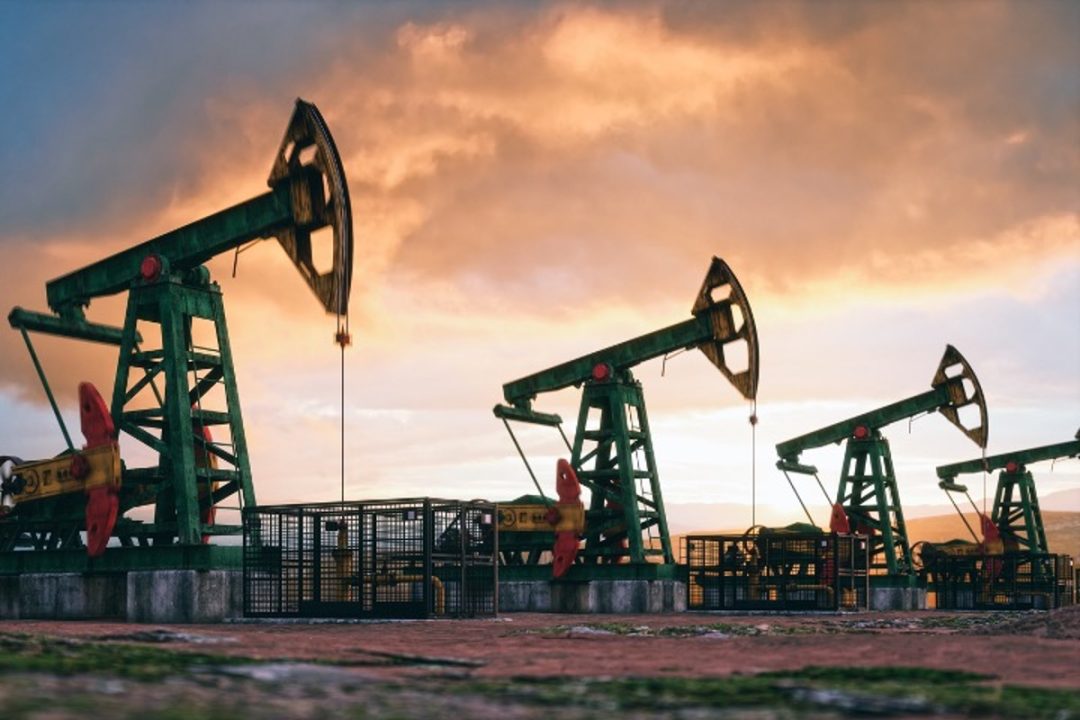
Energy Secretary Chris Wright said in April that the United States had sold about 150 million barrels of Venezuelan oil. By May, the DOE had estimated that sales were generating between $2 billion and $3 billion each month. No wonder the revenue climbed so quickly. The administration was selling Venezuela’s oil into a price shock its war on Iran had helped create, driving Brent crude from about $73 before the February 28 attacks to a late-April peak of $126.41 per barrel.
Venezuela now exports more than 1.2 million barrels of oil and fuel per day. That compares with an average of about 847,000 barrels per day in 2025.
Refiners have also begun dealing directly with Venezuela’s state oil company, PDVSA. Per a Reuters report, Phillips 66 resumed purchases after a seven-year pause. India’s Reliance Industries established a direct supply line. Valero may follow. Repsol and Eni have expanded their involvement.
American Gulf Coast refiners stand to benefit. Their plants can process Venezuela’s heavy crude, which often sells below the price of lighter grades.
Venezuela’s domestic industry remains far weaker. Trump initially promised billions in private investment to revive Venezuela’s oil industry. That investment has largely favored crude production and exports, not domestic refining. A White House spokesperson told Reuters in late June that the U.S. government was not involved in rebuilding Venezuela’s refineries, while executives and analysts said foreign companies had little incentive to take on the costly work.
The trade can therefore succeed while Venezuela’s own energy system continues to fail.
All in all, the scheme resembles the Iraq plunder model, minus the occupation government: Venezuela, holder of the world’s largest proven crude oil reserves, remains formally sovereign while its oil money flows through Washington to unknown recipients.