
Former CentCom Chief McKenzie: U.S. Has Planned for Kharg Island Attack for Years
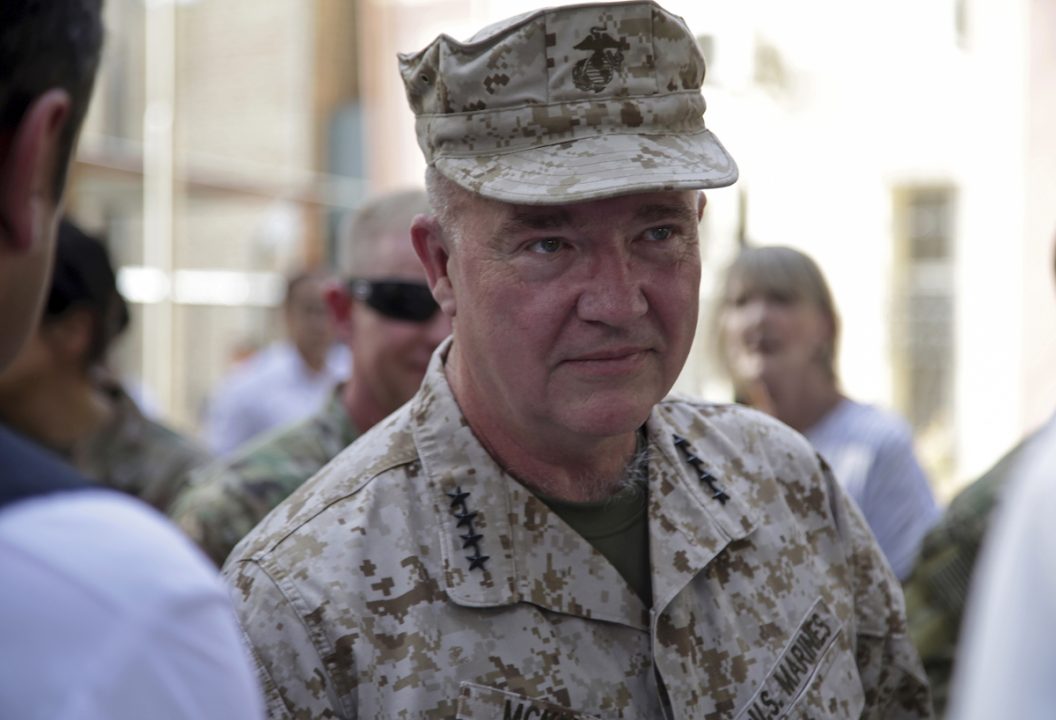
Retired Marine Corps General Frank McKenzie, the former chief of the U.S. Central Command, which is managing the war against Iran, told CBS’s Face The Nation on Sunday that the U.S. has planned for a ground invasion of Kharg Island and other points in Iran for years.
McKenzie also said the war will be considered a success when the United States reopens the Strait of Hormuz.
Last week, Trump gave Iran until April 6 to reopen the vital energy waterway, which carries 20 millions barrels of oil per day.
Yet the plan for U.S. forces to reopen the strait is also years old, McKenzie said. McKenzie’s commentary strongly suggested U.S. ground forces will attack Kharg island to seize its oil facilities.
Plan to Open Closed Straight Existed for Many Years
Hostess Margaret Brennan asked the retired Marine whether Iran’s activating Houthi militias will alter the course of the war by hampering oil shipments across the Red Sea.
“I don’t think it will be a game changer,” McKenzie said:
Their ability to attack Israel is quite limited. Yes, they will have the ability to further stop, slow traffic through the Bab-el-Mandeb, going up into the Suez Canal. We have the ability to go down there and prevent that. It will require additional resources, but we have those resources and we can certainly do it if that becomes necessary.
Asked what the “military reality” of reopening the strait is, McKenzie said the United States is “on the way” to accomplish that.
“This is a part of a plan that’s been in existence for many years,” he said:
What we’re doing right now is we’re reducing Iranian ability to target ships in the strait through their short-range missiles, their drones and other activities. We do that by maintaining air superiority over southern Iran on a 24/7 basis, looking for where these missiles are and striking them relentlessly.
Once we reduce those to a very low level, then you’ll be able to go in, if necessary, sweep the mines. I’m not certain they put mines in the water yet. I predict eventually they will. It’s their nature.
McKenzie said he had simulated such a military operation for “many years and many places at Central Command.” As well, he added, “we’re a little further along than we would have expected to be at this point, in all the simulations that I’ve seen.”
Asked about negotiations to end the war, which would necessarily involve Iran’s reopening the strait, McKenzie said the “primary goal” of the ancient nation’s statecraft “is survival of the regime.”
“I believe that they will come to terms,” he continued:
And it may be an imperfect solution, but I think it would be one that would include opening the Strait of Hormuz, possibly some deal on the missiles — on the missile systems. The nuclear program is certainly a possibility. But I believe eventually they’ll make a deal. But we need to keep the pressure up. We need to continue to pressure them very hard because that is, in fact, the only thing they will respond to.
The strait will open in one of two ways, McKenzie continued: either by negotiation, or by U.S. force.
“The second condition is obviously a lot more intensive in terms of ships and equipment that we’d have to bring into the region,” McKenzie said:
And, yes, help from our allies would certainly be — would be very useful in that case.
We have the ability to open the Strait of Hormuz under any condition that the Iranians choose to exist under.
Another Years-long Plan: Take Kharg Island
But aside from dealing with Iran if it closes the Hormuz, U.S. forces have long contemplated using ground troops on Kharg Island and other places, “typically raids … an operation with a planned withdrawal.”
McKenzie said the plans would include seizing and holding the islands, which would humiliate Iran and give the United States the upper hand in negotiations to end the war.
That second way to open the strait is Kharg Island, he said. “If you seize Kharg Island, you really can shut down the Iranian oil economy completely,” McKenzie said:
And the beauty of seizing it is, you’re not destroying it. You’re retaining it for further use by the global economy and possibly for return to Iran under certain conditions.
So, all of these things — this is not back of the — these are not back of the envelope calculations. These are things we’ve been working on for many years. And I think we’re right to threaten the entire littoral, to hold all these options out there. And I think the president’s message is spot on when he talks about all these alternatives.
The United States will achieve success, McKenzie said, when the strait is open. But Iran will respond only to force, which the current administration, unlike those in the past, is unafraid to use.
“We get some kind of deal on the ballistic missile program, some kind of deal on the nuclear program,” he said:
That’s probably about as much as you could hope for. But I think there are very discreet things that for me at least, from an operational military perspective, would be — would look like victory.
I believe all of those things are actually within our grasp. We just need to continue. Iran will ultimately respond to the use of force. They know and understand it perhaps better than we have — we have in the past. This administration’s willing to use force. Other administrations have been thoroughly deterred by Iran. President Trump is not deterred by Iran.
Neither Brennan nor McKenzie noted that the strait was open until the United States and Israel attacked Iran.
Ground Forces Ready
McKenzie’s commentary suggests that U.S. ground troops will be fighting sometime soon. Thousands of U.S. Marines and troops from the Army’s 82nd Airborne Division have arrived in the region.
Yesterday, The Washington Post reported that military officials are planning for weeks of ground operations that will include conventional infantry and special operations forces. But the United States will not launch a full-scale invasion, the newspaper reported.
Last week, Trump claimed that Iran was negotiating with the United States to end the war, and that he would extend the deadline to reopen the waterway that provides 20 percent of the world’s oil.
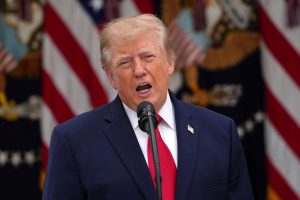
“As per Iranian Government request, please let this statement serve to represent that I am pausing the period of Energy Plant destruction by 10 Days to Monday, April 6, 2026, at 8 P.M., Eastern Time,” Trump wrote on Truth Social:
Talks are ongoing and, despite erroneous statements to the contrary by the Fake News Media, and others, they are going very well.
Iran had permitted 10 ships through the strait as a goodwill gesture, Trump told Cabinet officials during the first meeting since the United States and Israel attacked Iran.
“They’ll tell you, ‘We’re not negotiating,’” Trump said:
Of course, they’re negotiating. They’ve been obliterated.