
13 State AGs Warn Britain, Netherlands, to Drop “Anti-Israel” Sanctions on West Bank Settlements
More than a dozen Israel-First state attorneys general have warned the Netherlands and Great Britain that their anti-Israel trade sanctions might invite retaliation.
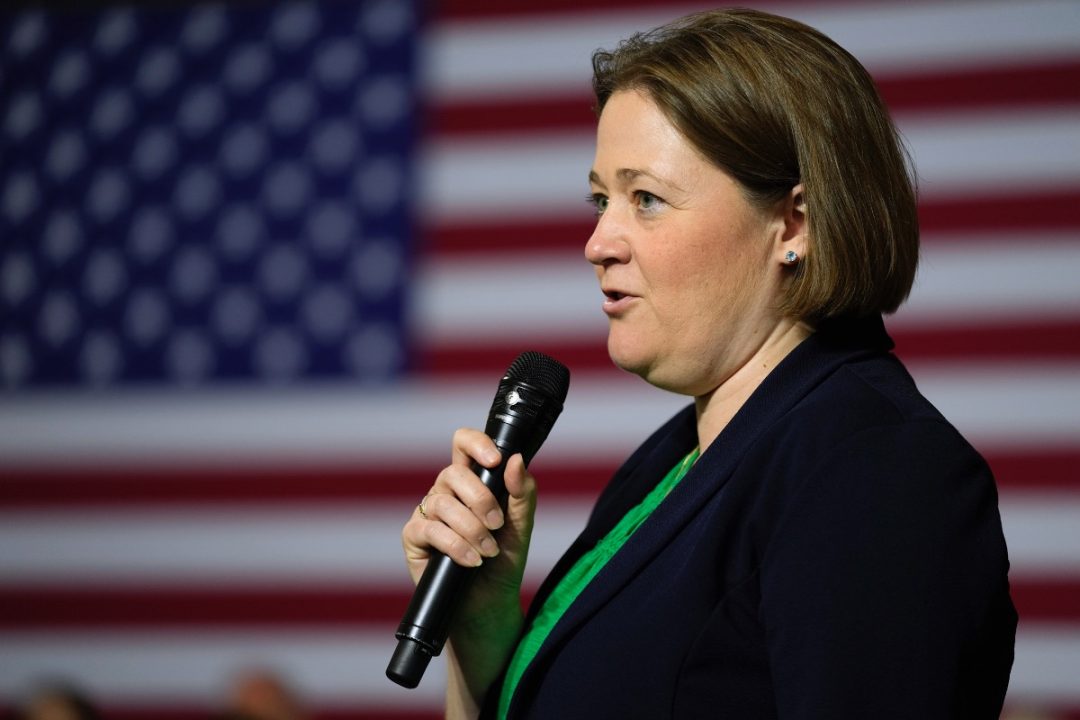
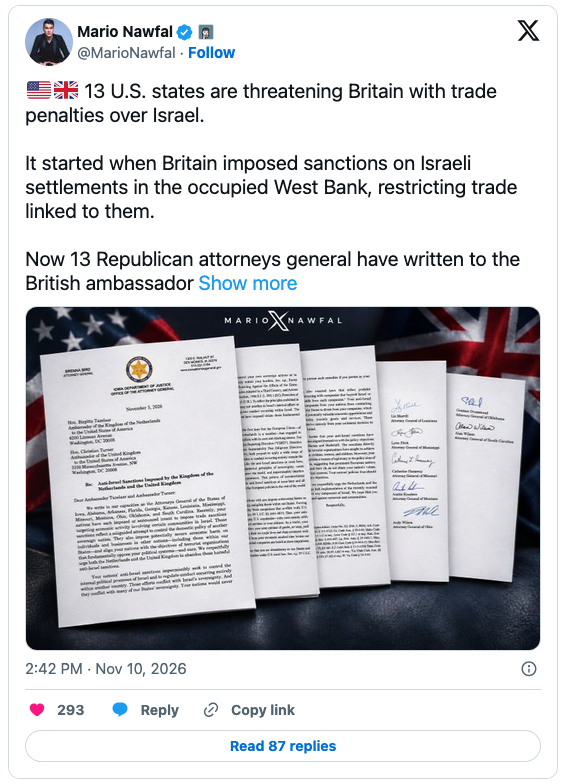
Led by Iowa’s Brenna Bird, 13 GOP attorneys general wrote to the ambassadors of the two countries to denounce trade sanctions on products from the West Bank because of Israeli settlements and vicious settler violence there.
The letter claims that the sanctions “impose substantial harm on economic actors around the world, including those within our States.” Retaliation could be ahead because states have passed laws that forbid contracts “with companies that boycott Israel.”
Settlements Targeted
In September, Britain “announced that it will introduce a new sanctions regime targeting settlements in the occupied West Bank over the next six to nine months, under the powers conferred to it by the Sanctions and Anti-Money Laundering Act 2018,” the Global Sanctions and Export Controls Blog explained.
But Great Britain was not alone: 11 countries joined them and “committed to introduce national restrictions, or support European restrictions, on trade in goods with settlements that are illegal under international law.”
Added to already enacted measures were these, the blog reported:
• a ban on imports of goods from illegal settlements in the occupied territories;
• a prohibition on providing, or facilitating the provision of, services relating to construction, infrastructure, financing or real estate where those services are provided for the purposes of settlement expansion; and
• a ban on the advertising of illegal settlements in the UK.
The government also stated that it will refuse licence applications for arms and other exports that materially contribute to settlement or occupation. This follows its previous suspension of more than 30 arms export licences relating to items used by the Israeli Defence Forces in Gaza. According to the announcement, the new licensing restriction will remain in place until the occupation ends.
Joining the boycott was the Netherlands.
At issue is not only the West Bank settlements but also settler violence.
“The Rabbis for Human Rights organization said Tuesday morning that six people were injured by extremist settlers who attacked volunteers with clubs and rocks during agricultural activities organized by the group outside the Palestinian village of Qusra in the northern West Bank,” The Times of Israel reported yesterday.
Foreign Meddling
Having apparently solved all the problems in their states — notably crime — the attorneys general are now meddling in foreign affairs and international trade, pursuant to imprudent state laws that require those states to act on behalf of a foreign power.
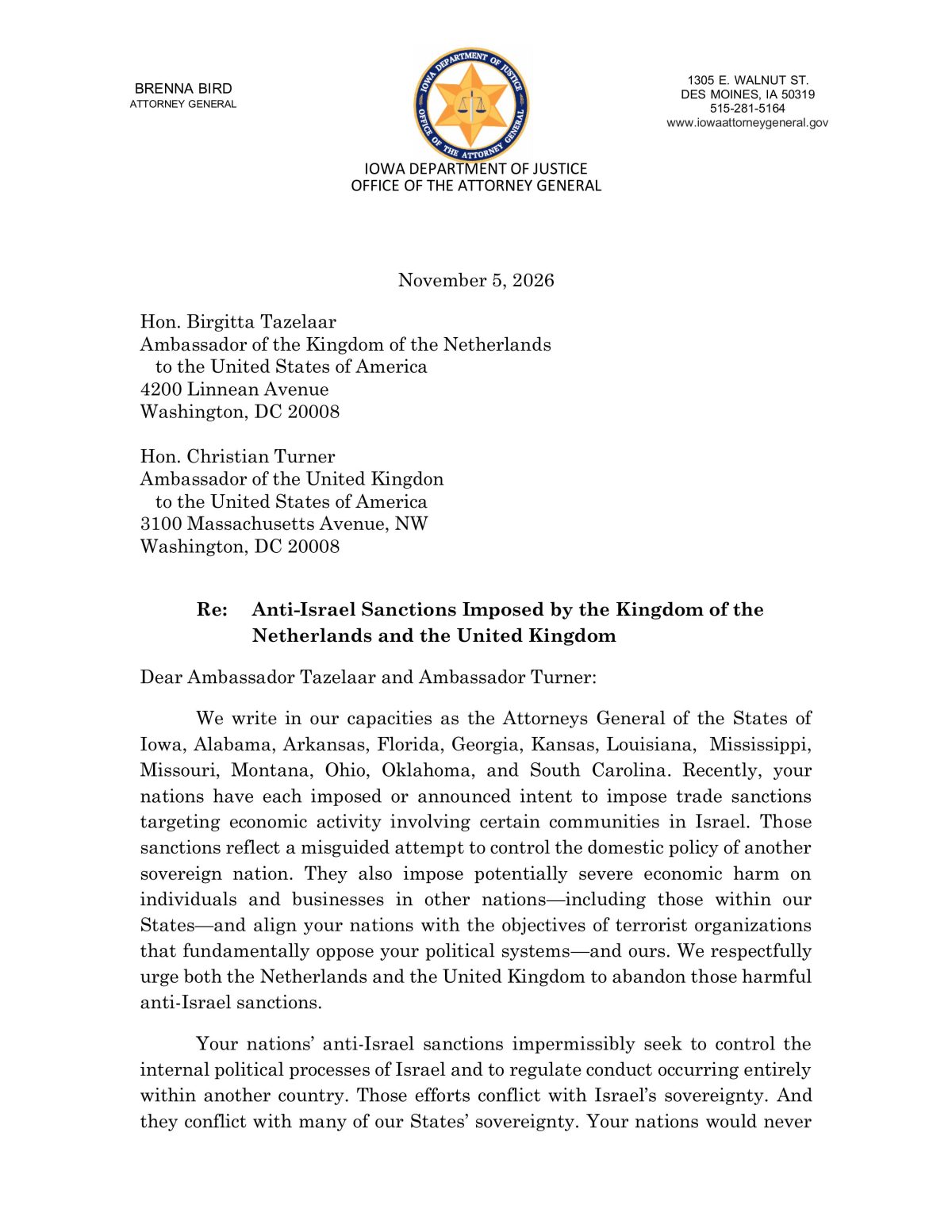
The attorneys general of Alabama, Arkansas, Florida, Georgia, Kansas, Louisiana, Mississippi, Missouri, Montana, Ohio, Oklahoma, and South Carolina also signed the demand. The letter went to Birgitta Tazelaar and Christian Turner, the ambassadors of the Netherlands and Great Britain to the United States.
Amusingly, and apparently lacking in self-awareness, the signatories note that the “sanctions reflect a misguided attempt to control the domestic policy of another sovereign nation.”
“They also impose potentially severe economic harm on individuals and businesses in other nations — including those within our States — and align your nations with the objectives of terrorist organizations that fundamentally oppose your political systems — and ours,” the signers continued:
We respectfully urge both the Netherlands and the United Kingdom to abandon those harmful anti-Israel sanctions.
Your nations’ anti-Israel sanctions impermissibly seek to control the internal political processes of Israel and to regulate conduct occurring entirely within another country.
Those states seek “to control the internal political processes” of Britain and the Netherlands.
Economic Harm
That aside, the signatories write that the sanctions force companies to trespass U.S. law and might also stop American companies “from providing goods and services to your citizens,” including those “essential to their everyday lives and their economic well-being.”
The attorneys general claim Britain and the Netherlands are threatening “economic harm” to Iowans and the residents of other states, and warn that continuing the “anti-Israel campaign” might invite retaliation.
“Many of our States have also enacted laws that either prohibit governmental entities from contracting with companies that boycott Israel or require divestment of state funds from such companies,” they wrote.
Those laws might require the states to end contracts with Dutch and British companies and divest from them. Both would deprive “your citizens of potentially valuable economic opportunities and … our States of potentially valuable goods and services.”
The sanctions, the officials wrote, are “unlawful.”
Sanctions Are Pro-terrorist
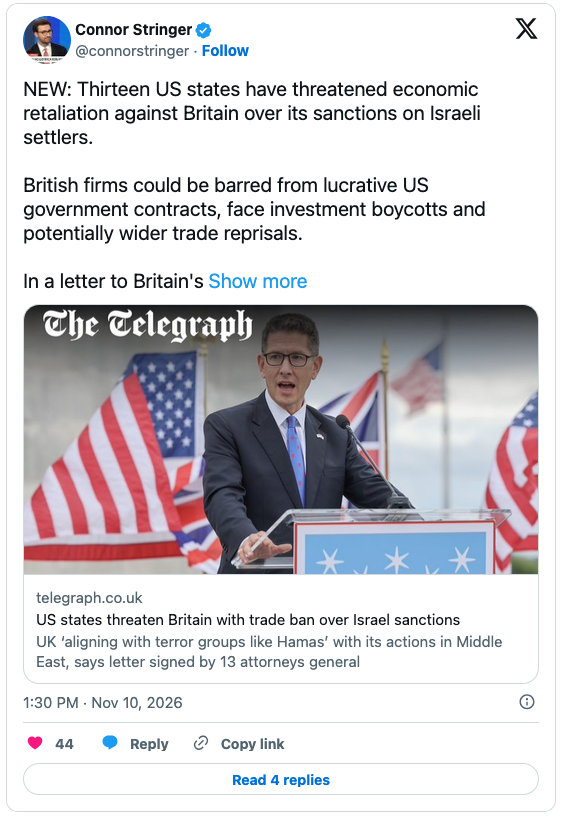
The final paragraph bluntly accuses Britain and the Netherlands of siding with and supporting the Hamas and Hezbollah terror organizations.
“Beyond the economic harms that your anti-Israel sanctions have created, your nations have also aligned themselves with the policy objective of terrorist organizations like Hamas and Hezbollah,” the attorneys general falsely wrote:
The sanctions directly advance the policies that these terrorist organizations have sought to achieve through brutal violence against civilians, women, and children. Moreover, your sanctions could be seen to provide a veneer of legitimacy to the policy aims of these terrorist organizations, suggesting that prominent European nations share them. Hamas, Hezbollah, and their ilk do not share your nation’s values. They do not respect your political systems. Your nations’ policies thus should not advance those organizations’ objectives.
Bird said the sanctions are “bad for American business,” and that the measures harm Iowa’s economy.