Sotomayor and Gorsuch Warn Police Powers May Eclipse Constitutional Rights
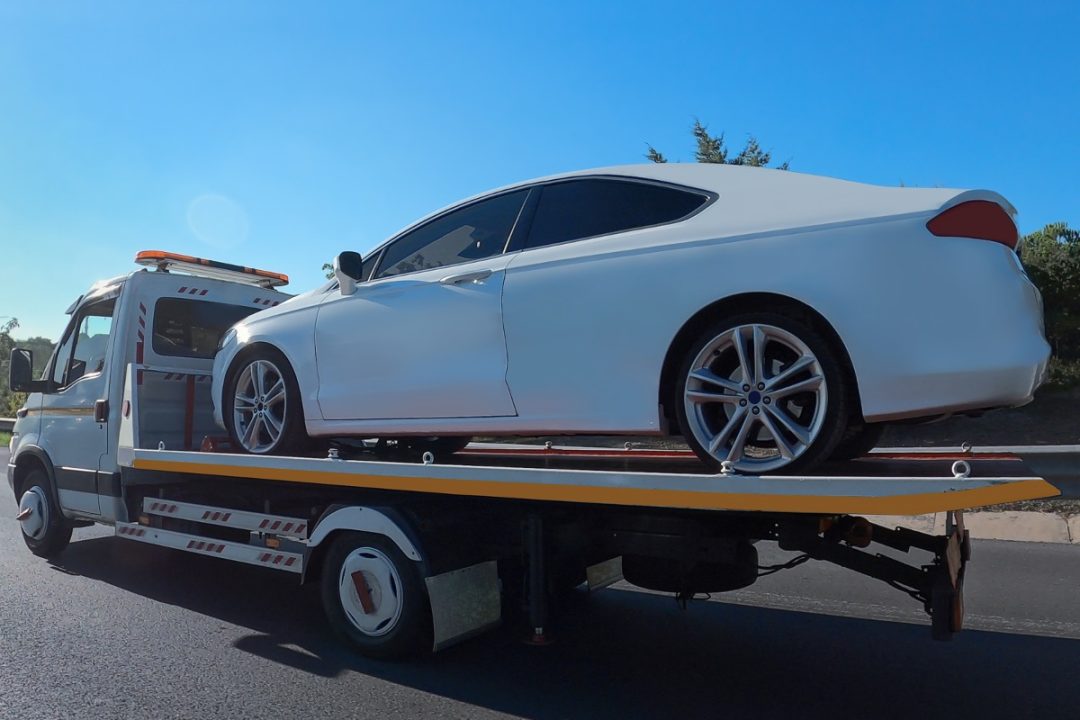
A city can confiscate a person’s car over unpaid parking tickets, sell it, and keep the proceeds without compensating the owner. Two Supreme Court justices are questioning whether such practices violate the Constitution.
In an unusual alliance, conservative Justice Neil Gorsuch joined liberal Justice Sonia Sotomayor on Monday in warning that Chicago’s vehicle confiscation system raises serious Fifth Amendment concerns. Their statement challenges a broader legal doctrine that allows governments to invoke their police powers to avoid compensating property owners.
Cars Confiscated Over Parking Tickets
The Supreme Court declined to hear O’Donnell v. City of Chicago, leaving in place a lower court ruling that upheld the city’s vehicle seizure policy.
But Sotomayor, joined by Gorsuch, issued a five-page statement questioning the constitutionality of that ruling.
She opened with a stark description:
In Chicago, a driver who fails to pay as few as two parking tickets risks forfeiting his vehicle to the city. The city then can do as it pleases with the vehicle, with no obligation to pay compensation, offset the unpaid ticket debt, or return any surplus to the owner if the vehicle is sold for a profit.
Noting that the federal appeals court had defended the policy as an exercise of municipal police power, she opined:
I have serious concerns about that conclusion.
The case involved two Chicago motorists, Ryan O’Donnell and Michael Goree.
O’Donnell accumulated approximately $524 in parking tickets. The city impounded his car and eventually sold it for just $273 in scrap value.
Goree’s situation was particularly striking. He had no outstanding tickets of his own. Instead, a co-signer on his vehicle owed approximately $560 in tickets involving another car.
Chicago nevertheless impounded Goree’s vehicle and surrendered it to the lienholder.
Neither man received compensation. Both challenged the city’s policy under the Fifth Amendment.
The Constitutional Dispute
The Fifth Amendment prohibits government from taking private property for public use without just compensation.
The 7th Circuit Court of Appeals nevertheless upheld Chicago’s confiscation policy in 2025.
The court reasoned that the city was exercising its police power to enforce traffic laws, rather than taking private property for public use.
That distinction matters. Governments possess broad authority to enforce laws, protect public safety, and penalize violations. Courts have sometimes allowed them to seize or destroy property without paying compensation.
But Sotomayor questioned whether Chicago was genuinely enforcing public safety rules or simply collecting debts.
She observed that Chicago can seize a person’s vehicle even when that vehicle had nothing to do with the underlying offense.
Goree’s case illustrated the problem. He lost his vehicle because another person owed fines involving a different car.
The justices highlighted the plaintiffs’ argument that the actual purpose was to “collect a debt, not enforce public safety laws.”
Sotomayor also questioned whether merely invoking the government’s law-enforcement authority could defeat a constitutional claim for compensation.
The dispute raises a fundamental question: Can a city escape the Constitution’s compensation requirement simply by labeling property confiscation an exercise of police power?
A Pattern of Government Seizures
Chicago’s practices resemble a broader problem involving civil asset forfeiture, which allows authorities to seize property allegedly connected to illegal activity, sometimes without securing a criminal conviction.
The New American has documented how Albuquerque, New Mexico, continued confiscating vehicles despite state restrictions on civil forfeiture.
In one case, authorities seized Arlene Harjo’s car after her son borrowed it and was arrested for drunk driving. She faced the loss of a vehicle for conduct she had not committed.
“It’s a scam and a rip off,” Harjo said.
The city defended its ordinance as a public-safety measure against repeat drunk drivers.
In another case, California authorities intercepted $17,500 that two Virginia sisters had sent to purchase breeding dogs. Officers suspected the money represented drug proceeds. The sisters disputed that accusation and said they had documentation supporting their ownership.
Such cases expose the practical burden on property owners who must fight the government to recover their possessions.
Supreme Court Precedents
The Supreme Court has repeatedly confronted the constitutional limits of property confiscation.
In 2023, the justices unanimously ruled against Minnesota’s practice of keeping profits from tax foreclosure sales.
In Tyler v. Hennepin County, authorities seized a woman’s condominium over a $15,000 tax debt. They sold it for $40,000 and kept the remaining $25,000.
Chief Justice John Roberts, writing for the Court, rejected that practice:
The taxpayer must render unto Caesar what is Caesar’s, but no more.
The Court revisited the issue in 2026 in Pung v. Isabella County. That dispute involved a Michigan home sold for $76,008 over approximately $2,242 in unpaid property taxes.
The Court emphasized the importance of a fairly conducted tax sale when determining compensation.
Chicago’s practices raise a related concern. The city can dispose of confiscated cars for scrap rather than seek their fair value through an auction.
Another relevant precedent is Timbs v. Indiana. In 2019, the Supreme Court ruled that the Eighth Amendment’s prohibition on excessive fines applies to state governments.
As we reported, the case involved Indiana’s confiscation of a vehicle following a drug offense. The ruling strengthened constitutional scrutiny of punitive property seizures.
Ticket Revenue and Financial Ruin
Chicago’s traffic enforcement system has long attracted criticism for its financial consequences.
A 2018 ProPublica investigation found that traffic tickets generated nearly $264 million for the city in 2016, approximately seven percent of its operating budget.
The investigation documented how unpaid tickets, escalating penalties, and vehicle impoundments pushed thousands of motorists into bankruptcy. Chapter 13 bankruptcies involving debts to Chicago climbed from approximately 1,000 in 2007 to more than 10,000 in 2017.
The financial incentives behind such enforcement practices have also prompted legislative reforms elsewhere.
In 2019, Arkansas restricted civil asset forfeiture and addressed a federal loophole that allowed authorities to circumvent state protections.
These efforts reflect growing concerns that police departments and municipalities can develop financial incentives to confiscate private property.
The Limits of Police Power
The Supreme Court’s refusal to hear the Chicago case does not settle the constitutional question.
Sotomayor noted that federal appeals courts disagree over when police powers exempt governments from compensating property owners. Some recognize broad exceptions. Others restrict them to public-safety emergencies or property damage during lawful enforcement.
She questioned the legal foundation of those exceptions:
Few of these decisions likewise explain the source of any such police-power exception to the Takings Clause, whether the common law, the Constitution, or elsewhere.
She urged courts to “carefully and narrowly define” such exceptions, warning that the “talismanic invocation” of law-enforcement authority cannot automatically justify uncompensated seizures.
The implications extend beyond parking tickets. Governments routinely invoke public safety and police powers to justify restrictions on private property and individual liberty. But those powers are not unlimited.
Sotomayor closed with a warning that Gorsuch expressly joined:
I again encourage courts considering this issue to take care that due deference to state police powers does not eclipse constitutional rights.
For now, Chicago’s policy survives. But the larger question remains: If government can confiscate property simply by invoking police power, what protection does the Constitution actually provide?