
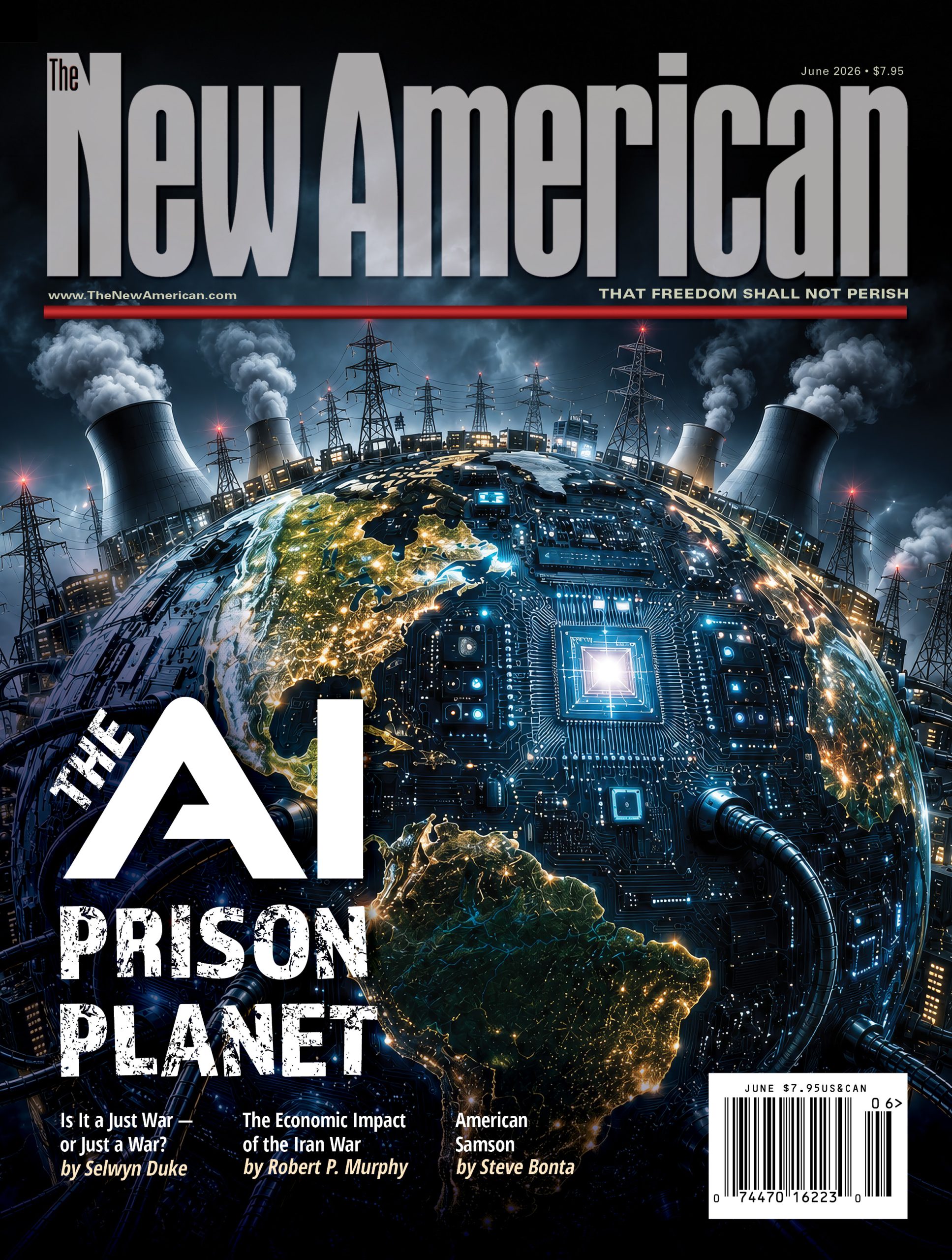

AI Is Creating a Human-capital Credit Bubble
In the decades following World War II, the United States experienced an extraordinary burst of economic growth, driven in large part by a unique historical advantage: much of the industrial world — especially Germany and Japan — had been physically devastated, leaving American factories, infrastructure, and capital stock largely intact. This imbalance created a temporary era of outsized productivity gains and rapid expansion, as the United States effectively supplied a rebuilding world.
Korean economist Ha-Joon Chang discussed this outsized influence in his book Bad Samaritans, wherein he described America’s post-war manufacturing dominance by pointing out that the United States made more than 50 percent of the world’s manufactured goods (contrasted with China today, which accounts for between 25 and 30 percent).
By the 1960s and beyond, however, as those war-torn economies recovered, modernized, and re-entered global competition, growth rates across the developed world began to decline. After the anomalous boom, however, American corporations didn’t want profits to abate and normalize, even as they were selling fewer widgets. What to do?
What if, through insurance products and finance, they could raise profitability by making money off their own employees? For decades, corporations did just that: They leveraged their workers as collateral for trillions in credit. The system ran on human capital: Workers paid into pension plans, bought life insurance, and fueled revenue streams that banks packaged into debt. Companies borrowed against that steady inflow, treating employees as predictable cash machines. As one analysis put it, JPMorgan recently warned that $40 billion to $150 billion in leveraged loans bundled into U.S. collateralized loan obligations (CLOs) could be disrupted by the AI boom — loans to companies that hired humans whose labor repaid the debt.
Ellen E. Schultz’s Retirement Heist exposed the pension side of this model. Defined-benefit plans were once overfunded gold mines. Companies siphoned surpluses for executive bonuses, shifted to riskier 401(k)s, and used worker contributions as free capital for investment or debt servicing. Pension assets — trillions today — flowed into bonds, stocks, and CLOs, quietly underwriting corporate expansion.
Insurance worked the same way. Warren Buffett built Berkshire Hathaway’s empire on “float” — premiums collected upfront from millions of policyholders, invested for years before claims were paid. More humans buying policies meant more float: cheap, patient capital that functioned like interest-free leverage. Life insurance, annuities, and employer-sponsored coverage turned everyday workers into unwitting investors whose money financed everything from corporate buyouts to leveraged loans.
The chain was simple: Human jobs led to steady premiums and contributions, which led to massive investable pools, which stimulated credit expansion. Banks lent to labor-heavy firms assuming revenue from human workers would service the debt. Those loans were sliced into CLOs and sold to the very pension funds and insurers funded by the same workers.
AI is severing that link. As automation replaces routine roles, companies need fewer employees. Revenue models built on human labor falter faster than debt structures can adjust. Fewer paychecks mean smaller pension contributions and insurance premiums. The inflows that once swelled those capital pools slow to a trickle. Meanwhile, the firms carrying legacy loans — those that bet on humans staying productive — face defaults. CLOs crack. Pension funds holding them take the hit.
This isn’t abstract. The same retirement savings that once propped up corporate borrowing could now fund the very AI systems displacing workers — creating a feedback loop where pensions finance their own obsolescence. Just as 2008 exposed housing as shaky collateral, 2026 risks exposing human labor as the fragile foundation of modern credit.

The irony is brutal: The pools companies built on human capital may dry up precisely because AI makes humans optional. Without new inflows or revenue, the leverage machine stalls. Is this the system rupturing, or will adaptation involve novelties such as universal basic income experiments? One thing is clear: The era when companies could treat people as perpetual credit engines is ending. The question now is, what replaces the human collateral that until now powered corporate leverage? — Rebecca Terrell
Massive AI Spending, Minimal Gains
Are huge investments in artificial intelligence translating into real economic gains, or are expectations running ahead of reality? Research from Goldman Sachs suggests that, so far, the measurable impact of AI on overall productivity and economic growth remains next to nil.
Over the past several years, companies across the economy have indulged in irrational exuberance — with huge disappointments such as Mark Zuckerberg’s recent announcement that, after spending $80 billion on the development of the metaverse, he is shuttering it since it failed to gain traction with the public.
Worse than that setback are larger industry trends related to dramatically increased spending on AI-related infrastructure, including data centers, advanced semiconductors, and cloud computing — with very little (so far) to show for it. A significant portion of this investment has flowed toward hardware produced by firms such as Nvidia, whose graphics-processing units (GPUs) have become essential for training and deploying large AI models. At the same time, major technology companies have committed tens of billions of dollars to expanding their AI capabilities, often describing the shift as foundational to their future business models.
Companies are experimenting with AI tools to automate tasks, improve customer service, and assist with coding and data analysis. While these applications can generate efficiencies, they do not always translate into immediate, dramatic gains in output. Nevertheless, due to (perhaps misplaced) optimism, corporations have raced ahead to instigate a wave of layoffs across the tech sector. Companies including Amazon (roughly 16,000 layoffs), Meta (about 15,800), Block, Inc. (around 4,000), Atlassian (about 1,600), Salesforce (roughly 1,000), eBay (about 800), and Pinterest (around 675) have all reduced headcount during this period. Moreover, Oracle was in the news recently after reports emerged that its layoffs (currently around 30,000) could go as high as 45,000 workers.
Amazon.com recently learned a valuable lesson after laying off scores of human programmers and relying on AI agents for coding, when a series of outages hit Amazon’s retail website. A major six-hour blackout on March 5 disrupted checkout, pricing, accounts, and product pages across North American marketplaces, resulting in a 99-percent drop in orders and an estimated 6.3 million lost orders (plus earlier incidents causing around 120,000 more losses and millions of site errors). Internal reviews linked some disruptions to “GenAI-assisted changes” and an AI agent pulling inaccurate advice from outdated internal wikis. Amazon convened emergency engineering meetings, implemented a 90-day “safety reset” across critical systems, and required senior approvals for AI-assisted code from junior/mid-level engineers. The company continues to downplay direct AI causation, but analysts have concerns about rushed AI adoption in critical infrastructure amid hype-driven workforce reductions.
Meanwhile, the rapid rise of AI-related stocks has raised questions about whether financial markets are pricing in long-term potential too aggressively. Critics argue that a significant share of current spending benefits infrastructure providers and platform companies, while the broader economic payoff remains uncertain.

Still, few analysts dispute the long-term potential of AI, irrespective of the “creative destruction” of its adoption period. Leaders at companies such as OpenAI and Microsoft maintain that the technology will eventually reshape industries ranging from healthcare to finance. The key question is timing: whether the current wave of investments will yield near-term returns, or whether the most transformative effects are still years away. — Rebecca Terrell
“Conservative Party” Leader Calls for Norway to Join EU
The leader of Norway’s opposition Conservative Party, Ine Eriksen Søreide, is publicly calling on her country to join the globalist European Union, arguing that it will protect national security from threats such as Russia.
Politico reports:
“In my opinion, and my party’s opinion, we would be best served by being full members of the EU,” [Søreide] said in an interview on Thursday as EU leaders were convening for a summit in Brussels.
“I’ve been talking consistently about the need for a constructive debate based on the EU as it is today, not as it was in 1994 … and saying very clearly and loudly” that Norway’s interests lie inside the 27-member bloc, added Søreide, who was defense minister from 2013 to 2017 and foreign minister from 2017 to 2021…
Beyond benefits on trade, Søreide listed defense, space, health and Arctic security as areas where Oslo would benefit from full EU membership. The fact that Norway isn’t part of the EU, but nevertheless transposes its laws, means that the country is “missing out in so many areas,” she said.
While Norway had transposed some 14,000 legal acts from the EU into national law in recent years, the country nonetheless gets no say in setting the bloc’s agenda or weighing in on its strategic orientations. The ferro-alloy case shows how Oslo can be seen as “a second-tier member” of the club, Søreide added.
The reason Norway automatically adopts EU laws is that it is already a member of the European Economic Area and the Schengen Area, which require the country to adhere to EU policies in return for allowing the country to participate in the EU’s single market and open-borders regime. Instead of getting Norway out of these globalist arrangements, Søreide wants her country to give up even more of its sovereignty.
Despite already being entangled in these EU sub-agreements, Norwegians rejected EU membership in a 1994 referendum, two years after the country’s government applied to join. Since the referendum, it hasn’t reattempted to join.
Søreide’s call for EU membership comes as other European countries are surrendering more of their independence, using national security as an excuse. For example, Iceland will hold a referendum on August 29 on whether to restart membership negotiations. Additionally, Finland and Sweden joined NATO — a “regional arrangement” of the United Nations that answers to the UN Security Council — in 2023 and 2024, respectively.

This development also illustrates that many “conservative” European parties and politicians are anything but. The ones that come closest to advocating limited government and national sovereignty are regularly derided by the media and Establishment as “far right” and “extremist.” To save Europe from the grip of globalism, European countries and their people must recommit themselves to national sovereignty, Christian-style principles, and limited government. — Peter Rykowski
NATO Allies Refuse Trump’s Call to Help Secure the Strait of Hormuz, Prompting Warnings of a “Very Bad” Future for the Alliance
President Donald Trump’s appeal for NATO allies to join a naval mission securing the Strait of Hormuz has been broadly rejected, exposing fractures in the 75-year-old alliance and prompting the president to warn of a “very bad” future for the pact.
The strategic choke point, through which approximately 20 percent of the world’s oil and much of Europe’s energy supplies normally flow, has been effectively closed by Iranian attacks on shipping amid U.S.-Israeli military operations against Tehran. Trump pressed European partners, along with Japan, South Korea, and others, to provide warships and escort vessels, arguing that beneficiaries of the waterway should share the burden of reopening it. He noted the United States, now largely energy independent, has little direct reliance on the route but acts in the interest of global stability.
Most NATO members declined. Germany’s defense minister declared, “This is not our war.” French President Emmanuel Macron stated his country would “never take part in operations to open or free the Strait of Hormuz in the current context.” Spain and Italy also refused offensive involvement, while Canada limited itself to non-combat roles. A widely circulated video captured a French general’s blunt dismissal when asked about Trump’s request, whereupon he said that the American President could go to blazes (albeit using saltier language), followed by mockery of past aggressive U.S. proposals such as acquiring Greenland.
Trump responded forcefully on Truth Social, calling the refusal “disappointing” and labeling NATO a “one-way street” that costs the United States “hundreds of billions of dollars per year” while allies offer little reciprocity. He branded non-participants “cowards” and declared that without American power, “NATO IS A PAPER TIGER.” In interviews, the president warned that a negative response “will be very bad for the future of NATO.” He later added that the United States “doesn’t need” the strait, shifting emphasis to the economic pain Europe and Asia would suffer from prolonged closure.
NATO Secretary General Mark Rutte attempted damage control, claiming a group of 22 nations — including some NATO members plus Japan, South Korea, Australia, and others — are now coordinating to reopen navigation. Yet the initial rebuffs and Trump’s public frustration over endless U.S. subsidization underscore years of American complaints about unequal burden-sharing. U.S. officials have long pointed out that Washington shoulders the bulk of the alliance’s defense spending, while European capitals often fall short of the two percent of GDP target. Unfortunately, none has pointed out that NATO undermines the U.S. Constitution by obligating the United States to war (without congressional declaration) if other members are attacked.

Fortunately, as the Iran conflict continues and energy markets reel, the Hormuz standoff may force a long-overdue reckoning for NATO. Whether the alliance adapts or fractures further remains to be seen, but the president’s warning is clear: NATO may be an obsolete post-World War II relic — and a costly one, at that. — Rebecca Terrell
Trump Hunts for Iran Off-ramp While Tehran Shakes Its Fist
The United States has reportedly delivered a peace proposal to Iran and threatened more attacks if the Iranians don’t agree to a deal.
A high-ranking diplomatic source told Al Jazeera that the Iranians received and rejected the plan on the basis that it’s “extremely maximalist and unreasonable.” Also, on Wednesday, an Iranian military spokesperson issued a combative message in which he calls Donald Trump “the foolish president of America” and claims the U.S. government is concealing from the American people the true number of U.S. casualties.
President Trump said on Tuesday that the two countries were in the middle of negotiations. He first announced that talks were happening on Monday, three days after he completely dismissed the idea of ceasefire discussions, saying there was no one in Iran to talk to because all their leaders had been killed.
The Iranians have wavered between outright denials that negotiations were happening to acknowledgement that mediators were trying to facilitate them. Meanwhile, Arab mediators are telling Western media that “Iran is being less strident in private discussions to end the war than it is in public.” Nevertheless, “the odds of success remain low, with Iran and the U.S. staking out maximalist demands that are unacceptable to the other side,” per the mediators.
According to reports, the peace proposal is similar to the one the United States presented before starting the war on February 28. The plan
calls on Iran to dismantle its three main nuclear sites and end any enrichment on Iranian soil, suspend its ballistic-missile work, curb support for proxies and fully reopen the Strait of Hormuz. In return, Iran would have nuclear-related sanctions lifted … and the U.S. would assist — while monitoring — the country’s civilian nuclear program.”
Iranians have consistently rejected deals that will not allow them to enrich uranium on their own soil. They have maintained that the reason they wanted to keep their nuclear program was for civilian energy production, not to build nuclear weapons. A U.S. threat assessment from last year concluded that Iran was not building nuclear weapons. But it also corroborated the findings of the International Atomic Energy Agency (IAEA), which said that Iran had enriched uranium to levels far above anything necessary for civilian purposes.
Joe Kent, the former director of the National Counterterrorism Center whose resignation last week ignited a whirlwind of attacks and smears from the president and the neoconservative media ecosystem, told Tucker Carlson the reason the Iranians enriched to such high levels was because they want a nuclear program for civilian energy but one that’s also capable of scaling in case the country needed to defend itself. Now that two of the most powerful militaries in the world have attacked them, the Iranians likely see the need for nuclear weapons as more dire than before.

Interestingly, North Korea’s dictator, Kim Jong Un, recently said this war “proves his country made the right decision to keep its nuclear weapons,” according to reports. In fact, some suggest this war will lead more countries to this conclusion. Since World War II, the United States has been engaged in more interventionist military campaigns than any other country. Yet it has never directly attacked a nuclear-armed country. The closest is its various proxy wars against Russia.
Continue reading this article at TheNewAmerican.com. — Paul Dragu
U.S. Government Financial Statements Reveal an Insolvent Federal Government
The U.S. Department of the Treasury released its consolidated financial statements for fiscal year 2025 (ending September 30, 2025) in mid-March. The report, part of the annual Financial Report of the United States Government, shows a balance sheet under significant strain. Assets totaled $6.055 trillion, while reported liabilities reached $47.779 trillion, producing a negative net position of $41.723 trillion — worsening by nearly $2.074 trillion from the prior year.
Federal debt and interest payable rose by about $2 trillion to $30.334 trillion. Federal employee and veteran benefits payable increased by $438.8 billion to $15.472 trillion. These figures exclude many off-balance-sheet obligations. The Statement of Social Insurance lists $88.4 trillion in unfunded 75-year obligations for programs such as Social Security and Medicare — an increase of $10.1 trillion from FY 2024. Combined, total obligations exceed $136 trillion against U.S. GDP of roughly $31 trillion.
The U.S Government Accountability Office (GAO) issued a disclaimer of opinion on the statements for the 29th consecutive year, citing material weaknesses in internal controls, particularly at the Department of Defense, and issues with interagency accounting. This is standard for the federal government’s accrual-based reporting, and does not indicate fraud, but highlights long-standing financial management challenges.
Of the $6.055 trillion in reported assets, one of the largest single line items is — ironically — debt itself: that is to say, student loan debt. In the “loans receivable” portfolio, which amounts to approximately $2 trillion, $1.7 trillion was student loan debt, held by roughly 42.8 million borrowers. Student loans have long ranked as the federal government’s single largest (or one of the top) reported financial asset(s), often comprising 25-40 percent of total assets in recent years. These loans appear on the balance sheet at net present value after allowances for expected losses and defaults. The Department of Education originates most of them as Direct Loans, which remain on the government’s books rather than being routinely sold to private investors — though the current administration has begun shifting management responsibilities to the Treasury Department.
Economists Steve H. Hanke of Johns Hopkins University and David M. Walker, former U.S. Comptroller General, analyzed the data in a Fortune article published March 23. They described the position as insolvency, noting liabilities nearly eight times assets and total obligations roughly four to five times annual economic output. The authors argued Congress has lost control over fiscal policy and called the situation a “fiscal catastrophe.” They scaled the numbers to household terms: a family earning about $52,000 annually but owing more than $1.3 million.
The 75-year fiscal gap widened to 4.7 percent of GDP. Unfunded liabilities reflect demographic pressures — aging populations and rising healthcare costs — rather than immediate cash shortfalls. Sovereign nations that issue their own currency face different constraints than private entities; markets continue to purchase U.S. Treasuries.

Hanke and Walker note that the Treasury statements provide a comprehensive accrual view but are one lens among many; cash-basis budgets and Congressional Budget Office projections offer additional context on near-term deficits and debt sustainability. Regardless, long-term fiscal pressures continue to mount with no relief in sight. The economists proposed two ill-conceived remedies: passage of H.R. 3289, the Fiscal Commission Act, and an Article V convention for a fiscal responsibility amendment modeled on Switzerland’s debt brake. — Rebecca Terrell
Government Schools Raising Woke & Illiterate Activists: Chicago Teacher Blows Whistle
Students across America are taking to the streets to protest ICE, deportation policies, and promote “social justice.” But the uprising is anything but organic, explained former Chicago teacher Geno Young to The New American’s Alex Newman in a recent episode of Conversations That Matter.
“They are training up the next generation of mindless automatons who will take whatever order they give them, brainlessly, and protest,” said Young, who just published the new tell-all book Sex, Drugs, and Illiteracy: The Death of Education in America. In fact, the teachers unions and so-called educators themselves are behind the scheme, he explained.
Of course, raising activists for left-wing causes is just one element of the agenda, Young continued. Children are also being groomed to embrace perverse sexual ideologies and communism.
The only hope, Young said, is if the Department of Education is completely dismantled while parents pull out their children and place them in good private schools and home schools. Watch the full interview here. — Alex Newman
Australian Group Exposes Infringements of Religious Freedom
An Australian Christian advocacy organization has launched a database and released a report exposing infringements on Christians’ religious freedom in the country.
According to Christian Daily International, the group, the Canberra Declaration, “on March 11 launched the Australian Christian Freedom Index (ACFI) with a 40-page report on anti-Christian currents in 2025.”
The site continues:
The launch of the index and the report were part of a webinar in which key Christian leaders and legal experts mapped religious discrimination across Australia….
The leaders intend to build a database of hard evidence and survey results to illustrate how the state restricts Christian freedoms. They plan to present the document to politicians and the media as evidence that Australian Christians face rising discrimination.
A central concern involves the “rule of silence,” in which Christians endure pressure to keep their faith private, especially regarding issues such as gender, parenting and education, said George Christensen, a former member of Parliament representing CitizenGO.
[Kurt] Mahlburg noted that the group is auditing state laws following incidents of the state forcing Christian schools to hire staff members who do not share the institutions’ religious beliefs. He also cited cases of laws compelling medical workers to participate in abortion and euthanasia, alongside restrictions on street preaching near abortion clinics.
Mahlburg and other leaders of the Canberra Declaration intend to use the database to pressure members of Australia’s state-level parliaments to enact more-robust protections of religious freedom.

Importantly, Australia lacks strong protections of religious freedom, meaning that little stands in the way of elected officials restricting Christians’ ability to practice their faith freely:
While the United States relies on the First Amendment, Mahlburg observed that Australia offers only small “exemptions” rather than strong rights.
“What strikes me is that in Australia, we really don’t have religious freedom explicitly protected in law, not robustly,” Mahlburg said….
“In the last couple of decades, federal and state governments have brought in anti-discrimination and vilification legislation,” Mahlburg said. “Christian freedom in Australia has become a series of ‘carve-outs’ or exemptions in other laws…. Structurally, the situation in Australia is not good.”
The situation in Australia illustrates the importance of maintaining robust structural protections of limited government and God-given rights. In the United States, for example, the federal Constitution contains multiple “firewalls” that have prevented or limited government infringements on freedom, including federalism, enumerated powers, separation of powers, and a Bill of Rights.
Additionally, this shows the importance of holding elected officials accountable, so they uphold God-given rights, as the ACFI seeks to do. Here in the United States, The New American’s Freedom Index holds state and federal legislators accountable to the U.S. Constitution and America’s founding principles. By becoming informed about both those principles and their elected officials’ records, voters can better ensure that those officials protect their rights and uphold limited government.
Saving our Republic starts with “We the People” getting informed and working together vigilantly to advance Americanist principles. — Peter Rykowski
U.S. Military Implements Key Changes to Boost Manpower as Tensions With Iran Rise
The U.S. military is quietly expanding its pool of potential service members in response to persistent recruiting shortfalls. These moves come amid escalating U.S.-Iran tensions, which former Congressman Ron Paul has linked to broader concerns about involuntary service. While no draft is currently active, recent legislative and regulatory updates have sparked debate over preparedness for potential large-scale conflict.
On March 11, Paul highlighted the changes, noting that Congress had embedded automatic draft registration into the fiscal year 2026 National Defense Authorization Act (NDAA). Signed by President Trump on December 18 last year, the provision takes effect on December 18 this year. Starting then, the Selective Service System will automatically register all eligible men ages 18-25 using existing federal databases, such as those from the Department of Motor Vehicles and Social Security Administration. This replaces the decades-old manual opt-in process. Registration remains mandatory for most male U.S. citizens and residents; failure to comply can still result in penalties, including loss of federal benefits such as student loans or government jobs. However, officials emphasize that registration does not mean induction — any actual draft would require separate congressional authorization and a presidential order during a national emergency.
Paul framed the automatic registration as an “involuntary” step tied directly to the Iran conflict, warning it signals deeper readiness for conscription. Critics, including libertarian groups, argue it erodes individual choice and could disproportionately affect lower-income Americans. Supporters counter that the update simply modernizes an outdated system already partially automated in many states via driver’s license applications.
Compounding these concerns, the U.S. Army announced major updates to its enlistment rules on March 20, effective April 20. Per revised Army Regulation 601-210, the maximum enlistment age has risen from 35 to 42 for the Regular Army, Army National Guard, and Army Reserve. The change aligns the Army with other branches, such as the Air Force, Space Force, and Coast Guard, which already accept older recruits up to age 42. Individuals with or without prior service qualify, provided they meet physical and moral standards.
Simultaneously, the Army eliminated the waiver requirement for a single conviction of marijuana possession or drug paraphernalia. Repeat offenses or patterns of drug-related behavior still require review. Army officials described the adjustments as responses to societal changes and recruiting challenges, not lowered standards. The service has struggled to meet annual goals in recent years, prompting similar age and waiver expansions across the Department of Defense.

Military analysts note these steps reflect ongoing difficulties in attracting younger volunteers amid a strong civilian job market and public wariness of overseas engagements. Stars and Stripes reported the age increase brings the Army “closer in line with most of the United States’ other military services.” Pentagon spokesmen stress the changes are assertive measures to sustain an all-volunteer force and have not tipped their hands regarding a possible looming draft. Still, the timing — in the wake of the Pentagon asking the White House for $200 billion to fund the Iran war — has fueled online speculation. Paul’s Liberty Report broadcast urged vigilance, calling the registration shift a slippery slope toward conscription. — Rebecca Terrell
NYMHM: News You May Have Missed
Federal Court Blocks Pentagon Press Access Policy as Unconstitutional
Failing Calif. School District Spends $610K for Black Kids to Learn Rap
Graham: Marines Should Attack Iran’s Kharg Island; Cruz: I Told Trump to Attack Iran
New Climate Study Debunks Key UN IPCC Dogma
Operation Epic Confusion: Mixed Signals and Stalled Victory in Iran
Left-wing Activists Live It Up in Havana and Support Commies While Cuban People Suffer
Trump, Blackburn Push to Federalize AI Control
Joe Kent Dusts Levin in Radio Interview, Forces Host to Cut to Commercial
Rulers and Radicals Unite Against Christianity
Lockdowns 2.0? IEA Rolls Out “Sheltering” Plan as U.S.-Israel War on Iran Hits Oil Supply
Eat the Rich? Will Wealth Taxes Buttress or Bust Dem-state Budgets?
Ask the Experts — and Get Guided Toward Destruction?
FBI Blocked Probe Into Possible Foreign Role in Charlie Kirk Assassination, Says Joe Kent
Graham: Former Counterterror Chief Kent Is a Lying Antisemite
Want to Be “More Like Europe,” Dems? Institute Voter ID
Patel Confirms FBI Buying American’s Location Data
How Israel Fooled Trump Into War With Iran, According to Joe Kent
NYT: Leftist Hero Cesar Chavez Was a Pedophile and Rapist
[END]