
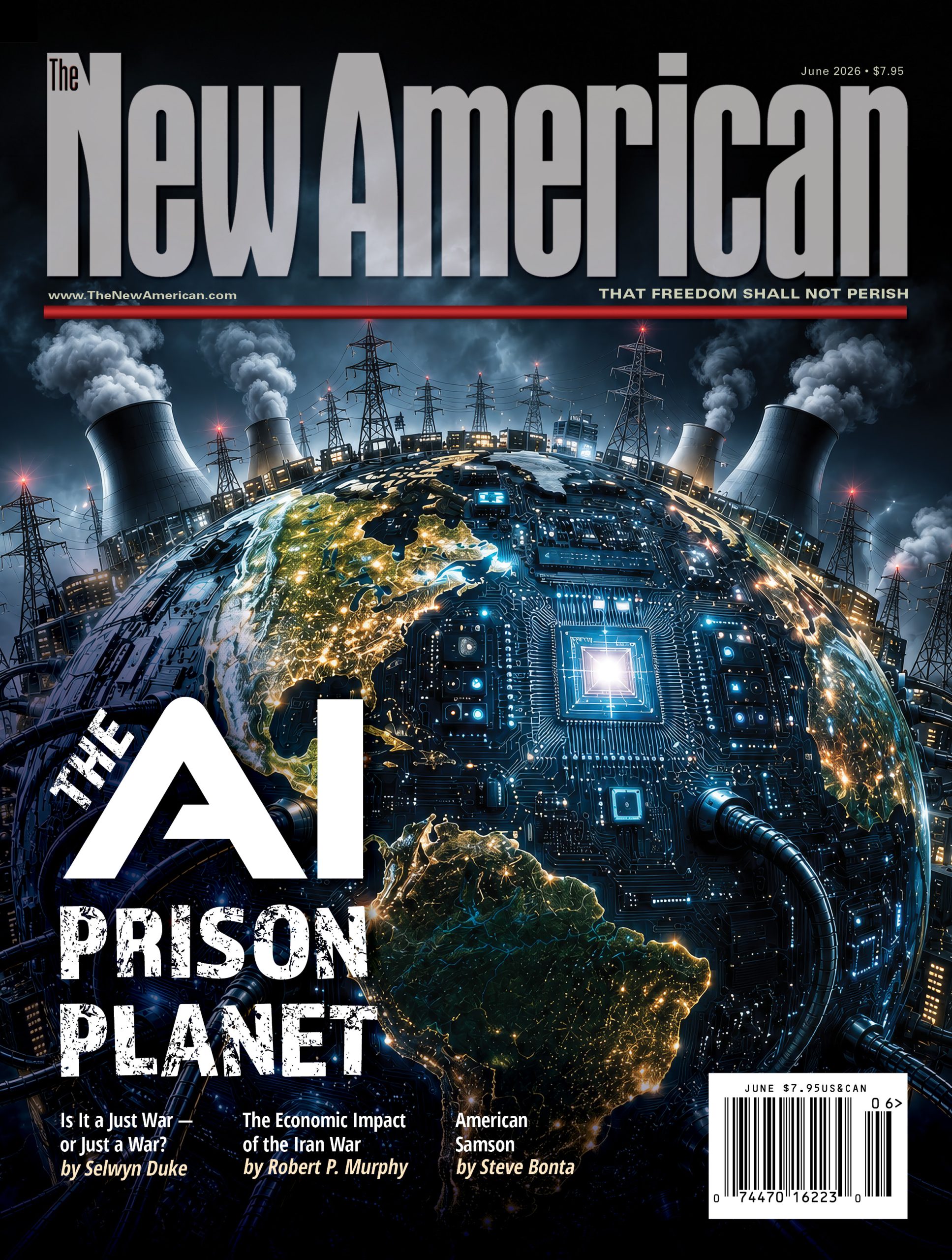

BRICS New “Unit” Digital Currency May Bring the World One Step Closer to Global Currency
The BRICS alliance, originally formed in 2009 by Brazil, Russia, India, and China, with South Africa added in 2010, has evolved into a significant geopolitical and economic bloc. In a major expansion in 2024, the group welcomed four new members: Egypt, Ethiopia, Iran, and the United Arab Emirates (UAE). Indonesia joined later, in 2025. This enlargement, referred to as BRICS+, now encompasses countries accounting for approximately 46 percent of the global population — more than 3.6 billion people — and about 35 percent of world GDP, surpassing the G7 in economic weight when adjusted for purchasing power parity. The expansion aims to amplify the group’s influence in global governance, challenge Western-dominated institutions such as the IMF and World Bank, and promote multipolarity in international affairs.
The motivations behind this growth stem from shared frustrations with the U.S.-led financial system, including vulnerability to sanctions and dollar dominance in trade. New members bring diverse strengths: The UAE contributes oil wealth and a financial hub, Iran adds strategic depth in the Middle East, and Egypt, Ethiopia, and Indonesia represent resource-rich areas.
Amid this expansion, BRICS+ has pursued financial innovations to reduce reliance on the U.S. dollar. A key development is the “Unit,” a prototype gold-backed digital settlement instrument unveiled in December 2025. Developed by the International Research Institute for Advanced Systems (IRIAS) in Russia, the Unit is not a full-fledged currency but a blockchain-based unit of account for cross-border trade and investments among BRICS+ nations. It is backed by a fixed reserve basket: 40 percent physical gold and 60 percent made of a weighted mix of BRICS currencies, including the Chinese yuan, Russian ruble, Indian rupee, Brazilian real, and South African rand. This structure echoes historical ideas such as John Maynard Keynes’ “bancor,” and may represent something even more consequential: a gradual shift away from a world in which a single national currency — the U.S. dollar — functions as the primary global reserve asset.
To understand the significance of this moment, it helps to look back to 1944 and the Bretton Woods conference. As economic journalist Ed Conway recounts in his book The Summit, British economist John Maynard Keynes proposed the creation of the aforementioned supranational currency called the “bancor.” Unlike the dollar-centered system that ultimately emerged, Keynes envisioned a global unit of account issued by an international clearing union. This bancor would not belong to any one country; it would be multinational, neutral, and designed to reduce global imbalances by discouraging both persistent deficits and persistent surpluses.
Keynes’ proposal was rejected. Instead, the postwar order placed the U.S. dollar at the center of the international monetary system — a national currency serving as a global reserve asset. Even after the collapse of the gold standard in 1971, the dollar retained its central role in trade settlement, commodity pricing, and sovereign reserves.

For decades, that arrangement appeared stable. But the rise of China, the expansion of emerging markets, and the increasing use of financial sanctions have exposed structural tensions in a dollar-centric system. Countries subject to sanctions, or concerned about their vulnerability to dollar-clearing networks such as SWIFT, have sought alternatives.
Recent BRICS discussions about cross-border payment systems, settlement in local currencies, and the creation of new financial instruments reflect a shared desire to reduce dependence on the dollar. Proposals for a digital, commodity-linked unit of account echo aspects of Keynes’ bancor: a reserve mechanism not tied exclusively to one sovereign state.
It may bear pointing out in passing that many critics have noted that BRICS, as a concept, did not emerge spontaneously from the affected countries themselves, but from an article in 2001 by Jim O’Neill (now Baron O’Neill of Gatley) when he worked for Goldman Sachs. So John Maynard Keynes’ 20th-century vision may be reasserting itself from England’s 21st-century financial center — with the coalition of emerging countries as a Trojan Horse for a blueprint that had long been on the table. — Rebecca Terrell
Trump’s “State of the Union”: Patriotic, Inspirational — but Substantial?
It is uncontested that President Donald Trump’s State of the Union Address on Tuesday was the longest in history. But was it the most substantial? And will it prove to be the most memorable?
It certainly had its memorable moments. This writer will never forget the president’s challenge to the legislators in the chamber to show where they stand on an issue where there should be unanimity among Democrats and Republicans alike. “One of the great things about the State of the Union is how it gives Americans the chance to see clearly what their representatives really believe,” Trump observed. “So tonight, I’m inviting every legislator to join with my administration in reaffirming a fundamental principle. If you agree with this statement, then stand up and show your support: The first duty of the American government is to protect American citizens, not illegal aliens.” In response, the Republican lawmakers stood up — but not Democrats. “Isn’t that a shame?” Trump commented. “You should be ashamed of yourself not standing up. You should be ashamed of yourself.” The optics made the Democrats look very bad — and deservedly so.
On other occasions too, Trump lambasted Democrats. “Democrats are destroying our country, but we’ve stopped them just in time,” he said.
In Trump’s view, his triumphant return to the Oval Office not only saved America from disaster, but it also brought about an incredible turnaround that made our great country greater than ever before. At the beginning of his speech, he enthused, “Our nation is back: Bigger, better, richer and stronger than ever before… When I spoke in this chamber 12 months ago, I had just inherited a nation in crisis, with a stagnant economy, inflation at record levels, a wide-open border, horrendous recruitment for military and police, rampant crime at home and wars and chaos all over the world. But tonight, after just one year, I can say with dignity and pride that we have achieved a transformation like no one has ever seen before and a turnaround for the ages.”
Later in his speech, he also lambasted Democrats for voting against the tax cuts in his Big Beautiful Bill. “All Democrats, every single one of them, voted against these really important and very necessary massive tax cuts,” he said. “They wanted large-scale tax increases to hurt the people, instead.” That’s not mincing words. But how accurate an assessment is this? Overlooked in this assessment is that the bill included not just tax cuts but also spending increases. Also overlooked is the simple fact that when the government spends more than it collects in taxes — as is now happening on a gargantuan scale — the piper will still be paid, and the payment will be manifested in the form of inflation when the debt is monetized via the Federal Reserve.
That said, it is of course true that the Democrats voted against the Big Beautiful Bill because they wanted to spend even more — much more — than Trump and the Republicans did. But it is also true that Representative Thomas Massie (R-Ky.) broke ranks with his fellow Republicans and voted against the bill because, in his estimation (and The New American’s, too) it was too big.
Trump acknowledged the deficits tacitly when he addressed the massive amount of “corruption that is plundering” America in Minnesota and elsewhere. “This is the kind of corruption that shreds the fabric of a nation, and we are working on it like you wouldn’t believe,” he said. “So tonight, although started four months ago, I am officially announcing the war on fraud to be led by our great Vice President JD Vance. He’ll get it done. And we’re able to find enough of that fraud, we will actually have a balanced budget overnight. It’ll go very quickly. That’s the kind of money you’re talking about. We’ll balance our budget.”

Seriously?! Eliminating fraud was what the now-almost-forgotten Department of Government Efficiency (DOGE) was supposed to accomplish. Government is inherently inefficient, so eliminating all of the fraud without eliminating all of the myriad unconstitutional programs where the fraud is occurring would not be realistically achievable anyway. But even if it were achievable, the problem with the government’s runaway spending and debt is not the fraud but the socialism. Put simply, efficient socialism, to whatever extent it could be achieved, is not the answer. Returning to the founding principles of our great Republic — including adherence to the Constitution — is the answer.
In his speech, Trump very appropriately acknowledged that “less than five months from now,” we will celebrate our nation’s 250th anniversary. “This July 4th, we will mark two and a half centuries of liberty and triumph, progress and freedom in the most incredible and exceptional nation ever to exist on the face of the earth,” he said. “And we’ve seen nothing yet. We’re going to do better and better and better. This is the golden age of America.” Stirring, patriotic words.
Also inspirational were the recognitions Trump extended to the gold-medal-winning men’s hockey team members, military heroes (two of whom were awarded the Congressional Medal of Honor on the spot), and others he invited to his speech. In ways, the celebratory atmosphere made his speech feel more like a campaign rally than a State of the Union address.
But Trump fell short in terms of substance. He did not acknowledge that runaway spending and debt cannot possibly lead to another “golden age of America” — not even when taxes are “cut.” Nor did he call for eliminating or phasing out all unconstitutional programs and abiding by the Constitution once again — steps that would make a new golden age truly achievable. — Gary Benoit
Michael Parenti Obits: Communist Press, MSM Have Kind Words for Stalinist Propagandist
Michael Parenti, an intellectual fixture on the far left for the last five decades, went to his eternal reward on January 24, 2026. He was 92. Since The Progressive magazine, a leading Marxist publication for more than a century, only got around to his obituary on February 24, we do not feel too bad about our somewhat tardy remarks on his passing. Although not as well known as, say, Noam Chomsky, Cornel West, or Frances Fox Piven, Michael Parenti carved out a significant niche for himself on the communist-socialist Left as a hardcore apologist for the Soviet Union, Castro’s Cuba, and other communist regimes. In 1970, while an associate professor at the University of Illinois Urbana-Champagne, Parenti was arrested during a protest against the Vietnam War. His conviction on the charges of aggravated battery against a state trooper, resisting arrest, and disorderly conduct resulted in his dismissal from the university. He subsequently taught at many colleges and universities but was unable to obtain a permanent, tenured position. Thus, he became a heroic “martyr” in the eyes of radicals. The Progressive’s encomium by Christopher D. Cook is titled “Free Radical: Remembering Michael Parenti,” with a subtitle that reads, “He educated generations about capitalism’s contradictions, corporate media biases, radical history, imperialism, and militarism.”
“Michael Parenti, who died on January 24 at the age of ninety-two, blazed a long, brave, and often lonely trail through American political thought and radical politics,” writes Cook. “The author of more than twenty-five books, including such many-editioned classics as Democracy for the Few and Inventing Reality, Parenti leaves behind a rich and vital legacy of intellectual and moral clarity.”
“World mourns Michael Parenti,” declared the obit headline of The Guardian, official publication of the Communist Party of Australia (CPA).
Worker’s World Party, a communist party of the Marxist-Leninist-Trotskyist variety, gushed: “His contributions inspired revolutionaries and anti-capitalists throughout the globe.”
Democracy Now!, the “public” radio-TV network funded by the Ford, Soros, and Tides foundations, referred to Parenti as “an outspoken critic of capitalism, imperialism and class inequities, whose intellectual works were celebrated around the world,” and then linked to several Democracy Now! videos featuring him.

The New York Times’ flattering eulogy offered some soft criticism of Parenti, noting that he “was accused of being an apologist for brutal regimes,” as if that were open for debate. He was not only a fervid flak for Moscow and Havana, but also a huge fan of mass-murderers Mao Zedong and Ho Chi Minh. For Parenti, the greatest evils in the world were capitalism and the United States. The Times also noted that he “worked at the Institute for Policy Studies, a left-wing Washington think tank,” which is like saying he worked with Al Capone, a Chicago businessman. Over the past half century, the Institute for Policy Studies (IPS) has earned a reputation as one of the most notorious “think tanks” operating in the interests of communist regimes and collaborating with terrorist-aligned groups. Over the past few decades, we have published numerous articles exposing the IPS in The New American as well as its predecessor magazines American Opinion and The Review of the News (see here, here, and here).
For all who are interested in the nefarious impact Parenti and his IPS comrades have had on America and the world, there is no better place to start than S. Steven Powell’s 1987 book Covert Cadre: Inside the Institute for Policy Studies, a damning 469-page indictment of the IPS and its many spin-off projects, publications, and organizations. — William F. Jasper
Pro-abortion Wyoming Supreme Court Ruling Shows Need for Constitutional State Government
What is the proper method to select judges for state courts? How should states design their constitutions? And why does it matter?
A recent ruling by the Wyoming Supreme Court demonstrates why states should apply America’s founding principles in their judicial-selection processes and constitutional structures — and why failure to do is causing major, negative consequences.
On January 6, the Wyoming Supreme Court issued its opinion in State v. Johnson, in which it struck down two pro-life bills that the Legislature enacted after the 2022 Dobbs v. Jackson Women’s Health Organization U.S. Supreme Court decision that overturned Roe v. Wade. In a 4-1 decision, the Wyoming Court ruled that Article 1, Section 38 of the Wyoming Constitution protects a so-called right to abortion.
On January 20, the Wyoming Attorney General’s Office filed a request to rehear the case, arguing that the Court “made numerous mistakes or errors of law.” On February 18, however, the Court rejected this request.
A 4-1 pro-abortion Supreme Court ruling in arguably the most conservative state in the country may seem surprising. Unfortunately, however, Wyoming is not alone as a conservative state with a left-wing court majority. In just the last few years, the supreme courts of Kansas, Montana, Oklahoma, and Utah, among other states, have struck down or blocked state laws restricting abortion — and conservative states have also experienced leftist state supreme court decisions on a host of other issues.
Why are the supreme courts of conservative states so left-wing? One reason — as The New American has previously covered — is that these states’ political leadership is often far less conservative than its voters, leading to left-wing judicial appointments. However, another important but seldom-mentioned reason is the judicial-selection method each state uses. Of the five states listed above, four of them use a technocratic method called “merit selection” or the “Missouri Plan,” after the state that first adopted it.
Our article “Restore State Government,” published in the October 14, 2024 issue of The New American, explains how both merit selection and electing judges directly undermine the republican form of government advocated by the Founding Fathers.
In order to restore their judicial system’s commitment to faithfully interpreting the law, states must avoid both democracy and technocracy, and instead adhere to the “Republican Form of Government” advocated by the Founding Fathers and required for all state governments under Article IV, Section 4 of the U.S. Constitution. This means that states should adopt judicial-selection systems that mirror the one used by the federal government: nomination by the governor without interference by a judicial nominating commission, and confirmation by the legislature.
In addition to adopting a proper judicial-selection method, states should ensure that their constitutions strictly uphold limited government and God-given, negative rights. Importantly, the Wyoming Supreme Court based its decision on Article I, Section 38 of the Wyoming Constitution. Titled “Right of health care access,” it declares, in part:
Each competent adult shall have the right to make his or her own health care decisions. The parent, guardian or legal representative of any other natural person shall have the right to make health care decisions for that person.
Of course, killing an innocent preborn baby is not healthcare. However, one can see how this vaguely worded section gave the Court ammunition to justify its pro-abortion opinion. Additionally, a “right of health care access” undermines the fundamental purpose of government: to prevent violations of natural, God-given (i.e., negative) rights. A “right to healthcare” is no right at all, since instead of restraining government and protecting individual liberty, it obligates big-government action. Such a constitutional provision directly undermines limited government.
Every state should model its government structure after what the Founding Fathers prescribed via the federal Constitution, and limit its own constitution to outlining that basic structure and protecting God-given rights.
Restoring America’s founding principles starts with us — educating our fellow citizens about constitutional state government and putting pressure on our elected officials to boldly reapply the Founding Fathers’ blueprint for government. To help educate your state legislators about constitutional state government, use The New American’s “Make America STATES Again” reprint, available for purchase here. Additionally, to view our other state-sovereignty resources, click here.
The above is part of an article by Peter Rykowski. To read the entire article at TheNewAmerican.com, click here.
Can Trump’s Nuclear Revival Overcome Irrational Radiation Fears?
In a move promoting President Donald Trump’s efforts to advance an “American nuclear renaissance,” U.S. Department of Energy Secretary Chris Wright ended a decades-old radiation safety standard last month, sending alarmists into overdrive.
The Bulletin of the Atomic Scientists published a rant entitled “Trump’s new radiation exposure limits could be ‘catastrophic’ for women and girls.” The piece sharply criticizes President Donald Trump’s Executive Order 14300, issued in May 2025. The order directs the Nuclear Regulatory Commission (NRC) to undertake a “wholesale revision” of radiation-protection standards, potentially discarding the long-standing linear no-threshold (LNT) model — which assumes any radiation dose, no matter how small, carries some cancer risk — and the ALARA (“as low as reasonably achievable”) principle. (The latter is the standard that Wright canceled in January.) The Bulletin warns that this could raise the public exposure limit from the current 100 millirems per year — roughly ten chest X-rays, or 1 millisievert (mSv) — to as much as 500 millirems (5 mSv). A sievert (Sv) is the international scientific unit that measures the biological effect of radiation on human tissue, taking into account the type of radiation and its potential to cause harm; 1 Sv equals 1,000 mSv.

The authors argue the changes would disproportionately harm women and girls. Citing Hiroshima and Nagasaki survivor data, they claim women are 1.5 to 2 times more likely than men to develop cancer from the same dose and that young girls face seven times the risk overall. Biologist Mary Olson calls the potential loosening “undeniably homicidal” and “catastrophic” for women and children, projecting fatal cancers in roughly one in 57 people living near NRC-licensed facilities. Alarmists including Kimberly Applegate and Kathryn Higley, president of the National Council on Radiation Protection and Measurements, echo concerns that the increase would lie “far out of the international norms” and raise cancer rates without clear benefit.
Experts in the field of nuclear engineering know better. Seven months prior to the Bulletin’s rant, nuclear physicist Robert Hargraves published what amounts to a detailed counter-argument on his Substack “Benign!” It argues that radiation from nuclear plants is not harmful at the doses and dose rates encountered, because biological repair mechanisms fix cellular damage faster than it accumulates. He directly challenges the LNT model, citing reliable data that shows no observable excess cancers below 0.1 Sv — a threshold 20 times higher than the Bulletin’s feared new public limit of 5 mSv. Moreover, the United Nations Scientific Committee on the Effects of Atomic Radiation (UNSCEAR) data on atomic bomb survivors reveal no increase in leukemia or other cancers below this level. The French Academy of Sciences states: “Epidemiological studies … have not been able to detect statistically significant risks even on large cohorts or populations” below 0.1 Sv.
Hargraves explains that DNA repair systems efficiently handle low-dose damage: An annual exposure of 0.1 Sv produces roughly one irreparable double-strand break per cell per year, which cells routinely manage, as they regularly encounter far greater damage from environmental hazards such as free radicals, nutrient deficiencies, viral infections, etc. Real-world accidents reinforce the point: Fukushima caused zero radiation deaths, and Chernobyl’s public-health effects were limited to deaths among emergency crews. The absence of detectable harm below 0.1 Sv applies across all demographics, including women and children.
Hargraves contends that fear of radiation rests on a model repeatedly contradicted by evidence. Over time the NRC has tightened historical limits without reducing actual harm, merely inflating costs and public fear. France, which regulates based on observable risks rather than LNT, generates 70 percent of its electricity from nuclear plants. Adopting evidence-based standards would enable nuclear power at between $0.03 and $0.04 per kilowatt-hour (kWh) (current prices in the United States range from $0.12 to $0.40 per kWh); it would also protect health far better than fossil fuels, linked by the World Health Organization to 7 million premature deaths yearly.
“Our team is focused and prioritizing resources to make sure this critical work is grounded in safety and completed on time,” brags the NRC in a Facebook post, claiming that its rulemaking schedule is on track to publish final rules by Trump’s deadline in November. The question is whether final regulations will prioritize undetectable theoretical risks or measurable real-world outcomes. Hargraves’ evidence suggests that easing limits within the 5 mSv range would not be catastrophic but benign — unlocking nuclear energy to power the AI-driven future safely and affordably. — Rebecca Terrell
Trump Administration Resumes Funding to UN
The Trump administration has begun making payments to the United Nations that the globalist body has demanded from the United States.
The Associated Press reports:
The United States has paid about $160 million of the nearly $4 billion it owes the United Nations, the U.N. said [February 19], and President Donald Trump promised more money to the financially strapped world organization.
The Trump administration’s payment last week is earmarked for the U.N.’s regular operating budget, U.N. spokesman Stéphane Dujarric told The Associated Press….
U.N. officials have said 95% of the overdue payments to the U.N.’s regular budget is from the United States.
As The New American previously reported, U.S. Ambassador to the UN Mike Waltz described the payment “an initial tranche of money” and “a significant … down payment on our annual dues.” This funding comes after UN Secretary-General António Guterres warned that the globalist body risked “imminent financial collapse.”

Although Trump and his administration have taken multiple actions to restore U.S. sovereignty from the UN system — including signing a memorandum on January 7 to withdraw the United States from 66 international organizations and agreements — Trump himself has made multiple statements supporting the UN itself.
In its article, The Associated Press noted recent comments by the president:
At the Board of Peace meeting [February 19] in Washington, Trump was much more positive than he has been in the past about the future of the United Nations, which was established on the ashes of World War II.
He said his administration was going to be working “very closely” with the U.N., adding, “Someday, I won’t be here — the United Nations will be.”
Trump said the Board of Peace “is going to almost be looking over the United Nations,” strengthening it and making sure its facilities are good and it runs properly.
“They need help, and they need help moneywise,” the president said, never mentioning that the U.S. failure to pay its dues is a key reason for the U.N.’s financial crisis.
“We’re going to help them moneywise, and we’re going to make sure the United Nations is viable,” Trump said. “And I think it’s going to eventually live up to its potential. That will be a big day.”
Instead of funding an international organization whose core principles and goals are completely antithetical to America’s founding principles, the United States should reassert its sovereignty by withdrawing from the UN entirely. Contact your U.S. representative and senators, and urge them to Get US Out! of the UN by supporting H.R. 1498 and S. 669. — Peter Rykowski
U.S. Threatens to Withdraw From IEA
The Trump administration is threatening to withdraw from the International Energy Agency (IEA) if it doesn’t abandon certain net-zero policies. Politico reports:
U.S. Energy Secretary Chris Wright on [February 17] threatened to pull America out of the International Energy Agency, whose work on deploying renewables conflicts with the pro-fossil fuel policy of the Trump administration.
“If a large part of data reporting agencies devote themselves to these kinds of leftist fantasies … that can only distort their mission,” Wright told a early-evening conference at the French Institute of International Relations in Paris.
Accusing the IEA of behaving like a “climate advocacy organization,” Wright urged it to focus on “energy security.”
… This isn’t the first time Wright has warned the agency about its work. “We’re going to change the way the IEA operates, or we’re going to pull out,” he said in an interview with Bloomberg last July.
At a meeting in Paris earlier this month, Wright called on the organization to stop conducting modeling in a manner promoting net-zero emissions.
Wright’s comments come after President Donald Trump ordered U.S. withdrawal from the UN Framework Convention on Climate Change (UNFCCC), the underlying mechanism for the UN’s climate agenda.
If the United States withdraws from the IEA, it would be another step toward restoring U.S. sovereignty and pushing back against the radical climate agenda. — Peter Rykowski
States Advance Legislation Opposing the UN
Multiple states are advancing legislation in their 2026 sessions pushing back against the UN.
Already this year, legislation clarifying that the UN or World Economic Forum have no domestic jurisdiction and banning the enforcement of any policies from these globalist bodies has passed one chamber in Iowa and Kansas. As of this writing, these bills are awaiting action in each state’s second chamber.
A similar bill in Utah passed the state House but was voted down in the Senate.

Legislation pushing back against the UN has been introduced this year in other states, including Arizona and West Virginia.
Additionally, Arizona state Representative Khyl Powell (R-Gilbert) has introduced a resolution calling on “the President of the United States and the United States Congress [to] withdraw from the United Nations to better serve this country’s interests.”
This legislation shows how states can push back against the UN — and are already doing so. By creating an informed electorate, we can secure more legislative victories like this, and ultimately get the United States out of the UN for good. — Peter Rykowski
FedEx Sues for Tariff Refunds
In a landmark decision on February 20, the U.S. Supreme Court ruled 6-3 that President Donald Trump’s broad tariffs imposed under the International Emergency Economic Powers Act (IEEPA) exceeded presidential authority. The ruling struck down tariffs that had collected an estimated $175 billion from importers, including reciprocal duties on allies and higher rates on adversaries such as China. Just days later, FedEx became the first major corporation to sue the U.S. government, filing in the U.S. Court of International Trade for a full refund of tariffs it paid, claiming “injury” from the illegal levies.
Historically, tariffs have straddled the line between foreign policy and economic protectionism. The U.S. Constitution assigns Congress the power to regulate interstate commerce and lay duties, reflecting the framers’ intent: Congress handles domestic affairs, while the presidency, created to address weaknesses in international dealings, manages foreign relations. Tariffs, as taxes on foreign goods, primarily burden overseas producers. Critics argue that they function as indirect taxes passed to consumers via higher prices. But this parallels inflation induced by Federal Reserve policies when they expand the money supply, thereby eroding the purchasing power of each individual dollar. It amounts to a “shadow tax” on American citizens, which the Fed imposes without explicit congressional approval.
President Trump is not the first to impose tariffs without congressional approval. Richard Nixon’s 1971 “Nixon Shock” included a unilateral 10-percent import surcharge under the Trading with the Enemy Act, aimed at addressing inflation and balance-of-payments crises. This measure, upheld in court, forced currency revaluations and ended the gold standard, evincing presidential latitude in trade emergencies.
While tariffs indeed require congressional approval, when the Constitution was written, there was no income tax, and the federal government funded itself with tariffs, excise taxes, and duties. As globalists pushed in the 20th century to incorporate the United States into a global economy, they decried tariffs (and national borders) and proposed that the government fund itself with an income tax on its citizens. President Trump has routinely said that, if we could go back to the old system (and enough money could be raised via tariffs), the federal income tax could be phased out. “I believe at some point in the not-too-distant future, you wouldn’t even have income tax to pay because the money we’re taking in is so great,” said the President in a December 2 Cabinet meeting.

There are forces in play, of course, that don’t want this to happen. In the end, it signals the enduring battle between national sovereignty and supranational economic forces, where the real constitutional crisis is not about indirect price-hikes on the consumer via tariffs but the direct tax on the public as a result of abandoning our original constitutional system. — Rebecca Terrell
West Virginia Bill Would Nullify Federal Court Rulings
Legislation introduced in the West Virginia Legislature would create a formal process for nullifying federal court rulings that conflict with the U.S. Constitution.
House Bill 5533 (H.B. 5533), titled the “West Virginia Federal Constitutional Authority Clarification Act,” is sponsored by Delegate Bill Ridenour (R-Harpers Ferry) and three other delegates. It declares, in part:
(a) The Legislature finds that —
(1) The Constitutions of the United States and West Virginia are the supreme law within their respective jurisdictions;
(2) Judicial decisions demonstrably wrong in their interpretation of constitutional or statutory text threaten the sovereignty of the State of West Virginia and the separation of powers;
(3) Federal courts of limited jurisdiction are bound by the geographic and subject-matter confines of the districts and circuits established by Congress, and decisions purporting to reach beyond those confines lack legitimate force in this State; and
(4) West Virginia has a compelling interest to ensure that the people of this state are governed only by lawful, constitutional commands and not by ultra vires or unconstitutional judicial dictates.
(b) The purpose of this article is to establish clear processes within both the Executive and Legislative branches to identify, review, and, as warranted, declare specific federal judicial decisions, or aspects of specific judicial decisions, null and void in West Virginia, and to direct the actions of state officers in response.
The remainder of the bill lays out the specific procedures for reviewing and nullifying unconstitutional federal court rulings, and ensuring that state and local officials do not enforce them.
H.B. 5533 is an excellent example of state nullification of unconstitutional federal acts. Any federal act that violates the U.S. Constitution is null and void, and state officials are duty-bound to nullify such acts — including lawless federal court rulings. Contact your state officials, and urge them to boldly uphold the U.S. Constitution as written, including by nullifying all unconstitutional federal acts. — Peter Rykowski
Will A.I. Data Centers Soon Orbit the Earth?
Elon Musk’s aerospace company SpaceX announced its acquisition of xAI on February 2 in a $1.25 trillion deal, merging two of the entrepreneur’s largest companies. According to Jeff Brown’s The Bleeding Edge newsletter, the move aims to revolutionize AI computing by deploying orbital data centers. SpaceX plans to launch an armada of solar-powered AI satellites, forming a constellation in low Earth orbit (LEO) for an “orbital cloud data center.” These large satellites would harness unlimited solar energy, bypassing Earth’s atmospheric limitations. Musk envisions this as the future of scalable AI, predicting that the space-based model could become cost-effective within two to three years.
Musk says his vision is inspired by the unprecedented demand for resources that AI data centers pose. Water consumption is a primary concern: a mid-sized data center uses as much water as a small town, with hyperscale facilities requiring up to 5 million gallons daily for cooling — equivalent to water use in a city of 50,000 people. Globally, data centers are predicted to consume 1,200 billion liters annually by 2030, exacerbating shortages in water-stressed regions and driving up utility costs for consumers.
Energy demands are equally daunting. U.S. data centers consumed 176 terawatt-hours in 2023 — matching Ireland’s national usage — and are projected to double or triple by 2028. A single 100-megawatt AI center uses power for 75,000 homes. Relying on traditional power plants will likely spike consumer energy prices even more than renewables have.
The most formidable hurdle is raw materials, particularly copper. Mining magnate Robert Friedland warns that the “surveillance capitalism” model that Silicon Valley is pushing would require mining as much copper in the next 18 years as humanity has in the last 10,000. AI data centers alone could demand 572,000 tons annually by 2028, widening a projected 30-percent shortage by 2035 and inflating costs.
Space-based solutions address two of the three key issues: energy and cooling. “It’s always sunny in space,” quips Musk, while vacuum conditions enable radiative cooling. Yet raw materials remain an insoluble problem. Satellites still require copper for wiring and components, potentially exacerbating shortages. Moreover, launch costs are steep and hardware lifespans are short. Experts deem large-scale viability decades away, despite Musk’s optimism.
That’s good news for freedom-lovers, who can’t be expected to look with approval upon a surveillance state with levitating data centers that have no off switch. But as with the push for tyranny in other ages, the most grandiose schemes for authoritarianism run up against hard physical realities. The scarcity of copper and other precious metals required to maintain the planned technocracy may end up being humanity’s silver lining. — Rebecca Terrell

NYMHM: News You May Have Missed
Is the Cartel Uprising in Mexico a Pretext for a U.S. Resource Grab?
U.S. & Iranian Officials Make Last-ditch Peach Effort in Geneva
FISA Section 702 Nears Expiration as Congress Considers Warrant Requirements
Bill Gates Admits Russian Affairs as Epstein Files Fuel Calls for Justice in America
Wisconsin Voter Records Raise Red Flags
Mamdani, Ocasio-Cortez Advertise Free Child Care for Illegals
Broken System: 97-year-old Woman Breaks Hip, Told of 10-day Ambulance Wait, Found Dying on Floor
Epstein-Rothschild Connection Key to Exposing the Deep State
Anti-Globalist Coalition Grows in Japan Thanks to Help from Charlie Kirk: Japanese Senator
Kristen Williamson: ASU’s Technocratic Role in the Epstein Files
Public Media and the Constitution: Government Broadcasting Beyond Its Proper Role
[END]