

Pentagon Presses for Weapons Surge as Iran War Drains U.S. Stockpiles
The Pentagon is asking weapons manufacturers to move faster. Much faster.
The new push comes as the United States faces serious shortages in some of its most important missiles after five months of war with Iran.
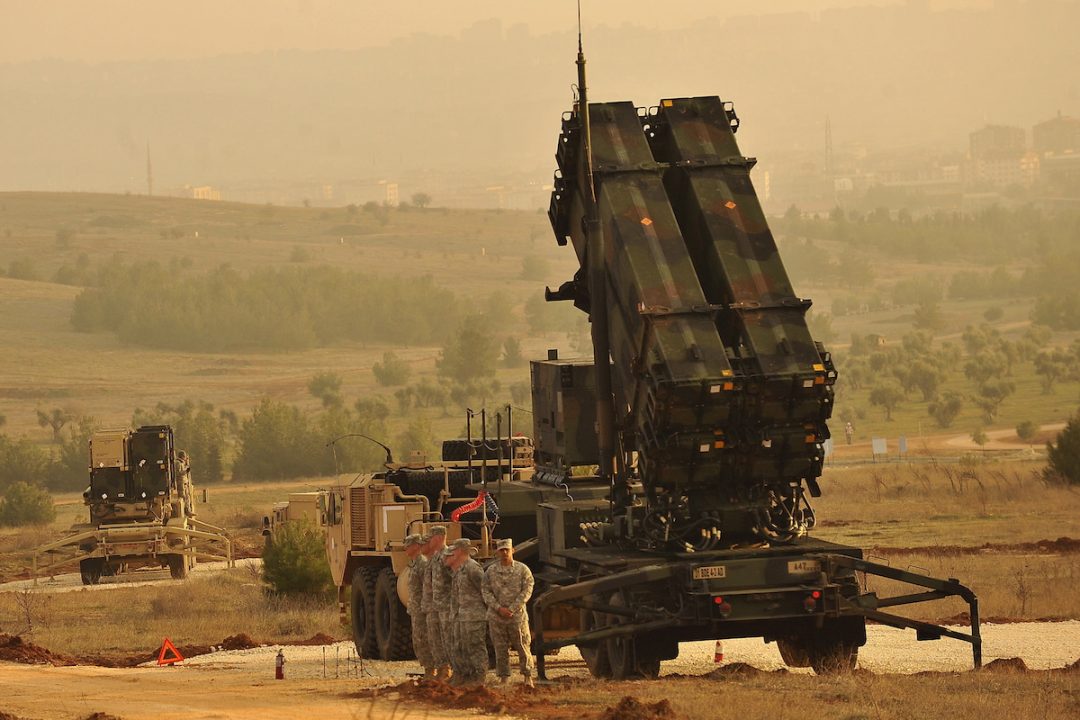
According to a recent analysis by the Center for Strategic and International Studies (CSIS), Patriot and Terminal High Altitude Area Defense (THAAD) interceptor stocks have fallen sharply. At the same time, Reuters reported that the Army has burned through “virtually all” of its Army Tactical Missile System (ATACMS) and Precision Strike Missile (PrSM) inventory. Replacing some of those depleted weapons could take years.
President Donald Trump insisted last Thursday that the United States remained well-armed. Yet, asked about the rationale for a $21 billion supplemental request for munitions, he said, “We always want more” weapons. He also blamed former President Joe Biden for draining the arsenal by supplying Ukraine.
There is some truth to that. U.S. support for Ukraine depleted stocks of several weapons. Those includes Stinger missiles, Javelins, and 155 mm howitzer ammunition, and the Pentagon was still working to replenish them when Biden left office. But those shortages reflected a much older industrial problem, and they do not explain the dramatic depletion of Patriot and THAAD interceptors during Trump’s wars with Iran.
When Depletion Becomes Demand
Deputy Defense Secretary Steve Feinberg sent defense companies an unusually blunt directive last week.
According to a memo published by The Washington Post on Saturday, he gave arms makers 21 days to explain how they can speed deliveries and increase production of critical weapons. He wrote,
Years-long development cycles are not acceptable.… We must dramatically accelerate our program schedules and expand our production capacity now.
According to Associated Press, Pentagon spokesman Sean Parnell confirmed that the memo is real. He said, however, that the effort fits a broader campaign to rebuild the defense industrial base.
The WaPo also said that in late July, the White House “summoned” both legacy defense contractors and Silicon Valley weapons start-ups for talks with senior administration officials. Those included Defense Secretary Pete Hegseth, White House Chief of Staff Susie Wiles, and Director of the Office of Management and Budget (OMB) Russell Vought. Per the report, they effectively asked the companies to help grease the wheels in Congress:
In the meeting — which included firms such as Lockheed Martin, Northrop Grumman, Boeing, autonomous weapons firm Anduril and data analytics company Palantir — company executives were asked to directly lobby lawmakers to increase defense spending through congressional reconciliation, the people said. Fox News earlier reported this meeting.
The Pentagon, meanwhile, has already moved to increase production.
It recently reached a deal worth more than $3 billion with Lockheed Martin and Northrop Grumman to expand production of Patriot and THAAD components. The framework would eventually triple Patriot production and quadruple THAAD production. A separate Lockheed contract worth up to $58.6 billion would dramatically increase Patriot interceptor output.
On June 17, Trump invoked the Defense Production Act to accelerate weapons production and address supply-chain bottlenecks.
The Missing Missiles
The scale of the depletion is striking.
The United States had an estimated 2,330 Patriot interceptors before the Iran war began. By the April ceasefire, that number had fallen to about 1,030. After renewed fighting, CSIS estimated that only 759 to 827 remained.
That represents a decline of about 65 percent since the war began.
THAAD stocks followed the same path. The United States entered the war with about 452 interceptors. That inventory fell to between 232 and 262 by the April ceasefire. Some replenishment followed, but CSIS estimates only 234 to 278 remain. That leaves the stockpile at least 38 percent below its prewar level.
Patriot and THAAD systems form critical layers of U.S. missile defense. Patriot can intercept ballistic and cruise missiles as well as aircraft. THAAD targets ballistic missiles at higher altitudes and longer ranges. Both protect U.S. troops, bases, and allies.
The offensive arsenal has suffered even more.
As noted earlier, the Army has already used “virtually all” of its ATACMS and PrSM inventory during the Iran war. These highly accurate, ground-launched missiles can strike targets deep behind enemy lines. ATACMS can reach about 190 miles, while the newer PrSM can travel more than 250 miles.
Their range allows U.S. forces to hit air defenses, command centers, and missile sites without sending aircraft directly into heavily defended airspace. Their depletion could therefore force greater reliance on riskier piloted bombing missions.
The Navy has also used nearly half of its global Tomahawk stockpile. Those are long-range cruise missiles launched from ships and submarines to strike heavily defended land targets from far outside enemy airspace.
Trump’s Contradictions
The shortages have also produced reports of tension inside the administration.
The Washington Post reported on Thursday that Trump “clashed” with Hegseth at Camp David the week before.
According to two people familiar with the exchange, Trump demanded answers about the shortages and complained that he thought the problem “had been fixed.” The Post reported that the depleted stocks were limiting military options against Iran.
Trump strongly denied the account.
“The Fake News, as usual, is spreading false and completely unfounded rumors,” he wrote on Truth Social. He said he was “extremely happy” with Hegseth’s performance and described The Post’s reporting as potentially “treasonous.”
In another post, he insisted that the United States possesses “massive amounts” of munitions. In the same breath, he said officials who leak stockpile information were “being hunted down” and could face long prison sentences.
Later that day, however, Trump acknowledged the problem more directly.
“We have certain types of munitions that are very powerful, that we have unlimited, virtual unlimited supply,” he told reporters. “We have others where it’s a little bit tighter.”
A War the Arsenal Could Not Sustain
The shortage was not an unforeseeable surprise.
Before Trump launched the Iran war, Joint Chiefs Chairman General Dan Caine, along with other officials, warned him that America lacked the stockpiles needed to sustain a prolonged conflict. Trump went ahead anyway, anticipating a short war.
Five months later, the consequences will outlast the fighting.
Even before the latest combat, CSIS estimated that rebuilding Patriot, THAAD, and Tomahawk inventories to prewar levels would take at least three years. Patriot missiles ordered in the fiscal 2027 budget are not expected to begin arriving until May 2029. Major THAAD deliveries are projected around the same time. Tomahawk replacements could stretch into late 2030.
New factories and multibillion-dollar contracts will eventually increase production. But they cannot quickly replace what Trump’s war consumed in months.
The result is a strategic liability that could outlast the Iran War by years. Until those arsenals are rebuilt, every new crisis begins with fewer weapons, fewer options, and less margin for error. More immediately, the shortages also leave the United States with less flexibility in the war it is still fighting.
So far, the clearest winner is, once again, the military-industrial complex. Every missile fired empties the arsenal and creates another contract to refill it. The profits accumulate in corporate ledgers. The bill, as always, moves to American taxpayers, already facing an economy under growing strain.
Related article:
Report: Trump Sons Build Defense Portfolio as Pentagon Billions Flow