
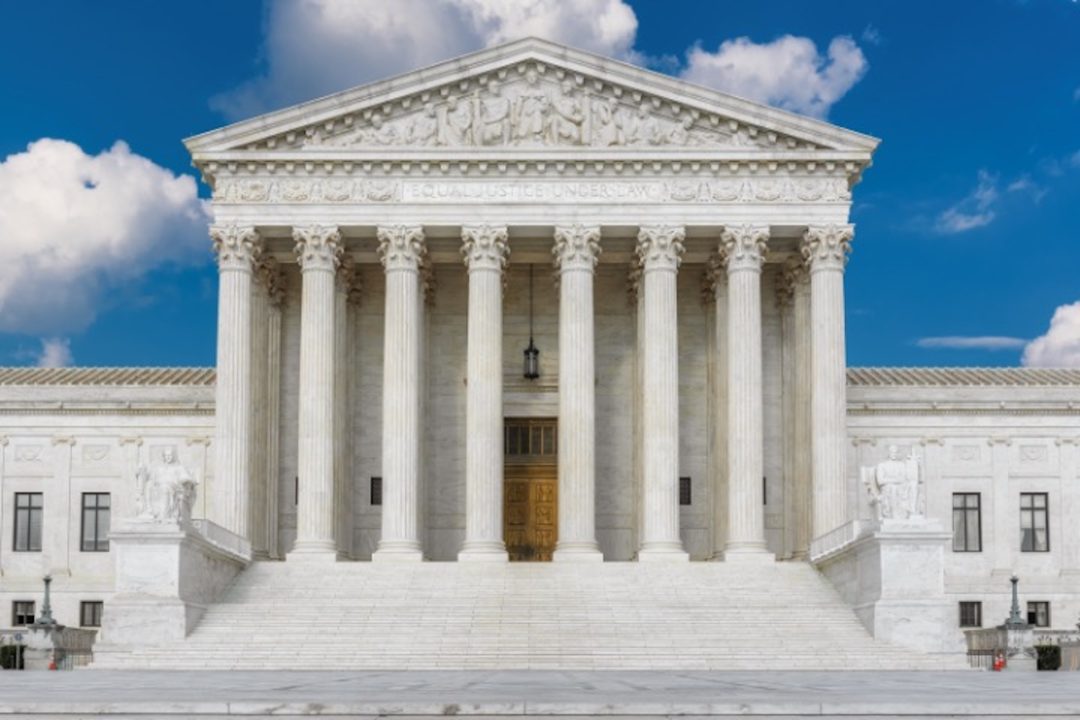
The Oracle on First Street
Before he marched on Persia in 547 B.C., Croesus of Lydia sent gold to Delphi and asked the oracle whether he should make war on Persia. The answer came back as a riddle: If he crossed the river Halys, he would destroy a great empire. He crossed. He destroyed one. It was his own.
Americans have their own Delphi. It sits at 1 First Street in Washington, D.C. Its priests wear black. And every October, a nation that once threw off a king gathers on the temple steps to learn which of its liberties it will be permitted to keep.
This December, the Supreme Court will hear Viramontes v. Cook County and Grant v. Higgins, two challenges to state bans on the most popular rifle in America. Read that sentence again. Tens of millions of free citizens are waiting for nine lawyers to tell them whether “shall not be infringed” means what it says.
It does. It did in 1791. No oracle was consulted then, and none is needed now.
Founders’ Plan for the Judiciary
The men who wrote the Constitution never made the federal judiciary the final word on the liberty of the people. Alexander Hamilton, no friend of feeble government, sold the courts to New York as the harmless branch:
The judiciary … has no influence over either the sword or the purse…. It may truly be said to have neither FORCE nor WILL, but merely judgment.
Merely judgment. Not supremacy. Not revelation.
Thomas Jefferson saw where the road ran. In the Kentucky Resolutions of 1798, he declared that the government created by the Constitution
was not made the exclusive or final judge of the extent of the powers delegated to itself; since that would have made its discretion, and not the Constitution, the measure of its powers.
The states, as parties to the compact, kept the right to judge for themselves. James Madison said the same for Virginia. Two decades later, Jefferson put it more bluntly still: Making judges the ultimate arbiters of all constitutional questions was a very dangerous doctrine, one that would place Americans under the despotism of an oligarchy.
Justices Legislating
We did not listen. Today a right exists when five justices say it exists and vanishes when five say otherwise. Legislators who swore their own oaths to the Constitution shrug and say, “Let the courts decide.” Governors wait. Sheriffs wait. Citizens wait.
That is not a republic. That is a petitioning class kneeling before precisely the oligarchy Jefferson named two centuries ago.
Mark this: The Court opens its new term with its public approval at a record low. Americans sense something is rotten; they simply have not been told what. The problem is not that the oracle gives bad answers — the problem is that we keep asking it the questions.
Every officer in the Union swears an oath to the Constitution, not to the latest opinion interpreting it. State legislators may refuse to lend their machinery to federal usurpation. Sheriffs may refuse to confiscate what the Second Amendment protects. Citizens may read Article I, the 10th Amendment, and the Bill of Rights for themselves in a single afternoon, no law degree required.
The Framers wrote the Constitution in plain English so that free men would never need an oracle to translate it.
Croesus trusted the riddle and lost his kingdom. We are standing on the banks of the Halys now. We can linger on the temple steps awaiting the next pronouncement, or we can remember that the people of the states made this government, numbered its powers, and never surrendered the right to judge when it overstepped them.
The oracle does not hold our liberty. We do. Act like it.
This article is part of The New American’s weekly online newsletter Insider Report, which is emailed to TNA subscribers each week. Click here to subscribe to The New American to receive the Insider Report and access exclusive content.