Trump Quadruples Argentine Beef Import Quota Amid Ranchers’ Opposition
As beef prices strain American grocery budgets, the White House says help is coming from abroad. President Donald Trump has ordered a major expansion of beef imports from Argentina, arguing that more foreign supply will ease record costs for consumers.
Trump’s move comes through a February 6 proclamation titled “Ensuring Affordable Beef for the American Consumer.” It temporarily increases the amount of Argentine lean beef that can enter the United States at lower tariff rates in 2026. The extra volume equals 80,000 metric tons, released in four quarterly blocks. That represents roughly a four-fold increase over Argentina’s previous low-tariff quota level of about 20,000 metric tons, effectively quadrupling its access under this deal.
Ranchers, however, warn the policy will hurt U.S. producers while doing little at the checkout counter. They argue the real winners will be the large, highly concentrated meatpacking corporations that sit between producers and shoppers, and that can capture the added supply as higher margins rather than pass savings through.
A Supply Shock
The proclamation frames the decision as a response to a domestic supply squeeze. It states that “cattle ranchers have played an integral role in United States history,” and notes that beef remains a core part of the American diet. It then points to years of drought, wildfire damage to grazing lands, and livestock health pressures. Those forces, the document says, have reduced herd sizes and tightened the flow of animals into feedlots.
The president writes that these pressures have “resulted in higher beef prices for United States consumers.” He cites government data showing ground beef averaging $6.69 per pound in December 2025. He calls that the highest level since federal tracking began decades ago. Demand, Trump adds, has not faded. Americans continue to buy beef even as cheaper proteins are available.
Notably, the proclamation does not address the role that Trump’s trade wars have played in food inflation. Last November, the administration rolled back tariffs on a range of food products, including beef, after concerns that those duties were contributing to higher grocery prices.
Trump argues that the market needs short-term relief,
I am taking action to temporarily increase the quantity of in-quota imports of lean beef trimmings under the United States beef TRQ to increase the supply of ground beef for United States consumers
The administration uses authority under U.S. trade law that allows quota adjustments during supply disruptions caused by disasters or major market shocks.
The Lean-beef Factor
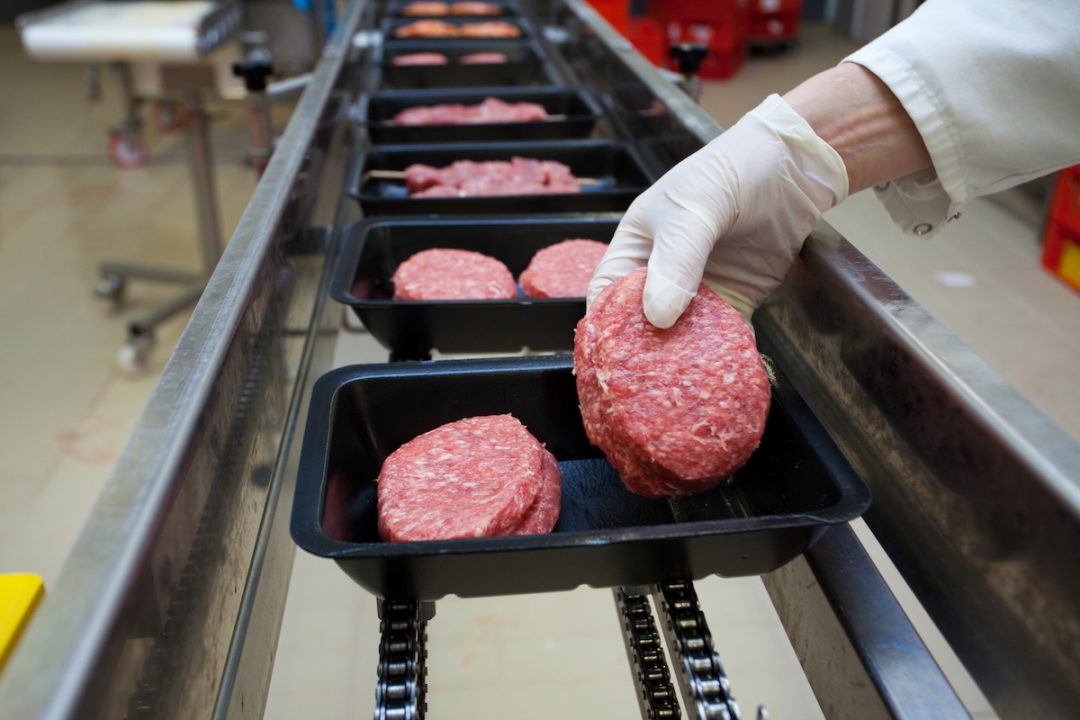
The policy focuses on lean beef trimmings, not steaks or premium cuts. These trimmings are commonly blended with fattier U.S. beef to make ground products such as hamburgers. Processors rely on that blend to hit specific fat percentages. When lean supply tightens, costs can ripple quickly through the ground-beef market.
Under the order, the additional 80,000 metric tons will move on a “first-come, first-served basis” in quarterly windows. The first window opens February 13.
Argentina is known for its pasture-based cattle industry and export-oriented beef sector. The White House presents the country as a practical supplier that can fill a temporary gap. Officials argue that the move buys time while U.S. herd rebuilding slowly works through the production cycle, which often takes years.
The U.S. Department of Agriculture (USDA) confirmed in its annual report that as of Jan. 1, 2026, the U.S. beef cattle herd stood at 86.2 million head — the lowest since 1951.
Ranchers Fear Damage
U.S. cattle producers say the import expansion comes at a difficult time for the domestic industry. Many ranchers already face high feed, land, and financing costs, and they contend that increased foreign competition could add further pressure.
The National Cattlemen’s Beef Association (NCBA), America’s largest association of cattle producers, told CBS News that
the increase in imports is a “misguided effort” and will damage the “livelihoods of American cattlemen and women, while doing little to impact the price consumers are paying at the grocery store.”
Back in October, when Trump first previewed the policy, the group issued a strong statement against the plan, calling on the president and Congressman “to let the market work, rather than intervening in ways that do nothing but harm rural America.”
In another statement, the NCBA quoted the drastic trade imbalance between the countries that favors Argentina. It also warned the USDA “has not completed the necessary steps to ensure Argentina can guarantee the safety” of its beef in regard to foot-and-mouth disease, “further endangering America’s cattle herd.”
The United States Cattlemen’s Association (USCA), representing independent cattle producers, said trade policy cannot substitute for rebuilding the domestic herd. The group also cautioned against treating the import expansion as a routine measure.
Back in October, a group of Republican lawmakers representing major cattle-producing states — including Minnesota, Montana, Colorado, South and North Dakota, and Kansas — voiced opposition to boosting Argentine beef imports, arguing the move could harm the U.S. agricultural industry.
Prices Unlikely to Fall
The White House‘s key argument is that the import surge will ease pressure at the meat counter. Market economists and agricultural analysts are far less confident.
Reporting from Reuters noted that economists expect the expanded quota to have minimal impact on grocery store prices. Analysts point out that ground beef pricing reflects a chain-of-costs beyond raw supply, including processing capacity, labor, and transportation. Adding foreign lean trimmings changes only one part of that equation. And even then, the sustained demand can absorb even a 80,000-metric-tons-increase without forcing retailers to pass savings along. That leaves a gap between policy intent and market behavior.
Industry groups make the same point more bluntly. As the North Dakota Farmers Union stated,
While the administration claims this move will lower grocery bills, history and economists tell us otherwise: it will push down the prices paid to American ranchers, not the grocery store prices paid by consumers.
Producers argue that imports have followed this pattern before. R-CALF USA, a rancher trade association, said in a statement that similar import expansions under past administrations failed to deliver the expected reduction in consumer prices, adding,
Instead, increased quantities of imports correlated with the shrinking of the U.S. cattle herd, the exodus of U.S. cattle farmers and ranchers, and higher consumer beef prices.
That outcome, ranchers say, is not accidental.
Packers Hold the Real Pricing Power
Many ranchers say the core issue is not supply alone, but who controls the market. R-CALF USA argues that dominant meatpackers can squeeze both producers and shoppers.
The U.S. cattle and beef market is so highly concentrated that it is susceptible to the exercise of abusive market power by dominant corporations that can reduce prices paid to cattle farmers and ranchers while raising prices to consumers.
Ranchers say they see this firsthand. Georgia cattleman Will Harris told Fox News, “Meat packers have created a system where they win no matter what — at the cost of everyone else.”
Texas rancher Cole Bolton pointed to the same imbalance: “What the real issue is, is the price differential between the big four packers and what they’re paying us for the product,” said Bolton. “Ranchers have dealt with such thin margins of profitability for the last 20 years.”
The outlet explains,
At the center of that pricing power sit the “Big Four” — Tyson, JBS, Cargill and National Beef — anchoring the U.S. beef supply chain from pasture to plate.
Together, the packing titans process about 85% of the grain-fattened cattle that become steaks, roasts and other supermarket cuts.
The largest meatpackers are also active political players. Campaign finance data show they give through PACs and lobbying arms to influence agriculture, trade, and antitrust policy. OpenSecrets lists Tyson as the top donor in the meat processing sector in the latest cycle, with contributions flowing to both parties but leaning Republican. JBS, the Brazilian-owned meatpacking giant, also drew attention through its U.S. subsidiary Pilgrim’s Pride, which made a record-high $5 million donation to Trump’s 2024 inauguration committee, underscoring the sector’s high-level political engagement.