Is Trump Building the North American Technate?
After sending shockwaves around the globe with his invasion of Venezuela and the capture of its president, the Trump administration and the president himself have moved quickly to signal that the campaign may widen. Besides Iran — a routine target — officials have issued warnings to Colombia, Greenland, Cuba, and Mexico. “This is our hemisphere,” both diplomats and military leaders now repeat with growing frequency.
The policy and rhetoric reinterpret earlier doctrines. Yet the scope and intent appear to be broader than traditional notions of regional influence.
Journalist Leo Hohmann argues that conventional geopolitical explanations may be too limited to capture what is unfolding. In his report “North American Technate: The real reason for conquering Venezuela, and it’s not going to stop there,” he suggests that the objective is not “establishing freedom and democracy” or even control over oil reserves (that, however, is an added bonus). Rather, it is the steppingstone in restructuring the hemisphere’s assets to support an entirely new administrative order.
Taken together, these developments have renewed concern about the rising influence of technocratic thinking inside the Trump administration.
Narrative Control
To understand the trajectory now unfolding, it is necessary to step outside the familiar partisan frame. The imagery from Caracas is predictable. Crowds celebrate, and officials speak of “liberation.”
Hohmann warns against “allowing minds to get stuck in the quicksand of the left-right paradigm.” Within that lens, interventions are judged by political loyalty rather than by outcomes. The underlying drivers — resource consolidation, debt leverage, and institutional redesign — fade into the background.
The historical record tells a different story. It is “long on blood, violence and pillage and short on freedom and democracy,” he writes. Iraq, Libya, Afghanistan, and Syria stand as reminders.
Viewed in that light, Venezuela does not mark a departure. It continues a pattern. The narrative remains constant, while what changes are the ownership arrangements and governance structures that follow, increasingly on a global scale.
As Hohmann puts it,
It’s about reorienting the world order and catapulting it to the next phase that will ultimately conclude with world government.
At this point, the discussion turns, inevitably, to the Technate.
Technocracy Reintroduced
Hohmann links the Venezuelan campaign to an older concept advanced by technocratic theorists in the 1930s. They proposed replacing political authority with expert governance organized around resource management, energy metrics, and centralized planning.
Dr. Dafydd Townley, of the University of Portsmouth, summarizes the approach in a March 2025 essay quoted by Hohmann,
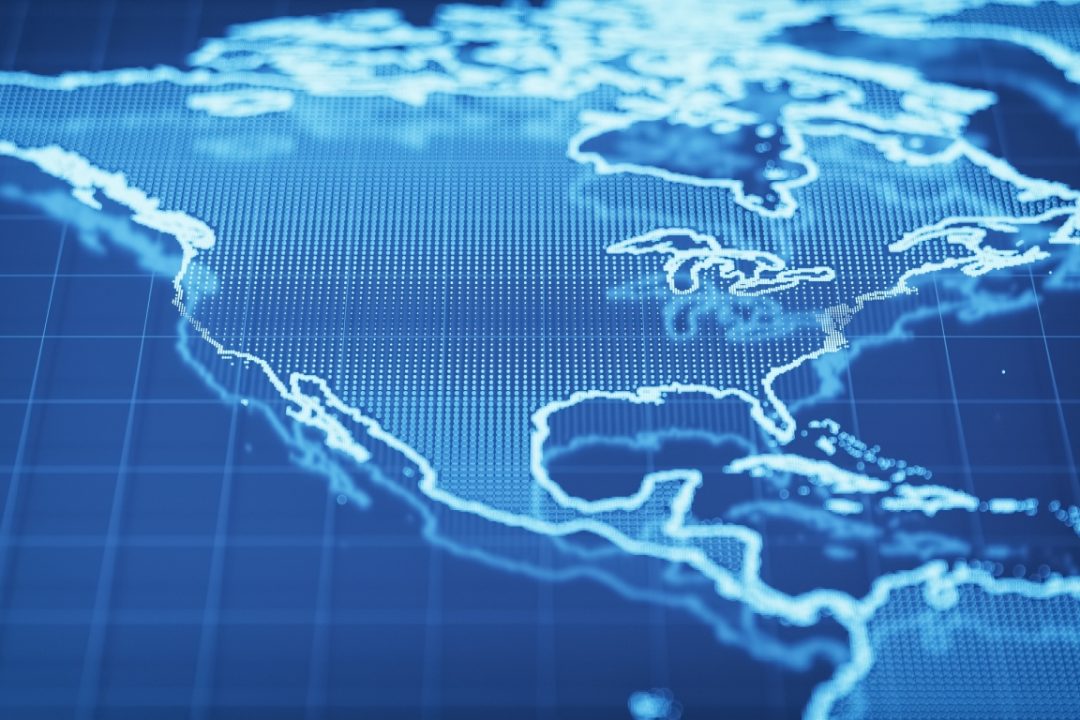
The Technocrats, sometimes also called Technocracy Inc, proposed merging Canada, Greenland, Mexico, the US and parts of central America into a single continental unit. This they called a “Technate”. It was to be governed by technocratic principles, rather than by national borders and traditional political divisions.
Patrick Wood, another contemporary analyst of technocracy, notes that the concept failed during its first iteration because technology could not support pervasive monitoring and resource allocation systems.
That constraint has changed. Digital surveillance infrastructures now exist — and are expanding. Centralized databases manage identity, finance, and mobility in ways unthinkable almost a century ago, creating conditions favorable to scaled technocratic governance.
Hohmann argues that Venezuela’s strategic value lies precisely here. The country does not simply offer oil. It offers backing for a new asset structure that could underpin a North American digital currency. The journalist describes,
That’s what technocracy is: An asset-based economy. The old fiat currency and dollar-based economy is on the way out. We may see dueling digital currencies for a while, with a Chinese digital Yuan and an EU digital Euro vying for supremacy with the North American digital equivalent, perhaps the Stablecoin. But eventually one will win out and the plan will be to further merge the evolving regional Technates into one global beast system.
In that reading, Venezuela is not the prize itself, but the keystone in a financial and administrative structure now being assembled.
Who’s Behind It?
The New American’s regular readers would not be surprised to see familiar forces associated with a project so deeply at odds with America’s constitutional foundations. Hohmann traces the modern revival of technocracy to elite planning circles that operate above traditional party politics:
The idea would resurface after Zbigniew Brzezinski and David Rockefeller formed the Trilateral Commission in 1973 for the sole purpose of establishing a new international economic order that would allow Rockefeller and other oligarchs to “convert their cash wealth into resource wealth.”
In addition to the Trilateral Commission, Hohmann cites parallel networks of influence that shaped energy, monetary, and corporate governance policy over subsequent decades. Patrick Wood argues that institutions such as the Council on Foreign Relations (CFR) are also heavily involved.
Alongside them sits the World Economic Forum (WEF), a network of some of the world’s most influential corporations and political figures. The WEF has positioned itself as a principal partner in advancing the United Nations’ Agenda 2030 framework, which emphasizes digital governance, data integration, and technology-driven systems for managing economic and social life.
None of these institutions openly describe their objective as a Technate. Yet the architecture they are building increasingly resembles one.
Trump and Technocracy
Trump’s second term has unfolded alongside an assertive geographic and administrative vision that extends well beyond Venezuela. Early on, he revived talk of Canada becoming “America’s 51st state,” a notion he repeatedly used even as Canadian officials rejected the idea and affirmed their sovereignty. He also publicly renewed his offer to purchase Greenland and indicated that all options, including military force, remain on the table. The president also signaled that the United States should “reclaim” the Panama Canal from China and Panama. After BlackRock, the world’s largest asset manager and a de facto financial arm of the globalism, acquired key port infrastructure on both sides of the Canal, Trump praised the move.
Taken together, these declarations, as well as the accompanying trade and tariff pressures, align closely with the boundaries envisioned by early technocrats. Reflecting on the president’s early moves, Wood observed last March,
In one fell swoop, President Trump has just traced out Technocracy’s mystery map of the North American Technate, which stretched from Greenland to just beyond Panama.
While projecting power abroad, the administration has also accelerated technocratic transformation at home. One of the signature initiatives is the “Stargate Project,” a $500 billion public-private program to build next-generation artificial-intelligence infrastructure.
Beyond headline announcements, the administration has moved quickly to integrate AI and comprehensive digitization into finance, healthcare, education, defense, immigration enforcement, government operations, and government identity systems.
Critics such as Catherine Austin Fitts contend that these developments are not isolated innovations, but components of a single architecture. In her view, the emerging system constitutes the backbone of a wider “digital control grid” capable of coordinating financial, administrative, and surveillance functions under a unified technological regime.