
U.S. to Withdraw Troops From Iraq but Retain Bases in Dozens of Countries
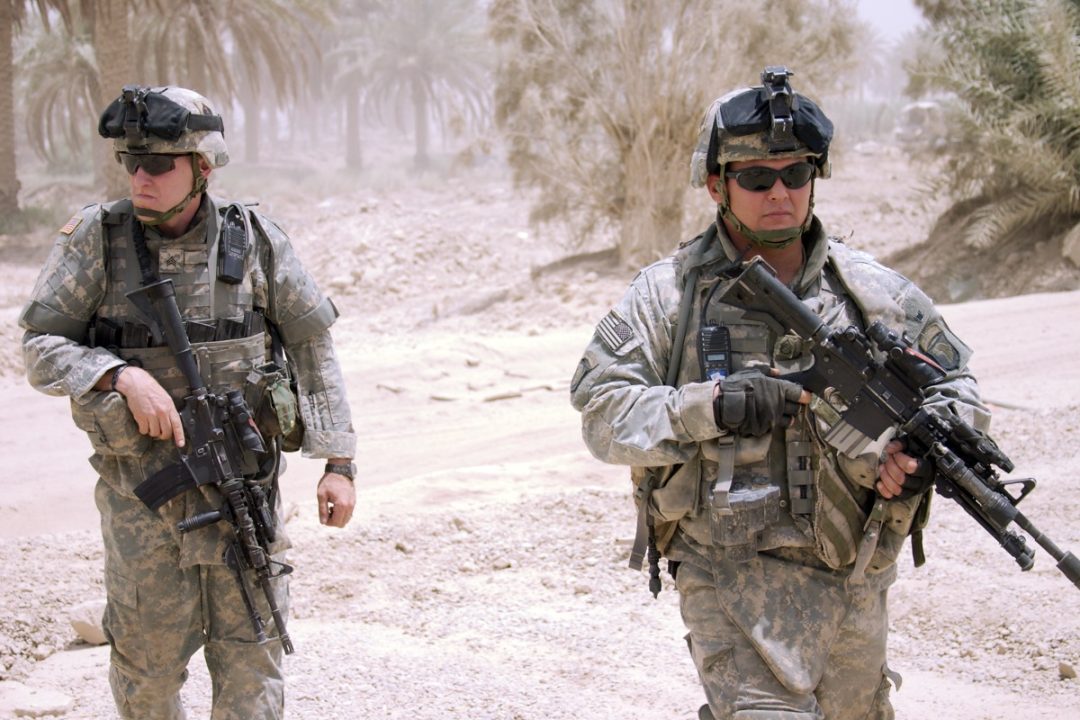
U.S. and Iraqi officials confirmed on August 12 that the United States will withdraw its remaining soldiers from Iraq at the end of September. If a full withdrawal is completed, it would be the first time that no American soldiers have been in Iraq since the United States invaded in 2003.
The Associated Press reported:
U.S. troops pulled out of bases in most areas of Iraq last year but maintained a presence in the semi-autonomous northern Kurdish region. Bases there have regularly come under attack since the U.S. and Israel launched the war on Iran on Feb. 28.
Iraqi Prime Minister Ali al-Zaidi met with Adm. Brad Cooper, who leads the U.S. Central Command, on Wednesday [August 12]. Al-Zaidi said in a statement afterward that he had affirmed Sept. 30 as the “fixed and final date for ending the military mission of the Global Coalition to Defeat ISIS in Iraq and completing the departure of its forces.”
A U.S. official confirmed that the U.S. expects to complete its pullout by Sept. 30, but declined to say how many troops remain in Iraq or where they would be redeployed.
A Drop in the Bucket
Although the impending withdrawal from Iraq is good news, the United States will continue to maintain numerous military bases in dozens of countries.
Because of differing definitions of what counts as a “base” (among other criteria), the precise number of overseas bases is not agreed upon. A 2024 Congressional Research Service report identified “at least 128 overseas bases in at least 51 different countries” that the U.S. Department of Defense (DoD) maintained a permanent presence in, based on unclassified records. A 2021 report by the Quincy Institute, which used a broader definition of a “base” and included installations on U.S. territories, found that the United States maintained 750 bases in 80 countries or territories, costing taxpayers $55 billion per year. And as of December 2025, more than 220,000 U.S. troops or DoD civilians were stationed overseas.
Entangling Alliances
Regardless of the exact number, the United States’ presence abroad is not consistent with the Founding Fathers’ recommended policy of noninterventionism. In his 1796 Farewell Address, President George Washington declared, “The great rule of conduct for us in regard to foreign nations is in extending our commercial relations, to have with them as little political connection as possible.” And in his 1801 Inaugural Address, President Thomas Jefferson called for “peace, commerce, and honest friendship with all nations, entangling alliances with none.” The sheer number of U.S. military bases worldwide is a stark reminder of how entangled the United States has become in world affairs.
Instead of directing the United States to act as the “world’s policeman,” American leaders must once again restore a traditional foreign policy of noninterventionism and zealous protection of American independence — and “We the People” must hold our elected officials accountable to the founding principles of our Republic.
This article is part of The New American’s weekly online newsletter Insider Report, which is emailed to TNA subscribers each week. Click here to subscribe to The New American to receive the Insider Report and access exclusive content.