
DHS Says ICE Officers Have “Federal Immunity.” The Law Is More Complicated.
The Department of Homeland Security (DHS), long seen as emblematic of dangerously expanding federal power, circulated a video clip asserting that Immigration and Customs Enforcement (ICE) officers enjoy “federal immunity” when performing their duties. Posted on Tuesday, the release comes amid widespread national attention and protests sparked by the fatal shooting of Renee Nicole Good by ICE agent Jonathan Ross during an enforcement operation in Minneapolis on January 7. Good’s death has become a flashpoint in ongoing debates over immigration enforcement, federal use of force, and civil rights, with tens of thousands gathering in Minneapolis and rallies under the banner “ICE Out For Good” held in cities across the country in recent days.
The DHS reposted a clip of Stephen Miller, the White House chief of staff, delivering a message to ICE officers. Miller’s remarks carried a clear implication: Federal officers, he suggested, operate beyond the reach of state and local authority, and anyone who interferes commits a felony. That framing sits uneasily with constitutional text, legal precedent, and long-standing limits on federal power. While immigration enforcement is undeniably a federal responsibility, the Constitution does not grant federal officers blanket immunity from the law, nor does it erase the authority of state and local law enforcement, particularly that of elected sheriffs.
“Reminder”
In the clip, Miller delivered a blunt message to ICE officers. He framed it as both reassurance and warning at once. The language left little room for qualification:
To all ICE officers: You have federal immunity in the conduct of your duties. Anybody who lays a hand on you or tries to stop you or tries to obstruct you is committing a felony. You have immunity to perform your duties, and no one — no city official, no state official, no illegal alien, no leftist agitator or domestic insurrectionist — can prevent you from fulfilling your legal obligations and duties. The Department of Justice has made clear that if officials cross that line into obstruction, into criminal conspiracy against the United States or against ICE officers, then they will face justice.
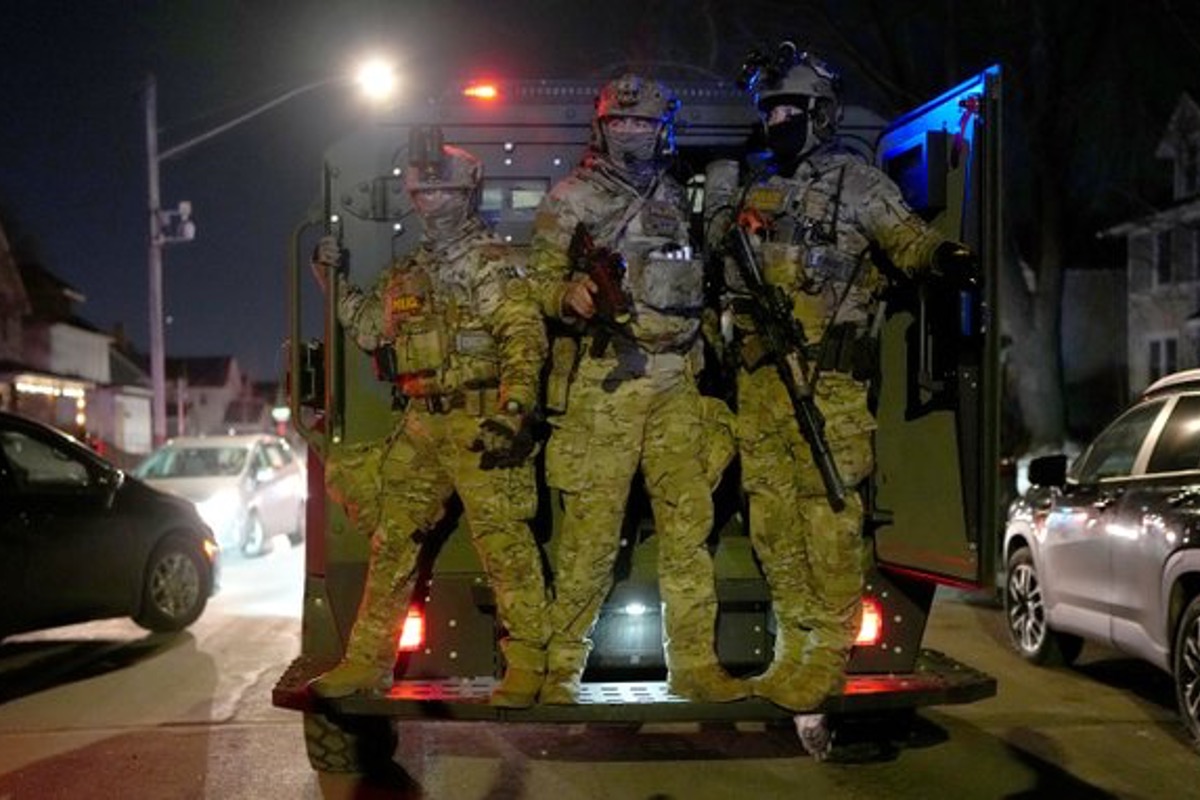
Miller made the remarks during a period of intense tensions between federal immigration authorities and state and local officials in Illinois. At the time, DHS had launched Operation Midway Blitz, a large-scale enforcement campaign across the Chicago area beginning in early September 2025. The operation immediately triggered legal and political backlash.
That context matters, since the DHS’s “reminder” of the “federal immunity” coincided with active litigation challenging the legality of ICE’s conduct on the ground.
The Illinois Context
This Monday, the state of Illinois and the city of Chicago consolidated those disputes into a sweeping federal lawsuit against the DHS and senior ICE officials. The complaint spans 103 pages and accuses the administration of deploying what plaintiffs describe as unlawful and dangerous immigration enforcement tactics.
According to the filing, ICE agents conducted arrests without valid judicial warrants, detained individuals without probable cause, and carried out enforcement actions that violated both constitutional protections and long-standing federal court orders governing immigration arrests in the region. State and city officials characterized the federal presence as “coercive” and destabilizing. They argued that it bypassed established legal limits on federal law enforcement authority and violated the Tenth Amendment’s reservation of powers to the states.
DHS dismissed the lawsuit as “baseless.” Spokeswoman Tricia McLaughlin said the department was looking “forward to proving that in court.”
The Illinois complaint echoed earlier claims raised by civil-rights attorneys representing detainees. In separate federal filings, those attorneys alleged that ICE violated a binding consent decree that restricts when agents may conduct warrantless civil arrests. Those filings documented cases in which U.S. citizens and lawful residents were mistakenly detained, raising serious due-process concerns.
Suing separately is a group of journalists, news organizations, unions and protesters. They accused the federal government of violating the First Amendment, the Religious Freedom Restoration Act, and the Fourth Amendment’s ban on excessive force and unreasonable seizures, among other charges.
A judge in Chicago ruled that some of the arrests challenged in court were unlawful, finding that ICE failed to satisfy constitutional and procedural requirements. The court ordered detainees released and warned that continued violations could trigger further judicial oversight.
The Illinois litigation underscores the tension at the heart of DHS’s decision to resurface Miller’s remarks.
Protections Afforded to Federal Officers
Federal officers do receive legal protections when they carry out their duties lawfully. But those protections are grounded in statute and constitutional structure, not in claims of blanket immunity.
Under the Supremacy Clause, federal officers are protected from state or local interference when they act within the scope of valid federal authority. States may not criminalize or obstruct lawful federal enforcement simply because they oppose the policy being enforced. This protection preserves the uniform application of federal law.
Federal criminal statutes also shield officers from violence and obstruction. Assaulting, resisting, or impeding a federal officer engaged in official duties is a felony under 18 U.S.C. § 111. Related statutes criminalize interference with federal process. These provisions protect officers from physical harm and coordinated obstruction.
Qualified immunity offers another layer of protection. Courts shield officers from personal civil liability when their conduct does not violate clearly established constitutional rights. The doctrine recognizes that officers must often act under uncertainty and should not face personal ruin for reasonable actions taken in good faith.
Finally, federal officers typically receive legal defense and indemnification from the Department of Justice (DOJ) when sued for actions taken in an official capacity, so long as those actions fall within lawful bounds. Notably, in the Ross case, several DOJ attorneys resigned rather than continue on the matter. That is an uncommon development that intensified scrutiny of the government’s response.
Overall, legal protections of the federal officers are substantial. But they are also conditional.
The Constitutional Limits
The Constitution does not recognize the concept of absolute “federal immunity.” Its structure imposes strict limits on federal power rather than exemptions from law.
As noted earlier, Article VI establishes federal supremacy over conflicting state law. Yet, it does not authorize federal officers to violate the Constitution or operate beyond judicial oversight.
The Fourth Amendment draws a clear boundary. “The right of the people to be secure … against unreasonable searches and seizures, shall not be violated.” Federal officers are bound by this standard no less than state or local police. Arrests without probable cause, warrantless searches outside statutory authority, and unlawful detentions remain unconstitutional.
The Fifth Amendment reinforces that boundary. It prohibits deprivation of liberty without due process of law. In immigration enforcement, this protection applies to citizens and noncitizens alike. Detention without lawful justification or meaningful review raises immediate constitutional concerns.
Habeas corpus provides a further check. Article I states that the writ may be suspended only in cases of rebellion or invasion. Individuals detained by federal authorities retain the right to challenge the legality of their confinement in court. Immigration enforcement does not override that safeguard. Courts routinely review ICE detentions through habeas petitions.
Notably, last May, Miller — dubbed “the ever-earnest architect of executive tyranny in immigration policy” by The New American’s Joe Wolverton — floated the idea of suspending it. At the same time, DHS Secretary Kristi Noem raised eyebrows when she told Congress that habeas corpus reflected presidential power to deport.
Finally, qualified immunity does not alter these limits. It shields officers only when they do not violate clearly established law. It does not apply to criminal conduct or knowing violations of constitutional rights.
What About the States?
Perhaps the most dubious aspect of Miller’s claim is the limitation it places on local authority.
The Constitution reserves powers not delegated to the federal government “to the States respectively, or to the people,” as the Tenth Amendment provides. Law enforcement within state boundaries has historically fallen within those reserved powers.
While immigration enforcement is a federal responsibility, the federal government does not possess a general police power. In many states, the sheriff is a constitutional officer, elected by county residents and recognized as the senior local law enforcement authority within the jurisdiction. Federal officers do not automatically supersede that role. They may act lawfully. They may not override state authority when acting unlawfully.
The Supreme Court has reinforced this balance. In Printz v. United States (1997), the Court held that the federal government may not “commandeer” state officers to enforce federal law. It described such mandates as incompatible with the Constitution’s system of dual sovereignty.
Federal supremacy prevents states from nullifying valid federal law. It does not erase state control over local law enforcement structures. Therefore, claims that no city or state official can ever prevent or challenge federal enforcement overstate federal power. Courts, sheriffs, and state officials retain authority to contest unlawful conduct.
The bottom line is this: Federal authority exists within tight constitutional boundaries.