
Sen. Paul Moves to End Vaccine Makers’ Legal Immunity, Including Covid Protections
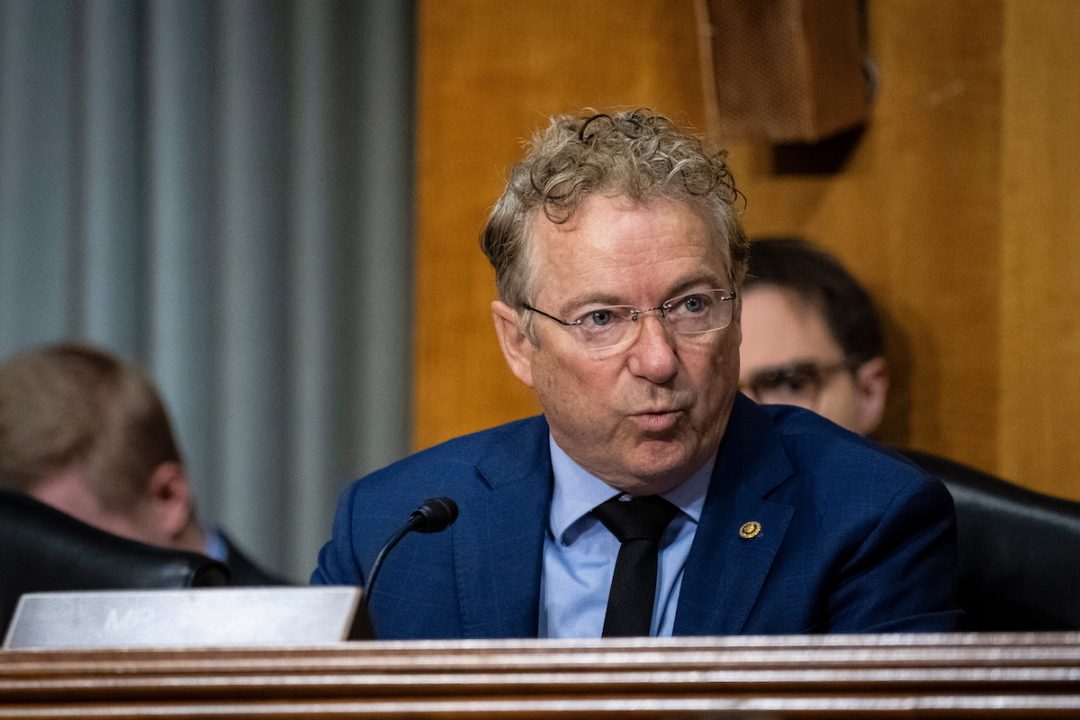
Senator Rand Paul (R-Ky.) has introduced legislation that would dismantle the federal liability shield protecting vaccine manufacturers. It would also carve Covid-19 vaccines out of “emergency” immunity protections.
The measure, titled the End the Vaccine Carveout Act (pdf is available here), seeks to amend the Public Health Service Act. It directly targets provisions that limit lawsuits against vaccine makers. If enacted, it would mark the most significant change to federal vaccine liability law in nearly four decades.
The bill is a Senate companion to the House bill introduced last July by Representative Paul Gosar (R-Ariz.) under the same title.
Challenge to the 1986 Framework
To understand the scope of Paul’s proposal, it is necessary to revisit the legal structure Congress built in 1986.
In response to the avalanche of lawsuits against vaccine manufacturers, Congress passed the National Childhood Vaccine Injury Act. Lawmakers feared companies would leave the vaccine market entirely. The statute created a special, taxpayer-funded compensation system and sharply restricted civil litigation.
That framework was codified inside the Public Health Service Act. It established the National Vaccine Injury Compensation Program (VCIP), known as Vaccine Court — a “no-fault alternative to the traditional legal system.” Individuals claiming vaccine-related injuries must generally file a petition there before they can pursue a lawsuit.
The law also embedded liability protections for manufacturers within specific statutory sections. These protections limit the types of claims plaintiffs can bring. They restrict access to punitive damages, and bar most design-defect lawsuits.
Paul’s bill directly targets those statutory pillars.
Core Liability Provisions
The legislation repeals three key sections of the Public Health Service Act: Sections 2121(a), 2122, and 2123. These provisions form the backbone of the current liability framework.
Section 2121(a) governs what is known as the “election” requirement. Under current law, individuals who file a petition in the federal compensation program must choose between accepting compensation or rejecting it and filing a civil lawsuit. They cannot freely move between the two systems. Repealing this section removes that statutory gatekeeping mechanism. Plaintiffs would no longer be forced into Vaccine Court before accessing traditional courts.
Section 2123 — “Trials” — governs procedural rules tied to civil actions following federal proceedings. It sets limitations on how cases may proceed in state or federal court. Repealing it strips away vaccine-specific procedural constraints and restores ordinary trial rules.
Together, these repeals dismantle the structural barriers that have limited direct lawsuits against vaccine manufacturers since 1986.
“Standards of Responsibility”
The most significant repeal is Section 2122, titled “Standards of Responsibility.”
Section 2122 limits manufacturer liability if a vaccine was “properly prepared and was accompanied by proper directions and warnings.” It restricts the types of claims plaintiffs can bring. It also bars punitive damages in most circumstances.
By repealing Section 2122 in full, the bill removes those statutory protections. Vaccine manufacturers would no longer operate under a distinct federal liability framework. Instead, they would face traditional product liability standards under state law, like other pharmaceutical companies.
This shift would fundamentally change the legal landscape surrounding vaccine-injury claims.
Covid Vaccines and the PREP Act
The bill also seeks to amend the Public Readiness and Emergency Preparedness Act, known as the PREP Act. That law grants broad immunity to manufacturers and administrators of certain medical countermeasures during “public health emergencies.”
The proposed amendment would exclude Covid-19 vaccines from the definition of “covered countermeasures.” That exclusion would remove the federal immunity shield that has protected these dangerous injections since 2020.
Speaking with Children’s Health Defense (CHD), attorney Ray Flores reminded that Health and Human Services (HHS) Secretary Robert F. Kennedy, Jr. could remove the Covid-19 vaccine liability shield “with the stroke of a pen.”
Indeed, the law is unambiguous:
The Secretary may … amend any portion of a declaration under paragraph (1).
In other words, Kennedy could revoke the PREP Act declarations today, without asking or waiting on Congress. For years, Kennedy had publicly denounced the Covid vaccines, citing their catastrophic safety profile and calling out pharmaceutical companies for what he described as “mass murder.”
“Unfortunately, bold support appears necessary to empower him to do what he already has the power to do,” Flores said.
In late August, Flores co-authored an analysis that found,
Over 1.5 million people who reported a COVID-19 vaccine injury to the Vaccine Adverse Event Reporting System (VAERS) cannot even apply for compensation from the government program that covers COVID-19 vaccine injuries.
Even for individuals whose injuries qualify for review under the Countermeasures Injury Compensation Program (CICP), the chances of receiving timely or adequate compensation remain extremely low. As of February 1, the program had received 14,709 claims. It had approved compensation in only 133 cases, and had already compensated just 74, which represents less than 0.5 percent of total claims.
Support From Advocacy Groups
The CHD reported that more than 40 organizations and individuals have voiced support for the legislation. Besides the CHD, the list includes the Brownstone Institute, MAHA Action, and Moms Across America.
Mary Holland, CEO of Children’s Health Defense, called the reform “long overdue,” arguing,
If vaccines are truly safe as advertised, then there is no reason for them to be exempted from liability, if and when they cause harm.
Senator Ron Johnson (R-Wis.) told the outlet,
It made sense in 1986, when there was a risk of having no vaccine manufacturers, but extending that protection to all new vaccines has led to an explosion in the number of vaccines without adequate safety testing or monitoring.
Since 1986, the recommended childhood immunization schedule has expanded from vaccines targeting roughly seven diseases to more than 20 diseases today, with dozens of total doses administered from infancy through adolescence.
Supporters argue that restoring access to civil courts would increase transparency. They say it would incentivize stronger safety monitoring and testing. They also contend that legal accountability would strengthen public trust.
Related article:
Reps. Massie and Gosar Target PREP Act’s Liability Shield for Pandemic Products