
What Is the Iran War Really About?
America is at war again. And once again, it has attacked a country that never possessed the ability to threaten the U.S. homeland nor the military capability to adequately resist Uncle Sam’s mighty hammer.
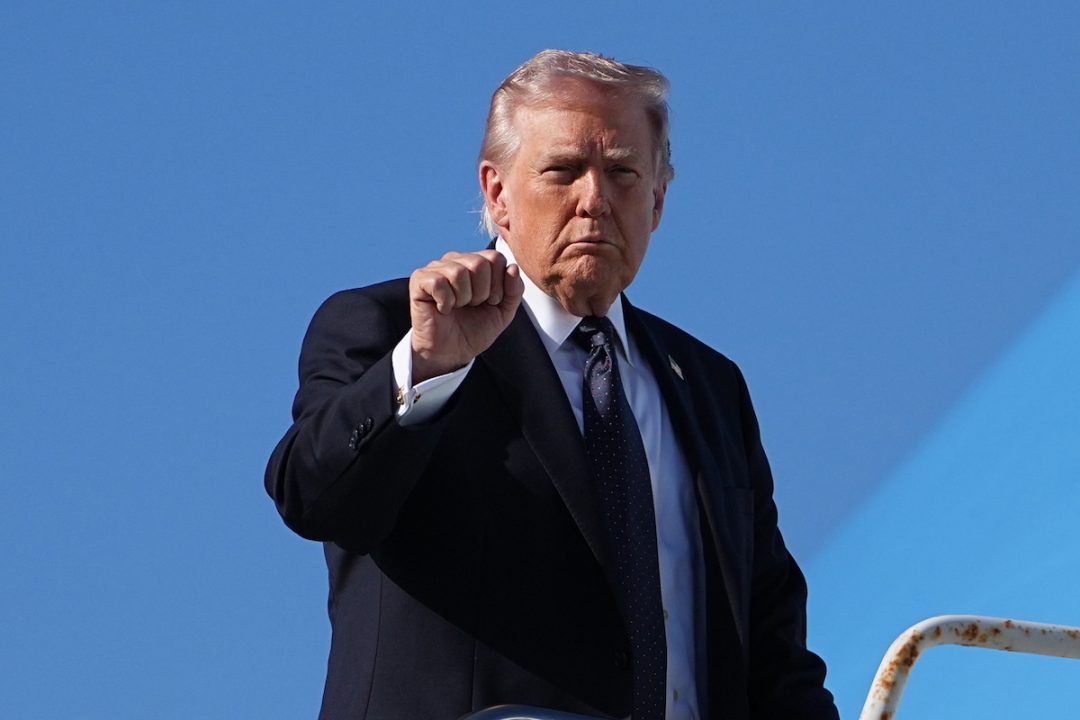
President Donald Trump announced in the middle of the night early Saturday that he ordered the U.S. military to join Israel in a tag-team mission to decapitate Iran’s leadership and free its people. He made the decision to take the United States to war illegally, without Congressional approval. In doing so, he also betrayed the millions of voters who took his campaign promise to avoid regime-change wars seriously.
Trump cited a number of grievances to justify the war. The first was to protect Americans from the Iranian “imminent threat.” Another reason was to neutralize a regime that has posed a longstanding threat to American assets and allies in the region. The war is also revenge for Iranian proxy attacks on Americans, including the 1983 Marine barracks bombing in Beirut, Lebanon, that killed 241 Americans. And, the president added, Iran was “probably involved” in the 2000 attack on the USS Cole.
Trump also said Iranian forces killed Americans in Iraq. And they were guilty of attacking commercial shipping lanes that affect U.S. interests. Iran was allegedly behind Hamas’ October 7 attack on Israel, which impacted American citizens, Trump pointed out. And, of course, there’s the claim of Iran’s dogged pursuit of nuclear weapons. The president even went as far as to say that Iran was working on building missiles that could reach the American homeland.
Deceptive Statements
Trump’s statement was a mixture of truth, deception, hyperbole, and probably some outright lies, all of it overlaid on the erroneous assumption that there’s nothing wrong with the United States having bases and tens of thousands of soldiers in the Middle East in the first place.
First off, Iran did not pose an imminent threat. According to recent reports, “Congressional staff were told by Trump administration officials in private briefings Sunday that Iran was not preparing to launch a preemptive strike against U.S. interests.” The private briefings were based on U.S. intelligence reports.
As for those decades-long warnings that Iran was close to building a nuclear weapon, even supporters of this war don’t believe that. Senator Ted Cruz (R-Texas) recently said, “I have no indication that they were anywhere close to getting nuclear weapons because our bombing was devastating.” Cruz was referring to last summer’s bombings on Iranian nuclear sites, the ones Trump said “obliterated” and set back their nuclear program decades. That was less than a year ago.
But Trump was telling the truth about Iranian proxy attacks against American assets in the region. But what generally goes unmentioned in conversations about these tragedies is that they wouldn’t have happened had it not been for our imperialistic foreign policy that puts precious American lives in harm’s way on the other side of the planet. There are hundreds of U.S. military installations around the world, a small portion of them in the Middle East. At no point whatsoever did the American people get a vote on whether they wanted their tax dollars to go toward overseas occupations. But today everyone generally accepts this as normal. It’s not.
The real reasons for the war almost assuredly go beyond what Trump said. That’s always the case when it comes to war.
We’re going to discuss some other possible reasons this war is happening.
Israel
The first one is Israel. Trump hinted at this in his speech when he mentioned the October 7 attack, a tragedy that was likely preventable given the long list of documented warnings Israel’s top brass ignored about Hamas’ incoming attack.
Israeli leadership has been trying to convince American administrations going back to the 90’s to attack Iran on its behalf. In Trump, they found their man.
Also, recent comments from Secretary of State Marco Rubio suggests Israel more or less dragged the United States into the war. Rubio said, “We knew that there was going to be an Israeli action, we knew that that would precipitate an attack against American forces, and we knew that if we didn’t preemptively go after them before they launched those attacks, we would suffer higher casualties.” You can read more about this in our reporting here.
Israel is without a doubt a central component of America’s involvement in this war. In defense of the Israelis, they’re doing what’s in their best interest. They’re a tiny nation fighting a multi-front war. They need help if they want to take out their largest regional rival. What better help than the world’s most largest military?
Epstein
Another reason Trump might have launched this war is to distract from the Jeffrey Epstein files debacle. He teased alien disclosure in an attempt to accomplish the same thing, but the public shrugged it off. War is harder to ignore than superficial vows to declassify alien files.
Even though the Justice Department is still illegally withholding more than 2 million Epstein documents, those that have been released have vindicated the “conspiracy theorists.” The files corroborate suspicions that a network of deviant international power players operate outside the laws, norms, and values the rest of the world adheres to.
Just a few days before Trump sent the country to war, The New York Times broke the news that the DOJ withheld “some key materials related to a woman who made an accusation against President Trump.” The Times reported, “The materials are F.B.I. memos summarizing interviews the bureau did in connection to claims made in 2019 by a woman who came forward after Mr. Epstein’s arrest to say she had been sexually assaulted by both Mr. Trump and the financier decades earlier, when she was a minor.”
The Times asked the DOJ why it withheld the documents. First it said the documents were “either privileged or duplicates.” The following day, the DOJ said they were withheld “because of an ongoing federal investigation.” By the third day, the agency said “it would publish any documents found to have been improperly tagged in the review process that are legally required to be made public.”
The Times is, of course, a leftist publication, but in this case that affects motivation and not content. Moreover, the original file dump already included accusations against Trump, accusations too disturbing and graphic to print.
It’s quite possible that the reason Trump fought so hard against the Epstein file release is not only to protect his friends, but also to protect himself. But he wasn’t able to completely accomplish that. And things were on track to get worse. Had it not been for a war breaking out, the Epstein files would still be the number one focus among the public and a select, yet very effective, subset of Congressional members.
Oil and BRICS
Another ulterior motive to consider is oil. We can never overlook this element. Isn’t it interesting that the two countries Trump sought to “liberate” happen to be among the most oil rich in the world? Venezuela, which the United States conquered in January, has the largest proven oil reserves in the world. Iran is third on that list. Iraq, another nation that we “freed,” ranks fifth on the list.
Toppling the mullahs and installing a U.S.-friendly regime would most likely result in Iran’s oil entering Western markets. It would also likely cut into how much goes to China, which is currently Iran’s largest oil client.
Iran is also part of BRICS, the multi-nation alliance that seeks to challenge the supremacy of the U.S. dollar as the world’s reserve currency. If the Insiders manage to install a Western-friendly puppet as the next leader of Iran, he would almost certainly pull the country out of BRICS.
Digital Control
Then there’s an interesting theory Catherine Austin Fitts floated during her latest conversation with Tucker Carlson. She believes the reason Iran has been in regime-change crosshairs so long is because the people in charge of the Islamic dictatorship would never have allowed the country to be part of the international digital prison that the Insiders are creating. Fitts refers to it as the “control grid.” She defined the control grid this way:
A process or an infrastructure that allows digital technology to be used to assert phenomenal surveillance and control of people. And at the very heart of it is what I call programmable money. It’s money that is no longer just currency, it’s money that comes with a set of rules, that can be surveilled and forced.… Programmable money allows the bankers who’ve been running monetary policy to now control fiscal policy and essentially replace legislatures and the executive by making and enforcing the rules through the money. That requires a large infrastructure of surveillance. So you need digital IDs and the hardware locally and globally to do the surveillance and implementation.
It’s an interesting theory, and certainly worth considering.
Trump’s Vanity
A final theory we want to float is that this action is, in part, Trumpian vanity. Trump desperately wanted the Nobel Peace Prize. He didn’t get it. He also wants his face on Mount Rushmore. He’s made numerous statements suggesting he wants to be seen as the best president ever.
Trump is a man obsessed with his legacy. He is immensely grandiose in his mind. Pulling off regime change in Venezuela, Iran, and possibly Cuba will change the global landscape for years to come. It’s hard to believe the warmongers who have slithered into his inner circle haven’t filled his brain with visions of monuments dedicated to his lasting “accomplishments.”
Wars are complicated. Rulers launch them for various reasons, and almost always, most of the real reasons are never said out loud. This one is no different.