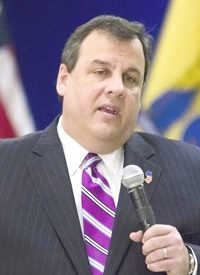
New Jersey Governor Chris Christie has found a way to solve the problem of chronically sub-standard public schools in his state, while dissolving the barnacles of public education, and its immense bureaucracy: privatize public education. The first part of his plan would authorize management organizations to operate five under-performing public schools in a public-private partnership. Not surprisingly, New Jersey teachers’ unions have blasted this move as part of the Governor’s “ongoing effort to privatize public education in New Jersey.”
The proposal comes after the New Jersey Supreme Court ruled that Governor Christie’s education cuts of $1 billion last year were unconstitutional and that they shortchanged disadvantaged students. The court ordered the state to spend approximately $500 million more on its poorest schools next year. Christie attacked the ruling, noting that school reform goes beyond just the amount of money spent. He said of his new approach, “Perhaps most importantly, through the knowledge that change is on the way, this program will begin to restore hope in communities where failing schools deny children hope and opportunity.”
The Governor has tapped Christopher Cerf, the former president of Edison Schools Incorporated, the largest private-sector school manager, as his Acting Commissioner of Education. Observers have noted that while his plan of bringing businessmen, not bureaucrats, into government will not sit well with public-employee unions, it will surely help the taxpayers of New Jersey. Though courts and lawyers, predictably, are interposing every artifice possible to prevent change, Christie has remained firm in his commitment to institute genuine reforms of government and public services in the Garden State.
The public policy debate over education has taken many forms in recent years. Should government allow tax credits for private schools? Should it provide vouchers for these schools? The ACLU, with its profound bias against religious faith in education, argues that any such “support” violates the putative wall of separation of church and state. Then there is the burgeoning home-schooling effort across the country. Home-schooled children are consistently outperforming children taught in public schools, and have also proven to have lower rates of premarital sex, teen pregnancy, and substance abuse.
Those who cherish the genius of America will know that one of its greatest polymaths, Benjamin Franklin, appears to have had almost no formal education at all — no school attendance and little, if any, instruction at home. The very process of education, in the best American sense of the word, is lifelong self-education. Many Americans from Abraham Lincoln to Thomas Edison and Mark Twain taught themselves. Though Lincoln possessed only two primary educational resources — the King James Bible and the Complete Works of William Shakespeare — these two works provided him with a mastery of the English language perhaps unmatched by any other President except Thomas Jefferson.
Surprisingly, Winston Churchill, another who possessed a formidable command of language and a breathtaking grasp of history, never attended college (Sandhurst was not a college, but a British Army officers’ training center). Some have suggested that his eloquence in both the written and spoken word was precisely because he was free to learn writing and speaking on his own.
So if Governor Christie can manage to begin privatizing public schools in New Jersey, it might be the sort of reform which could spread and revolutionize how children are educated in America — and that might be his biggest policy victory yet. What if every Republican-controlled state privatized education? The impact on the power of public-employee unions could be immense — as could the benefits to American children.